







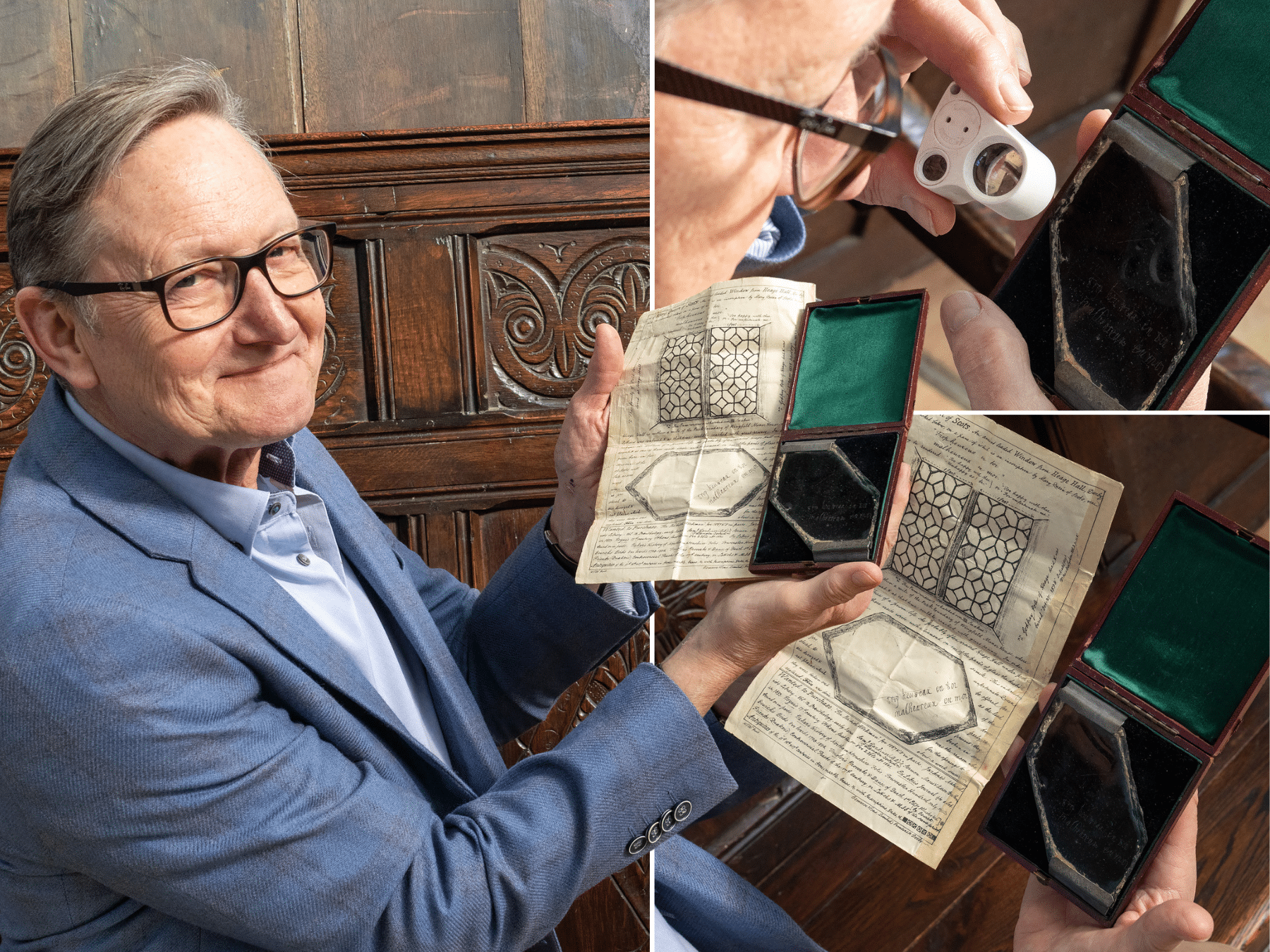
A long-lost 16th-century windowpane once believed to have been engraved by Mary Queen of Scots has been discovered at the back of cupboard in Belper.
For almost a century mystery has surrounded the whereabouts of a leaded glass window from Heage Hall, which some believed to have been carved by the queen while in captivity in Derbyshire.
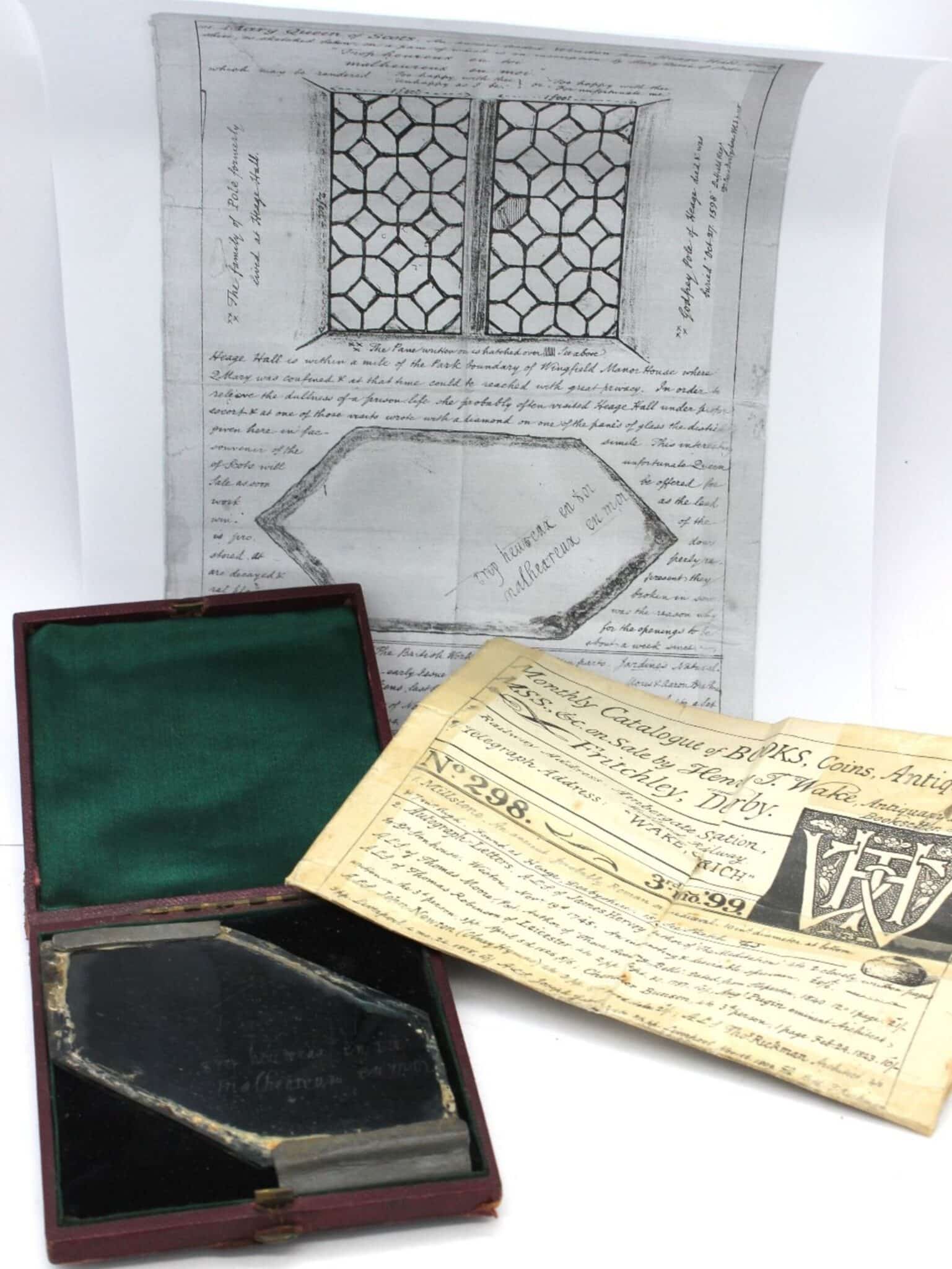
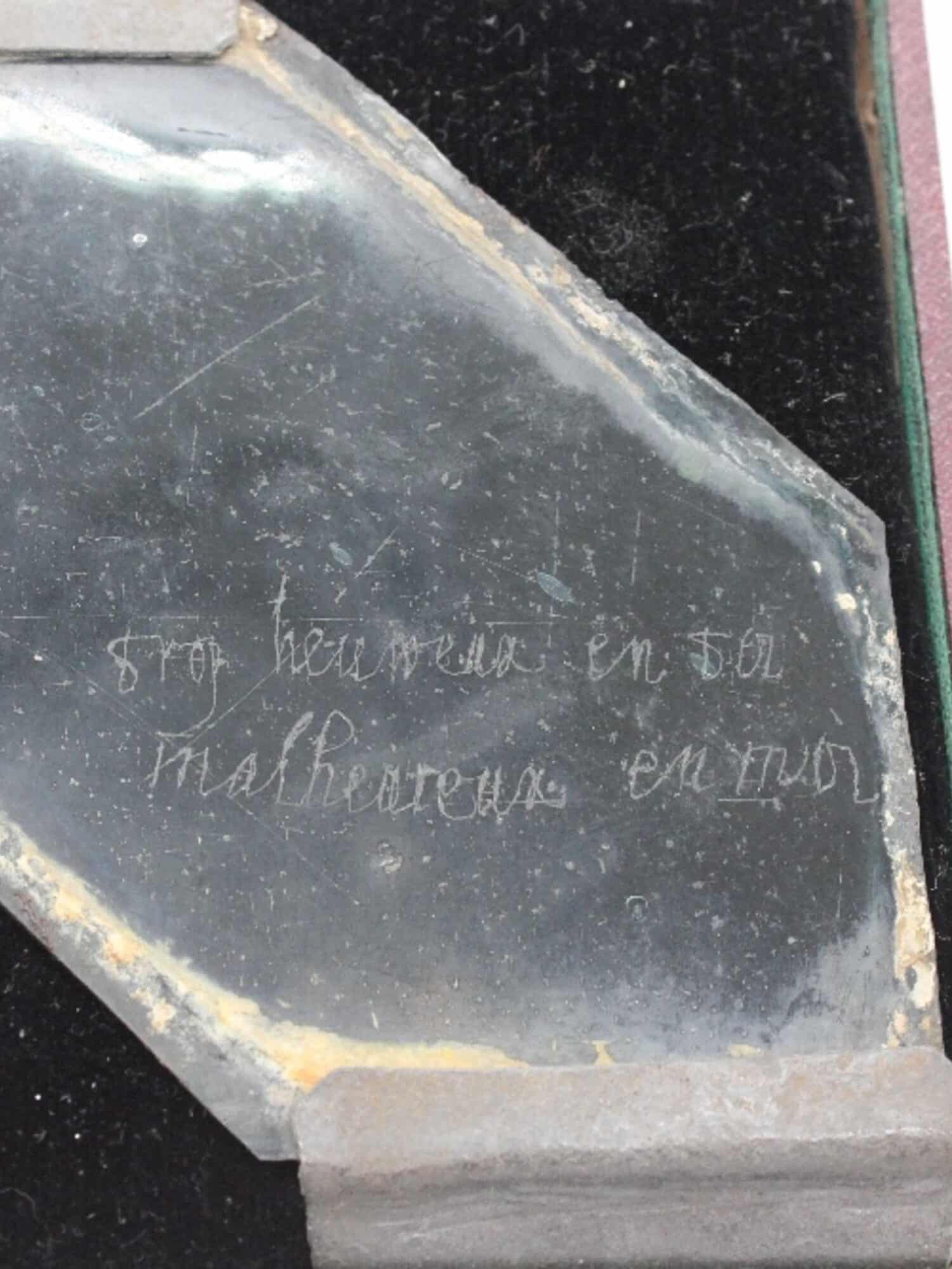
Now, the rare glass pane, measuring 11.5 x 5.8cm (4 ½ x 2 ¼in) is to appear at Hansons Auctioneers’ sale in Etwall on March 24, having spent decades in the cupboard of retired teacher John Maddison who died in 2024, aged 82.
His daughter-in-law, Anna Maddison from Duffield, said: “Exactly how he came to have it we really couldn’t say. Both he and my mother-in-law, Eileen who died in 2015, were very involved with Christ Church at Belper. I know they didn’t buy it, and I think he was given itby someone who bought it at auction.
“I remember when I first saw it thinking how special it must be. It is incredible to think it is a long-lost local artefact with the most amazing history.”
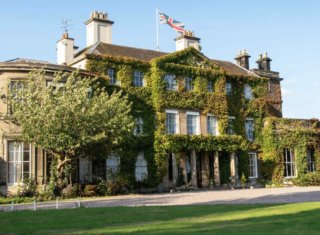
The pane was discovered in the 1800s by the Quaker antiquarian Henry Wake who spotted it while exploring the dilapidated remains of Heage Hall, near Nether Heage.
The panel readsTrop heureux en toi, malheureux en moi, which translates as “Happy in thee, unhappy in me.”
Wake was adamant that the French motto was the work of Mary who grew up at the French court and had been imprisoned a mile away from the hall at Wingfield Manor.
Charles Hanson said: “Mary was known to use a ‘scribbling’ ring – a diamond-set ring designed to scratch glass to leave messages, signatures, or verses on windowpanes during her travels and imprisonment. Wake was convinced she had visited the hall while she was incarcerated at Wingfield Manor between 1569 and 1571.”
However not everyone agreed – as there is no written evidence to suggest the heavily-guarded Mary ever visited the hall, then the seat of the Pole family.
The debate raged until 1914 when Wake died, and Ambergate vicar, H Eardley Field, sent the pane to the British Museum to settle the controversy.
Museum experts concluded “that it was in a hand contemporaneous with Mary but not her writing”.
Charles Hanson said: “If it wasn’t written by Mary herself there is a chance it was written by one of her ladies, either way it is a wonderful piece of Derbyshire history and a wonderful local artefact with a thrilling story.”
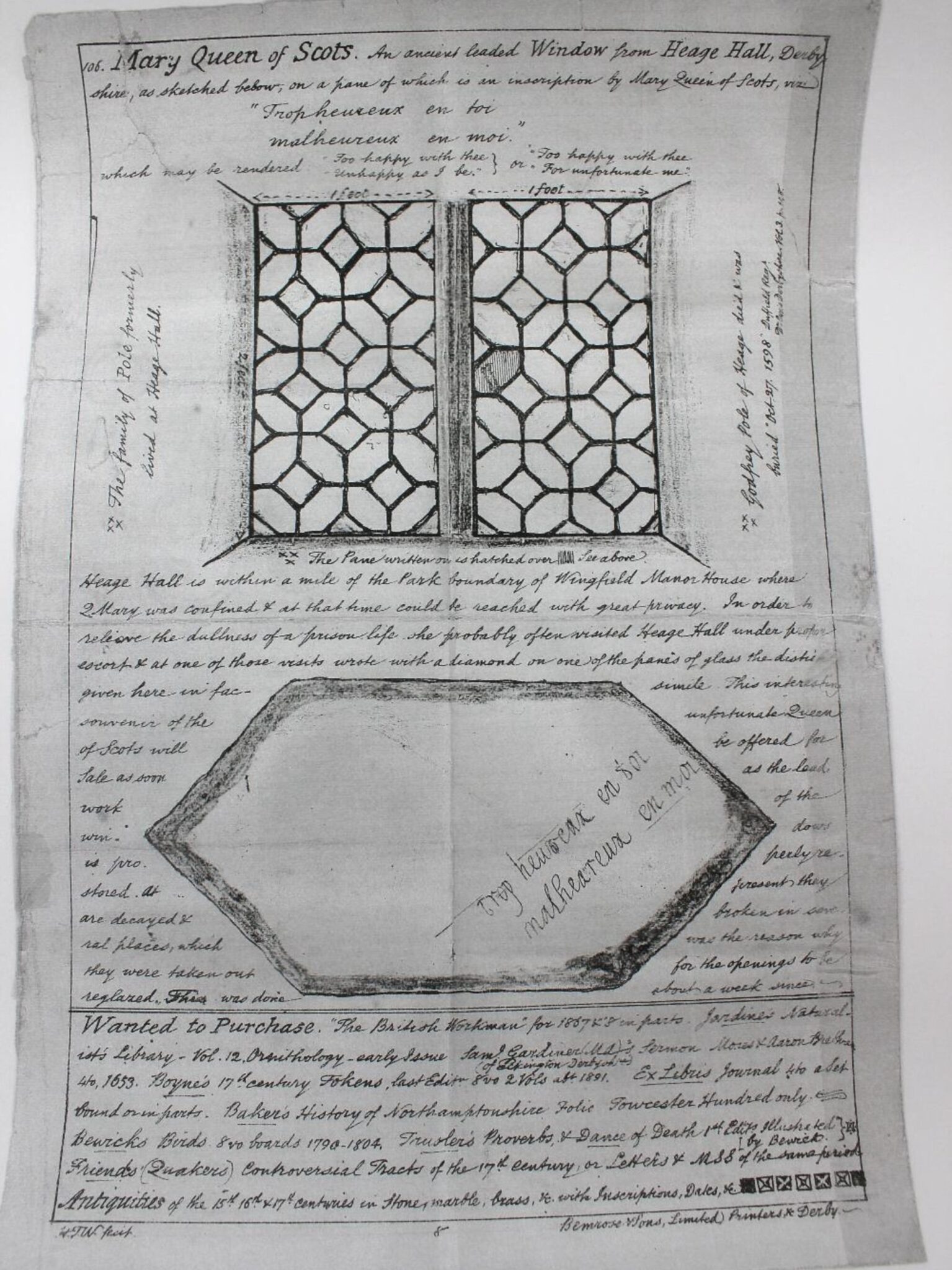
The pane is being sold with an old catalogue titled Monthly Catalogue of Books, Coins, Antiquities, on sale by Henry J. Wake, Fritchley, Derby.
In it Wake states: “Heage Hall is within a mile of the Park boundary of Wingfield Manor House where Mary was confined and at that time could be reached with great privacy. In order to relieve the dullness of a prison life, she probably often visited Heage Hall under escort and at one of those visits wrote with a diamond on one of the panes of glass.”
Due to her perceived threat to the English crown, Mary’s Protestant cousin Elizabeth I kept her rival imprisoned for 19 years until her execution in 1587, aged 44.
Under the supervision of the powerful nobleman George Talbot, 6th Earl of Shrewsbury she was kept in various castles and manor houses across England many in Derby where Talbot owned a number of estates.
Whether or not Mary Queen of Scots ever visited Heage Hall, her ghost – in the shape of a figure on a brown horse dressed in her Tudor riding clothes – is said to haunt the building.
Auction Details
Auction: Derby March Four-Day Antiques & Collectors Auction: including Silver, Jewellery & Watches
Auction date: 19th – 24th March 2026 | 9am
Location: Hansons’ Derbyshire Saleroom
Auction contact: [email protected]
Catalogue/bidding: www.hansonslive.co.uk | www.the-saleroom.com