







The script of the woman who introduced the first televised coronation and helped the Queen prepare for her first Christmas broadcast – said to have ‘saved the monarchy’ – is going under the hammer.
BBC announcer Sylvia Peters, who died in 2016 aged 90, broadcast to millions at the coronation on 2 June 1953, opening by saying it was a “great and joyous day for us all”.
Four years later she tutored the Queen on her critical first televised broadcast.
At a time when the royal family was seen as outdated and the Queen’s presentation style old fashioned, her well-received 1957 speech was said to have ‘saved the monarchy.’
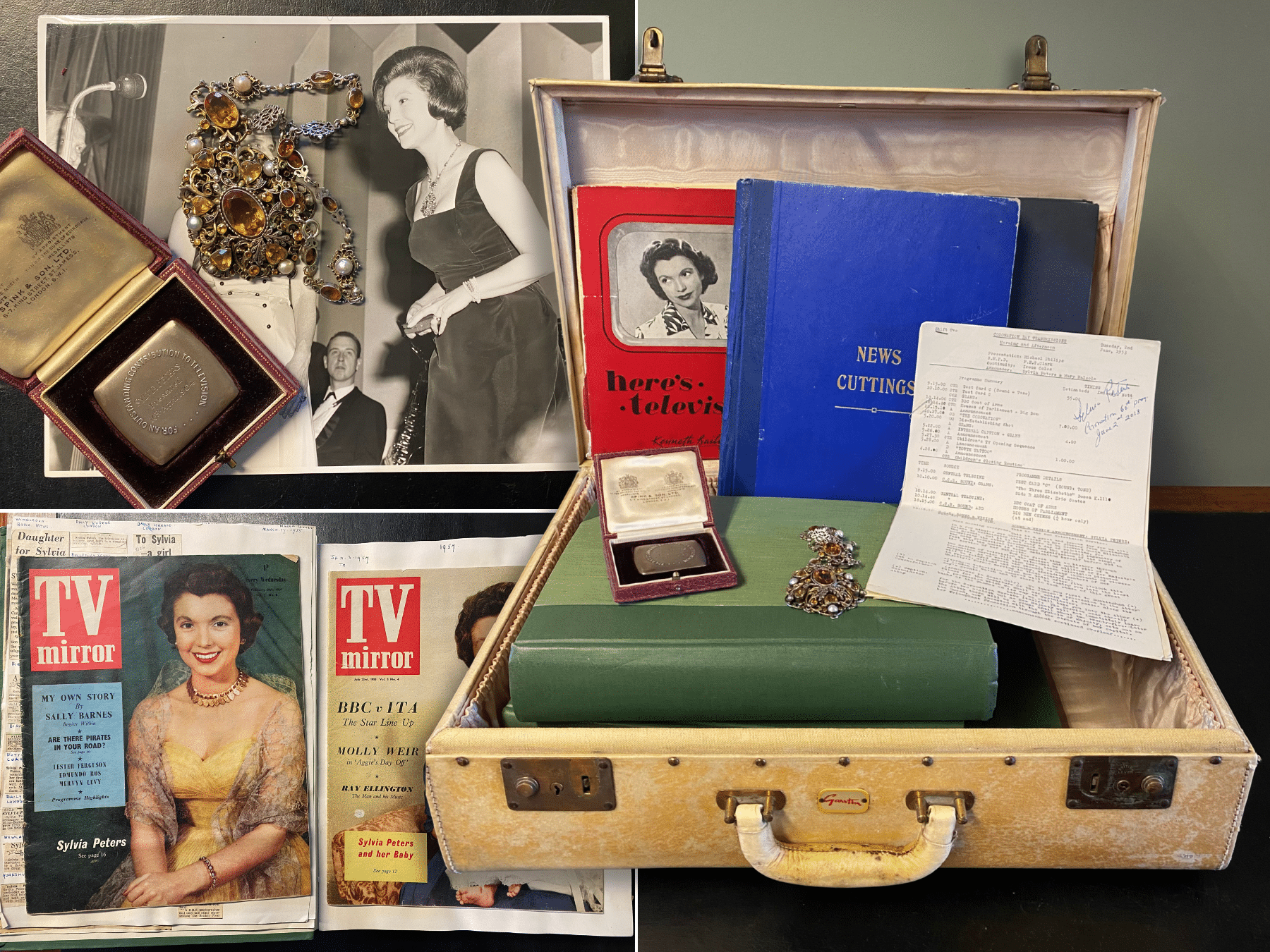
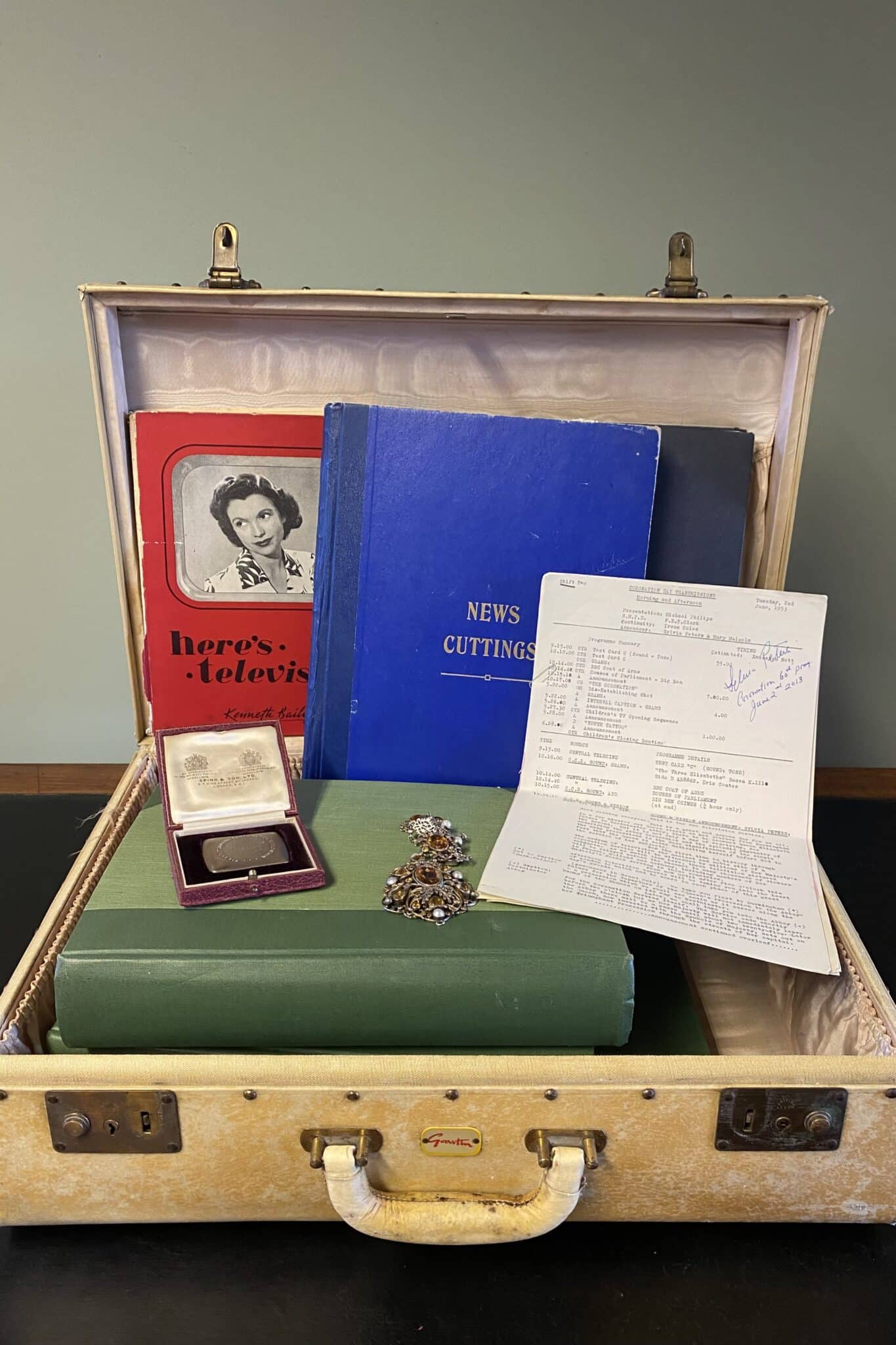
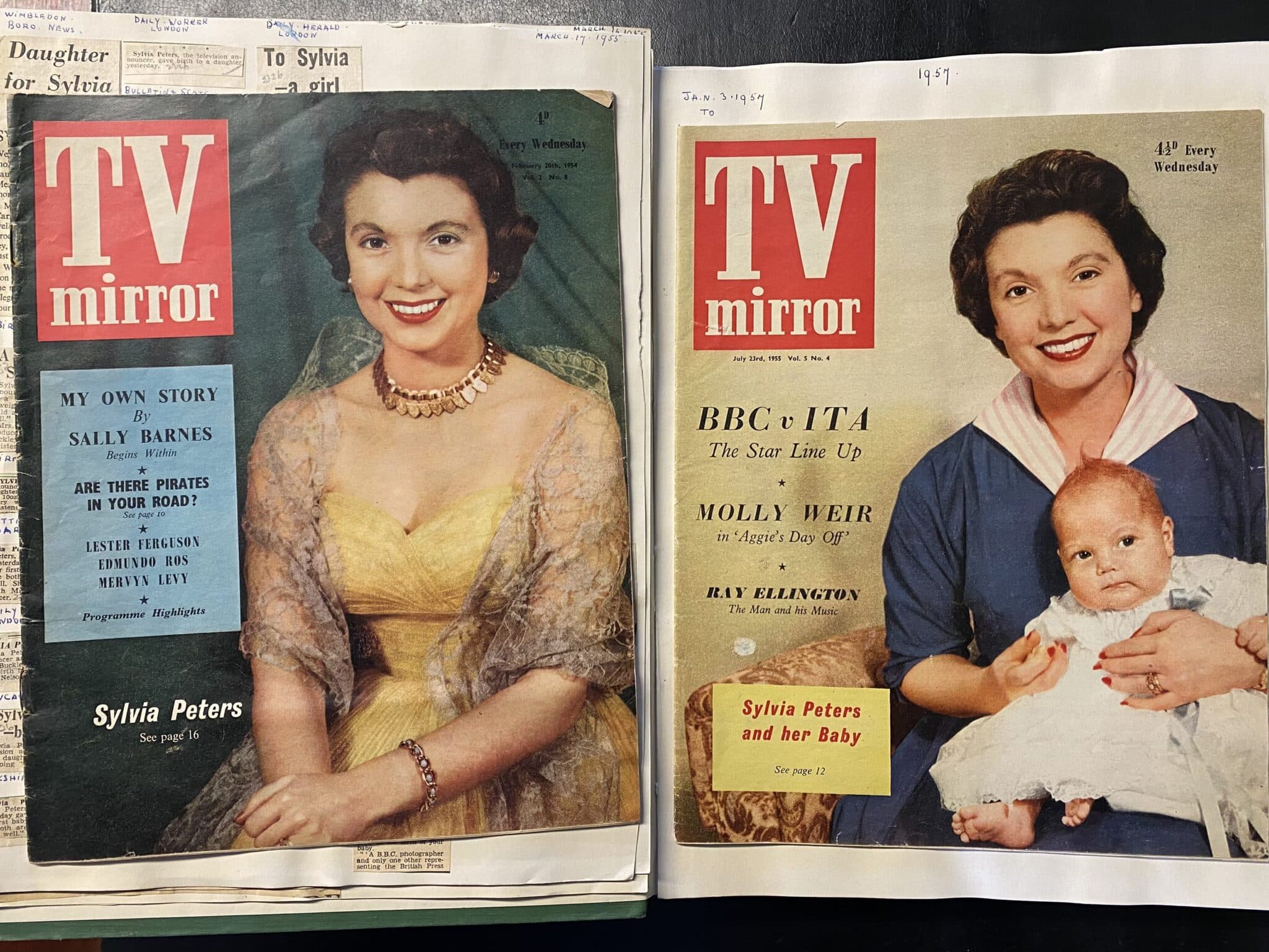
Now her archive of photos, scrapbooks, jewellery and clothing is expected to make £800-£1,200 at Hansons Auctioneers’ sale at its Etwall saleroom on December 11.
It includes Peters’ typewritten coronation day script with instructions on dealing with any “untoward incidents” or “network breakdowns”.
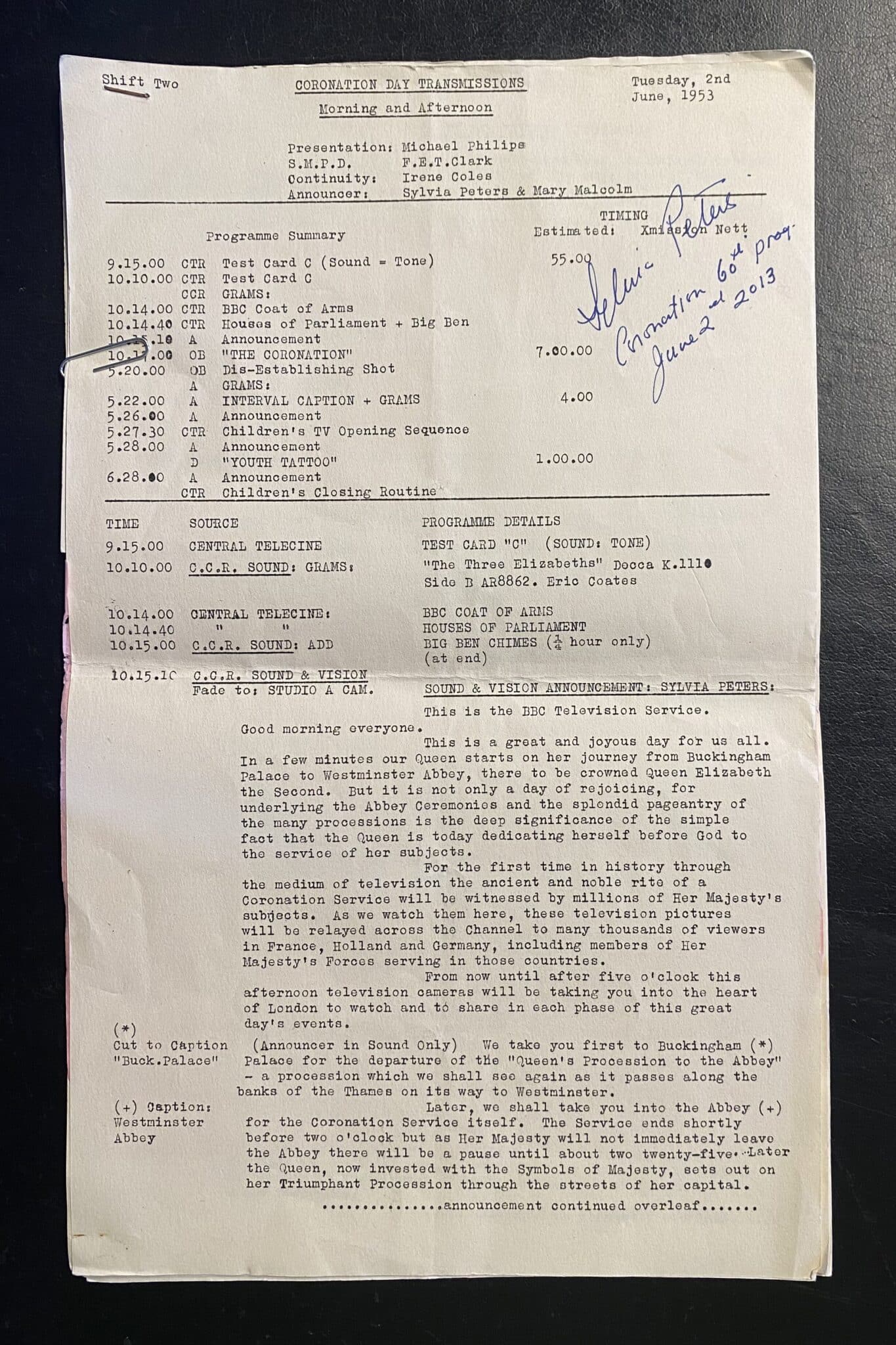
With no autocue Peters, who at 26 was the same age as the Queen, had to remember huge chunks of script.
Her daughter Carmella Gosling, a retired floor manager, said: “Mum’s memory was almost photographic which meant, despite only receiving the script the night before she was able to commit it to memory.”
The stakes were high. Televising the event, agreed to by the Queen, was against the advice of the prime minister Winston Churchill, the dean of Westminster Abbey and the archbishop of Canterbury.
Peters’ flawless broadcast, to an estimated audience of 20 million British viewers and 227 million worldwide, made her a household name overnight.
Four years after the coronation she was called on by the Palace to train the Queen for her first Yuletide message. Once again the stakes were high.
Hansons’ expert Jim Spencer, from Rare Book Auctions, said: “The first televised speech was another huge moment for the nation. At the time, criticism of the monarchy was gaining ground because it was seen as being increasingly out of touch. After the Suez crisis the monarchy was seen part of the unpopular elite.
“The Queen’s previous radio broadcast had not gone down well with the public so there was great pressure for her first televised speech to really connect with the country.”
Carmella, 70 who lives in Wimbledon, said: “Mum suggested five different options to the Queen: from memory, from notes, using an autocue, combining notes and an autocue, or reading it in its entirety. She chose notes and the autocue. Mum was, of course, a huge royalist and after the speech said the Queen had done an amazing job.”
Sitting beside an oak desk surrounded by Christmas cards and photos of nine-year-old Prince Charles and seven-year-old Princess Anne, the Queen began her seven-minute speech starting with the words: “It is inevitable that I should seem a rather remote figure to you . . . but now, at least for a few minutes, I welcome you to the peace of my home.”
Having embraced a new warm and personal tone, at tutored by Peters, the papers were full of praise with the headline in the Daily Sketch saying: “The Queen knocks those critics cold!”
Jim Spencer continued: “The speech silenced the critics marking a triumph for both the Queen and her mentor – some historians believe it even saved the monarchy.”
The daughter of a clock-making Italian father and ballet-loving English mother, Sylvia Lucia Petronzio was born in Highgate, north London in 1925.
Having started out as a musical actress she joined the BBC in 1947 after answering a newspaper advertisement for an announcer, with a salary of £500 a year.
She later said: “My mother forced me because she did not like me being on the stage.”
At the job interview she was tested on her pronunciation having to repeat sibilant phrases like Cincinnati Symphony Orchestra – as well as ability to speak French, Italian and German.
Once hired, immaculate grooming was essential and, like other female announcers, she was banned from wearing striped or checked dresses which could make the picture strobe.
She later said: “We were meant to be decorative, charming hostesses. They wanted us to look beautiful and feminine.”
In 1954 she presented BBC’s Come Dancing before retiring as an announcer in 1958, returning to present occasional programmes such as Ladies’ Day at Ascot.
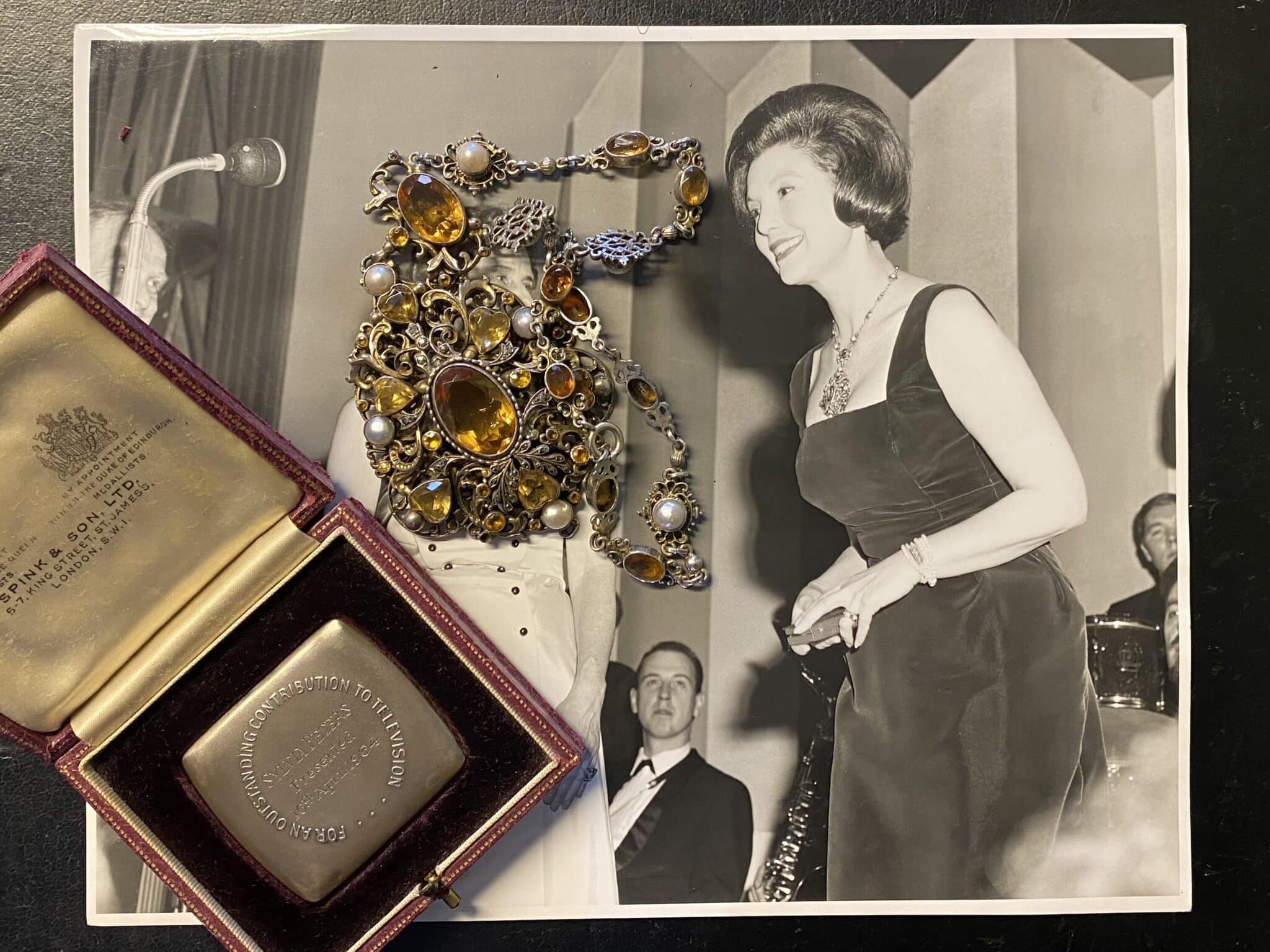
A true fashionista and friend of Jean Muir, Peters opened a children’s clothing store in Wimbledon in 1963 and in 1977 a women’s clothes shop called Encore.
In 2013, she presented a digitally remastered version of the coronation and in the same year met the Queen at the opening of the new BBC Broadcasting House.
Carmella said: “The Queen recognised her immediately and the pair seemed to have a good old chat. Even though she was then in her 80s mum was always immaculately turned out.”
Carmella, Peters’ only child with her studio manager husband Kenneth Milne-Buckley, made the difficult decision to part with her mother’s collection.
She said: “The archive deserves to be seen by as many people as possible, it’s not just a part of television history it charts one of the most important events of the 20th century.”
Jim Spencer said: “The archive was evidently treasured by Sylvia Peters and captures her in the prime of her career. Everything was stored in Sylvia’s vintage luggage case – and that’s how it came in for sale.”
Auction Details
Auction: The Derbyshire Two-Day Christmas Fine Jewels & Decorative Arts and Antiques Auction
Auction date: 11th-12th December 2025 | 9:30am
Location: Hansons’ Derbyshire Saleroom
Auction contact: [email protected]
Catalogue/bidding: www.hansonslive.co.uk | www.the-saleroom.com