








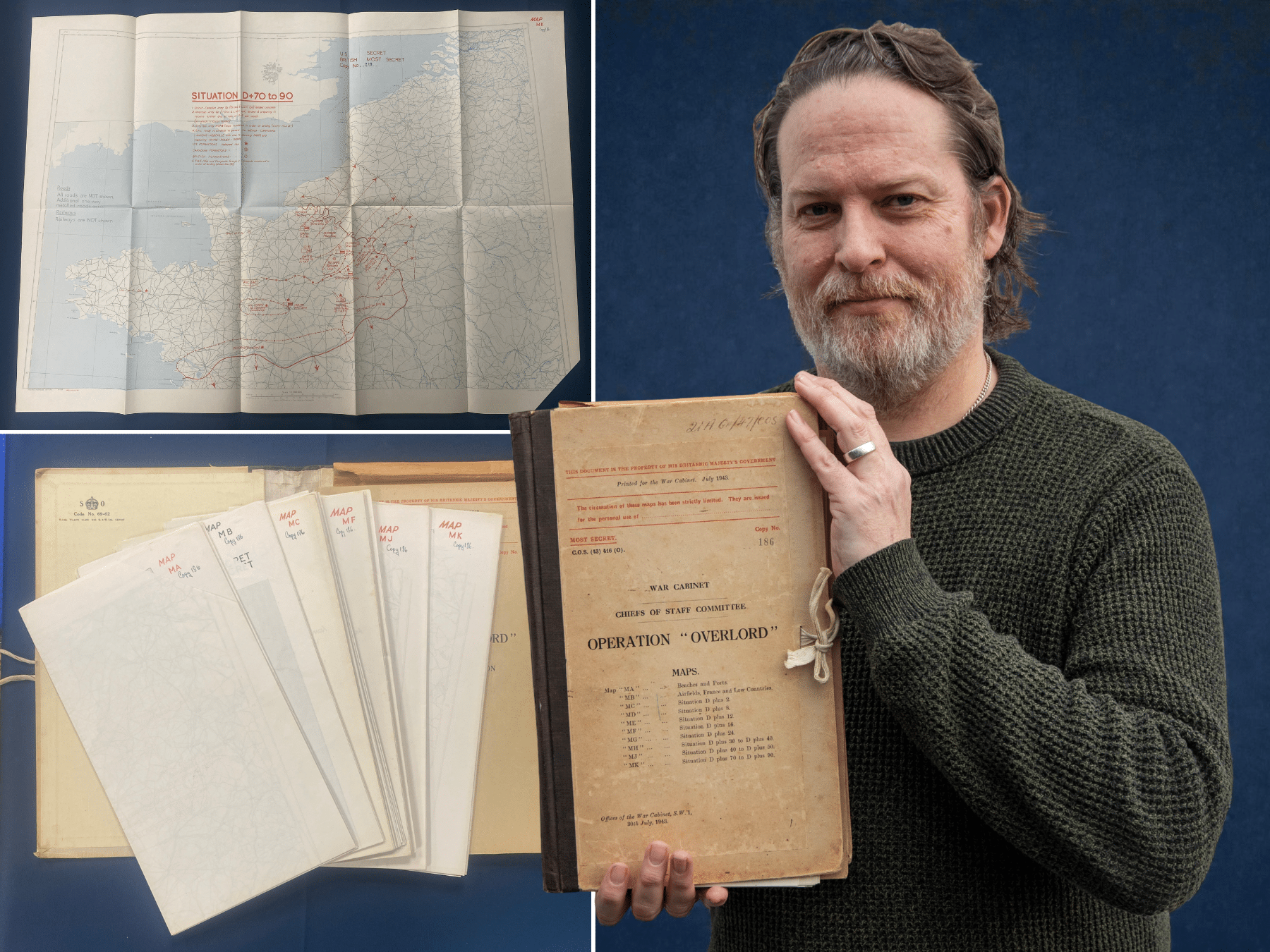
A top-secret blueprint of the D-Day landings – the most significant military campaign of the 20th century – could make £100,000 at auction next month at Hansons Auctioneers’ Derby saleroom <feb 25>.
Dated July 30, 1943, almost a year before the actual invasion, which was codenamed Operation Overlord, it was intended for the eyes of only a handful of the most senior members of the British and Allied command.
Declassified from “Most Secret” in 1958, it had been in the possession of its current owner, a relative of a senior military officer, since 1960.
A similar archive appears in the Imperial War Museum.
Hansons Auctioneers’ military expert, Matt Crowson, said: “This is almost certainly the rarest and most important item I have ever handled, with a historic significance that cannot be overstated.
“Original Operation Overlord planning documents are exceptionally rare, with some important WWII archives lacking them completely. Other surviving archives may have been broken up, with maps separated or lost. This complete archive is one of the most important museum-grade finds to appear on the open market in recent years.”
The document and maps, hand numbered Copy 186, include preparatory measures prior to D-Day; the invasion itself, and ongoing action in France.
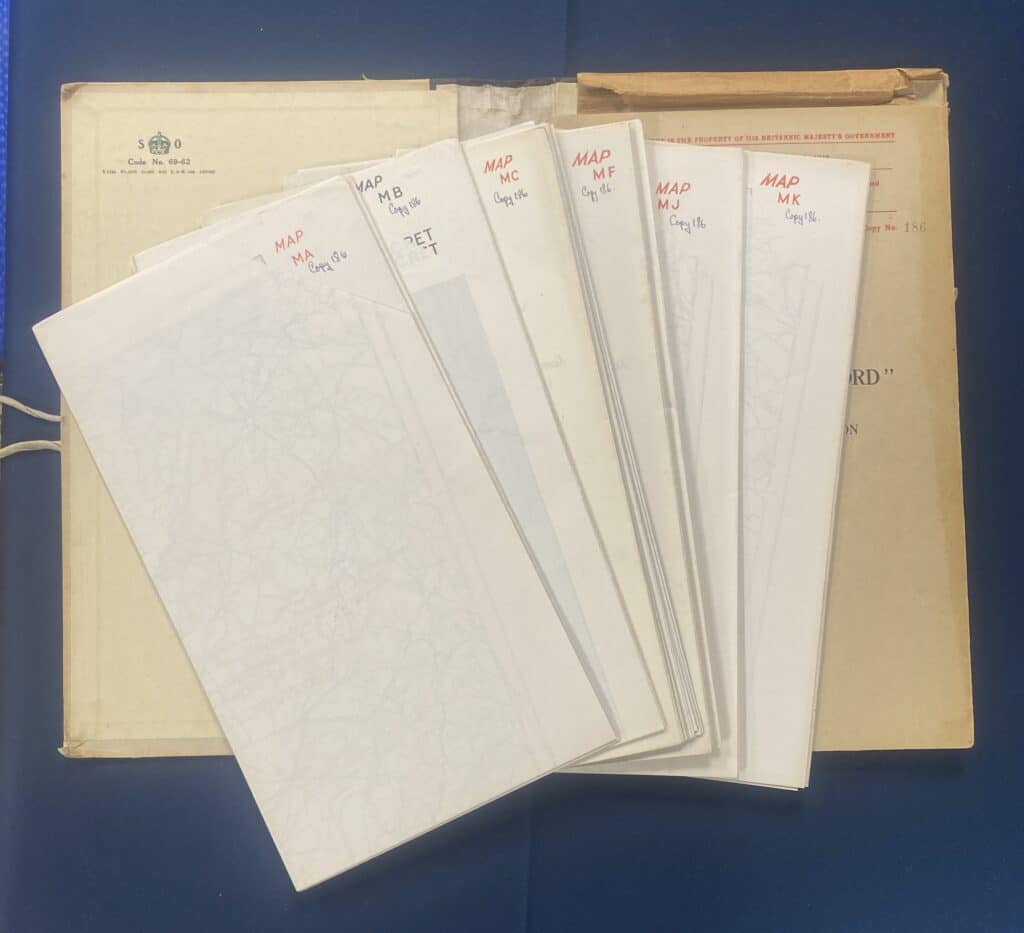
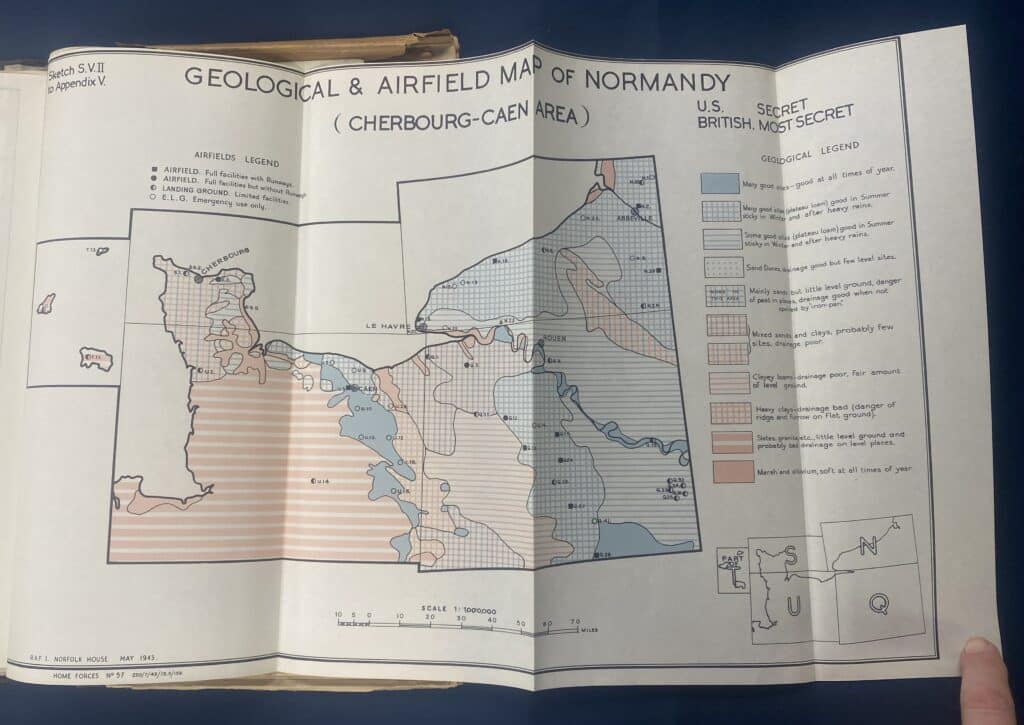
It is the work of Lieutenant General Frederick E. Morgan known as “the forgotten architect of D-Day” and highlights the divergence in US and British strategy ahead of the assault.
The plans are dated four months before Churchill, Stalin and Roosevelt formerly approved Operation Overlord at the Tehran Conference.
But by then Morgan, the Chief of Staff to the Supreme Allied Commander (Designate), known by the acronym COSSAC, had already come up with a detailed plan.
Keen to avoid earlier defeats like Gallipoli and Dieppe, the document details Morgan’s more cautious approach.
In it he writes: “The essential discrepancy in value between the enemy’s troops, highly organised, armed and battle trained, who await us in their much–vaunted impregnable defences and our troops who must of necessity launch their assault at the end of a cross-Channel voyage with all its attendant risks, must be reduced to the narrowest possible margins.”
Morgan’s blueprint proposed landing points at just three beaches along a 25 mile stretch of coast with three Allied divisions mounting an amphibious assault and two divisions in support roles.
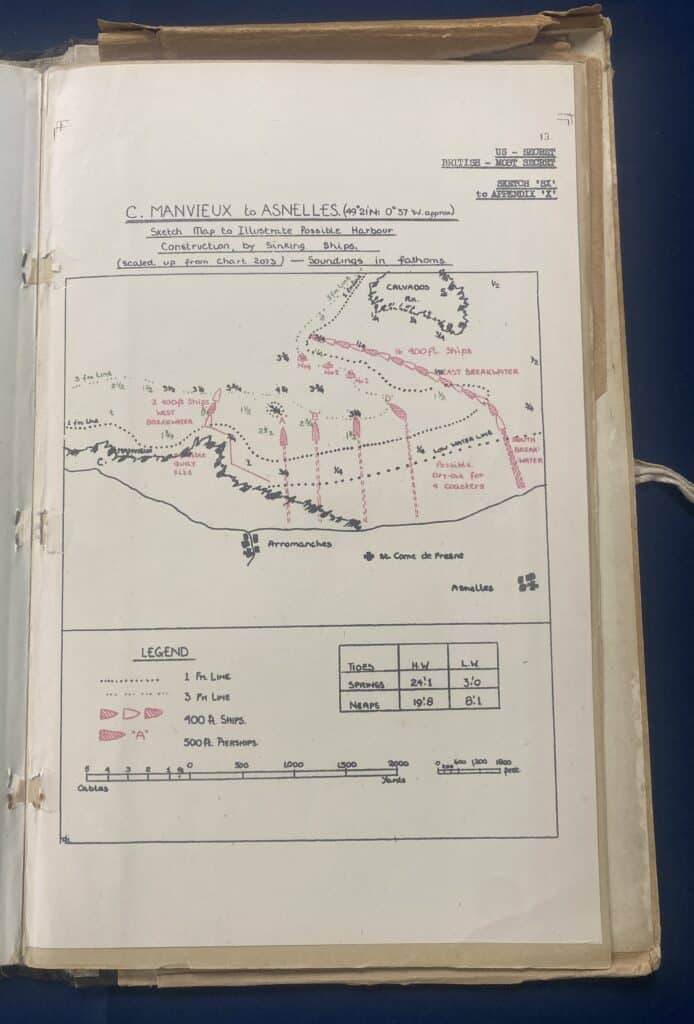
Two brigades were to be air-dropped with another 11 divisions landed within the first two weeks through two artificial harbours that would be towed across the Channel.
Crowson continued: “Morgan’s genuine fears are clearly stated in the document. He was deeply concerned about troops logistical vulnerability and the danger of being stuck on beaches. He insists as much risk as possible must be minimised before landing.”
But in December 1943 General Dwight D. Eisenhower became supreme Allied commander, and the COSSAC staff redesignated SHAEF (Supreme Headquarters Allied Expeditionary Force).
Eisenhower and Field Marshal Montgomery took command, with Morgan’s three-division plan immediately expanded into a massive five-division invasion landing on beaches now famously known as Utah, Omaha, Gold, Juno and Sword.
Montgomery also widened the landing area to include the Orne River estuary and the base of the Cotentin Peninsula.
With more beach landing craft required the operation was delayed from the original May 1 until June 6,1944 to allow for production time and account for bad weather and terrible sea conditions.
Crowson continued: “While D-Day, as we think of it today, was different from Morgan’s initial blueprint it is important to remember how many of his initial ideas were fundamental to its success.
“Normandy remained as the landing site and the necessity of artificial harbours known as Mulberries was recognised. These allowed the Allies to supply their army without having to capture a port and were flagged as essential by Morgan.
“The need for deception, as pointed out by Morgan in this document, took the form of Operation Fortitude which successfully diverted Nazis to defend Pas de Calais. This document was indeed the blueprint for the most audacious military campaign of WWII.”
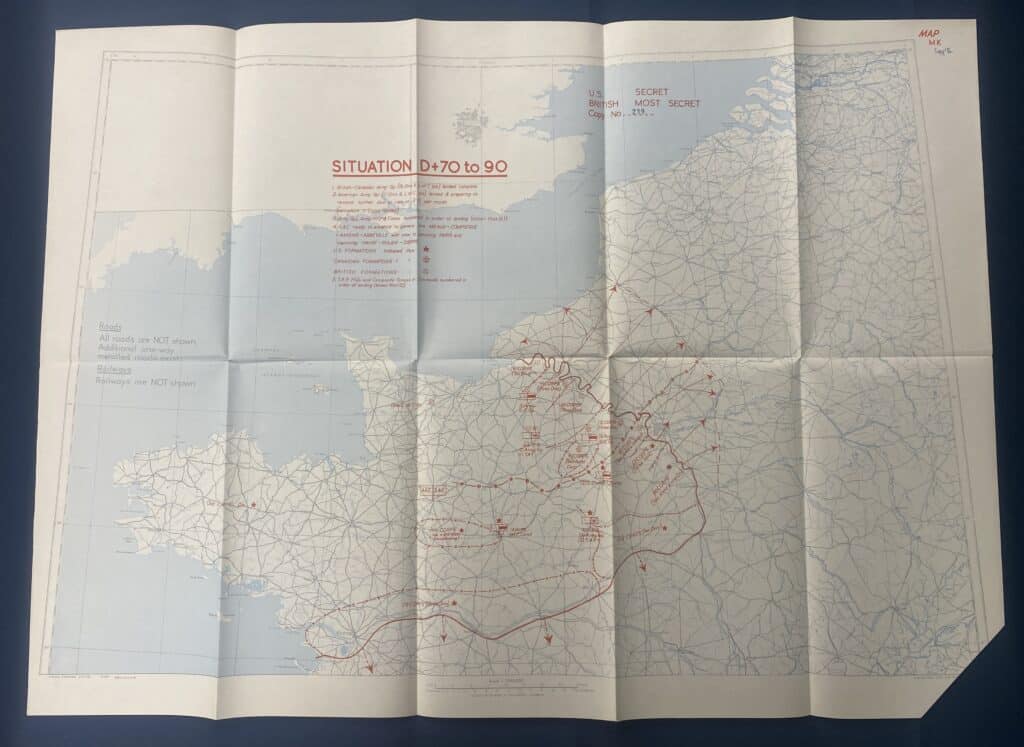
10 loose maps are marked ‘U.S. Secret’ and ‘British Most Secret’ and project how ongoing action would unfold in Caen area and the port of Cherbourg.
The Operation Overlord archive goes under the hammer at Hansons Auctioneers’ militaria sale at its Etwall saleroom on February 25.
Auction Details
Auction: The Hansons Medals, Militaria & Firearms Auction
Auction date: 25th February 2026 | 10am
Location: Hansons’ Derbyshire Saleroom
Auction contact: [email protected]
Catalogue/bidding: www.hansonslive.co.uk | www.the-saleroom.com