








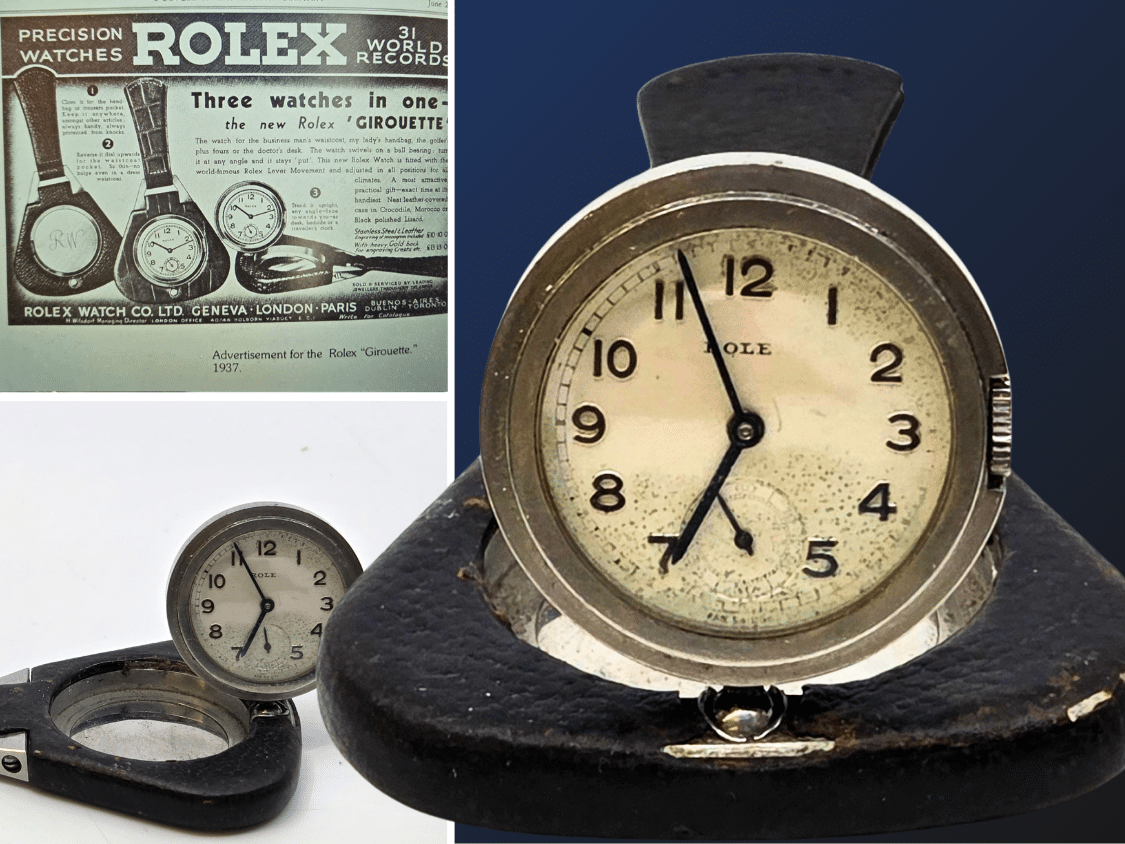
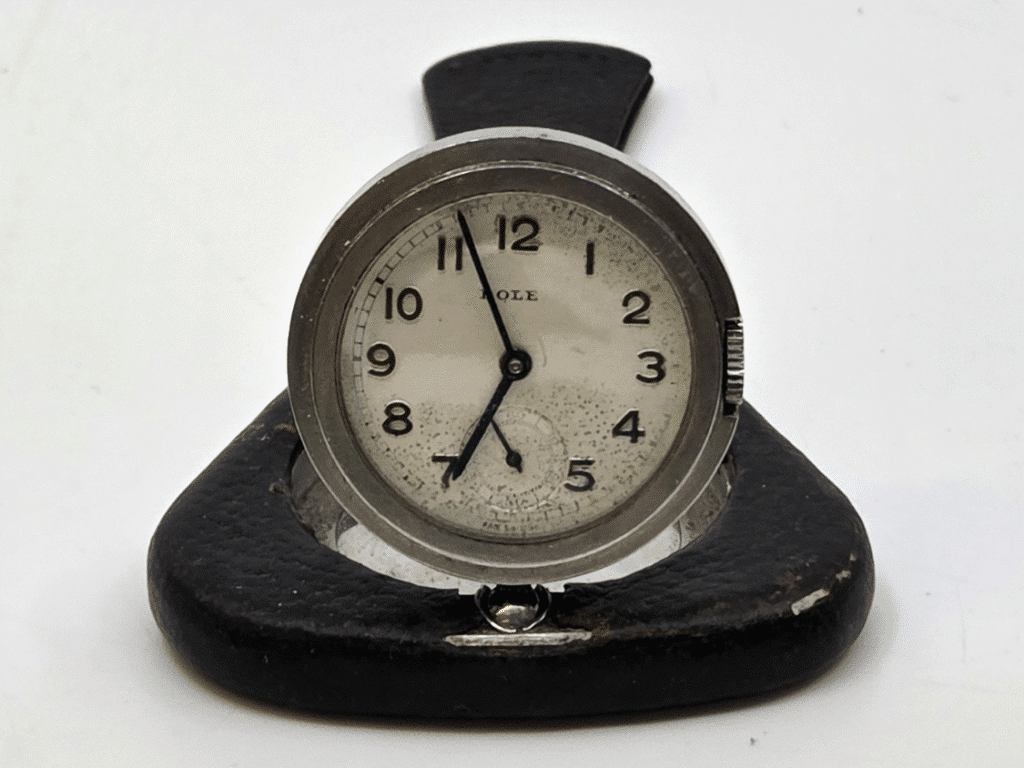
Among Rolex’s countless horological innovations, one lesser-known – though equally inventive – is a multipurpose pocket watch that transforms into a clock.
The Girouette, introduced in the 1930s, might seem at odds with the sleek, rugged wristwatches for which the Swiss maker made its name, but its inspiration was similar – accurate timekeeping on the go. In fact it was even advertised as “exact time at its handiest”.
The watch, which retailed for £10.10/– for the stainless steel and leather version, or £13. 10/– for a gold-backed model, has an estimate of £500-£700 at Hansons Auctioneers’ Richmond saleroom on July 31.
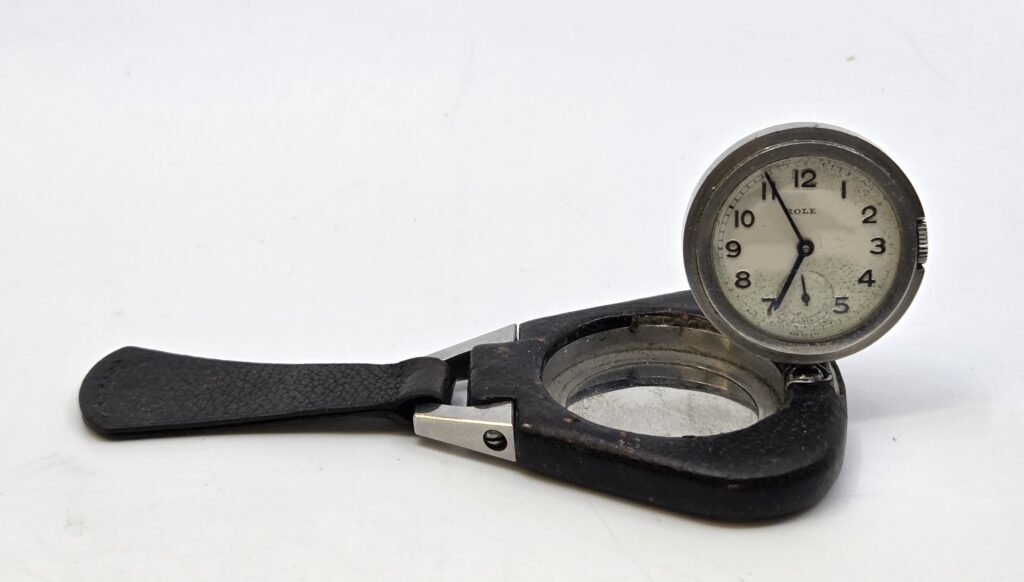
Marketed at men and women, it was designed to suit a myriad locations about the person, from a golfer’s plus fours to a lady’s handbag. The watch face could also be swivelled to become a handy desk clock.
An advertisement from 1937 for the Girouette, which translates as weathervane in French, reads: “Close it for the handbag or trousers pocket. Keep it anywhere, amongst other articles, always handy, always protected from knocks.”
Auctioneer Chris Kirkham said: “Rolex is typically associated with innovative watches made famous by the daring exploits of the sportspeople and explorers who tested them. Such as the waterproof Oyster, endorsed by Mercedes Gleitze when she swam the Channel in 1927, or Sir Malcolm Campbell, who used the same watch on his famous land speed records. But at the heart of the more unusual-looking Giroutte is the same Rolex ethos – how to solve a timekeeping problem.”
Founded in 1905 in London by Hans Wilsdorf and Alfred Davis as Wilsdorf & Davis, the makers became known as the Rolex Watch Company in 1915, before moving its headquarters to Geneva in 1919.
Unusually for the time, Rolex decided to focus on men’s wristwatches –at the time seen as women’s accessory – rather than pocket watches which were viewed as altogether more masculine. Wilsdorf rightly foreseeing a wristwatch being better suited to the more dynamic lifestyle of the 20th century.
Rolex soon earned many firsts in the history of horology. Its first was a waterproof watch known as the Oyster in 1926. In 1931, it patented the Oyster Perpetual, the first self-winding waterproof chronometer wristwatch. More was to come, with the Datejust in 1945, the GMTMaster in 1954 and the Daydate in 1956.
Auction Information
Auction: London July Modern Design, Interior, Fine Art and Jewellery Auction
Auction date: 31st July 2025 | 9.30am
Location: Hansons Derbyshire Saleroom
Auction contact: [email protected]
Catalogue/bidding: www.hansonslive.co.uk | www.the-saleroom.com