








A miniature portrait of a beautiful Irish actress who captured the heart of the Earl of Derby centuries ago has been discovered.
The painting reminds us of the power of love as the blue-eyed London stage star rose from humble beginnings to marry an aristocrat and move in royal circles.
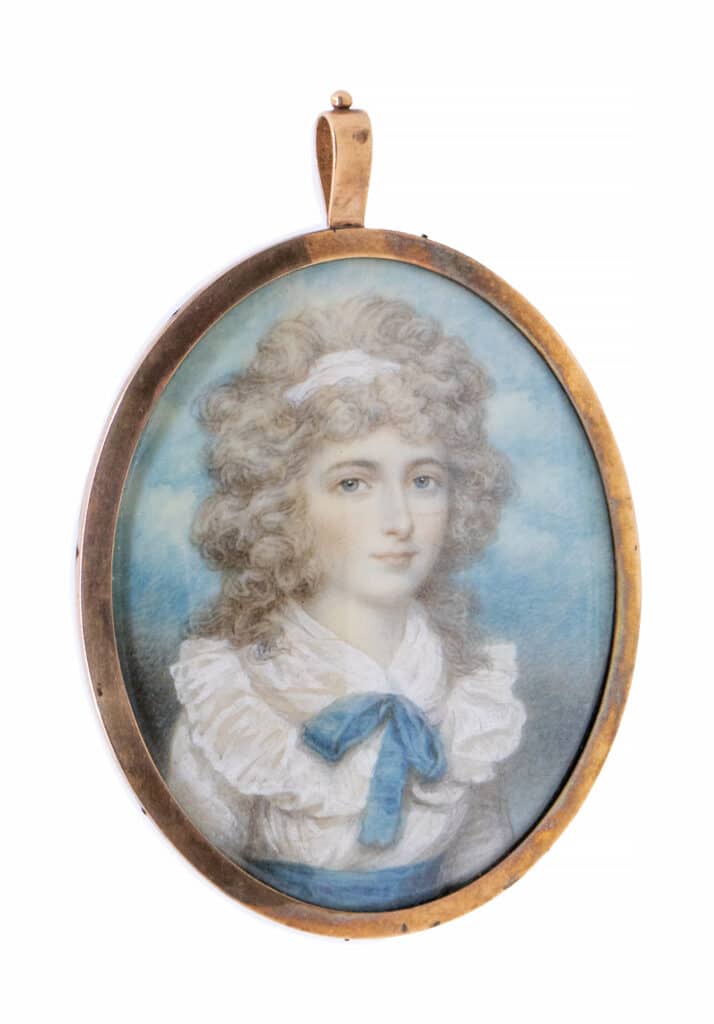
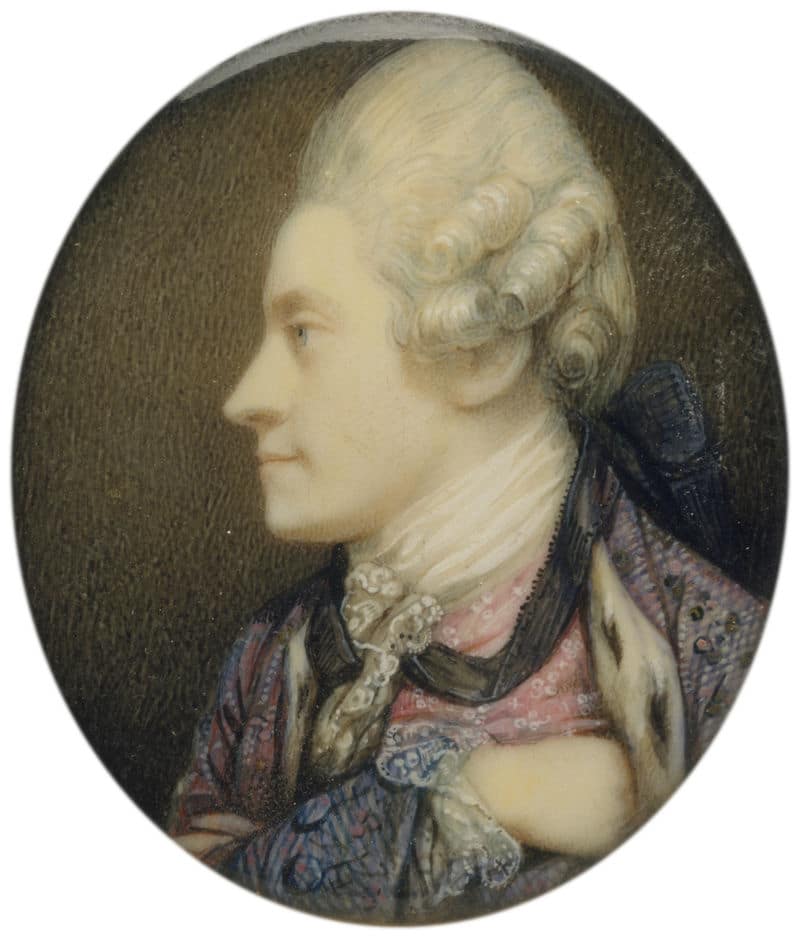
This 225-year-old miniature oval portrait depicts Elizabeth Farren, a celebrity in 18th century England. The actress entranced her audience and gained wealthy admirers thanks to her talent. She was described as being above average height with a slight figure, expressive face, blue eyes, winning smile and a sweet, cultivated voice.
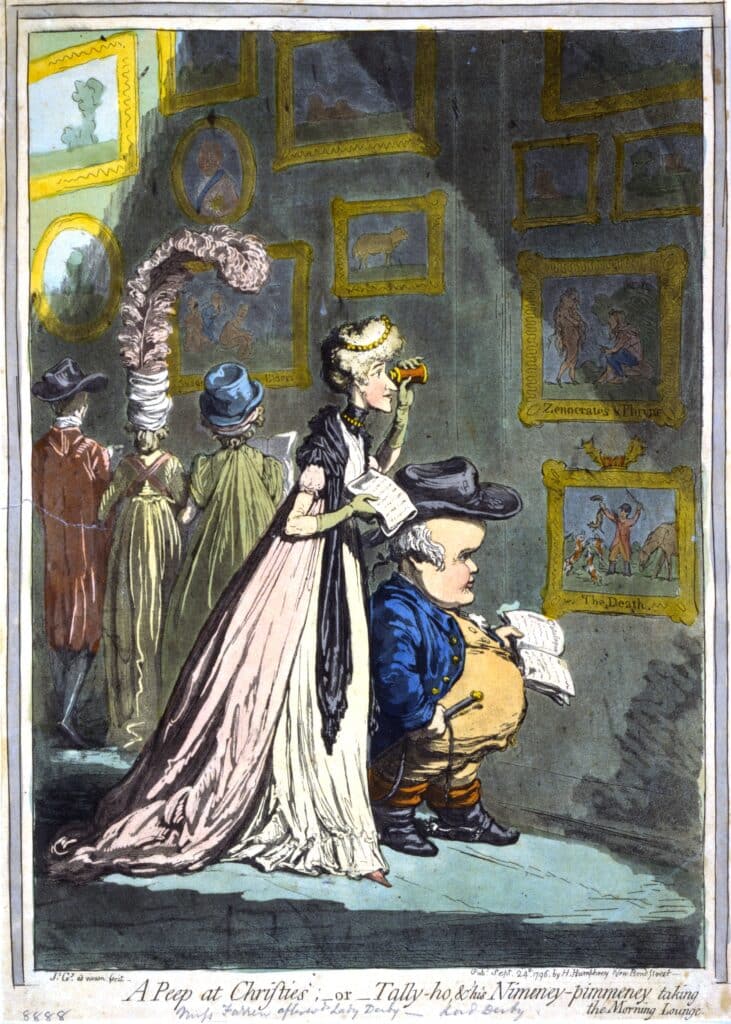
Among her fans was old Etonian politician the Earl of Derby. Though rather cruelly depicted by a cartoonist of the day as a short, obese man, the peer of the realm’s love for Elizabeth swept her into high society.
The oval miniature demonstrates this. Only the wealthy could afford such luxuries. Her likeness was captured by leading English Regency/Georgian era portrait painter Richard Cosway RA (1742-1821). He painted the future King George IV in 1780 among other members of royalty.
He depicts the Countess in a white dress with ruffled collar, blue sash and blue bow tie with fichu and white head band against a sky and cloud background. An inscription on the back reads, ‘Miss E Farren Actress / Countess of Darby / Rd Cosway RA / Principis Pinxit 1798. As she married Lord Derby in 1797 it is likely he commissioned the piece.

The painting, which has been authenticated by the National Portrait Gallery, will be offered in Hansons’ March 30 Fine Art Auction with a guide price of £4,800-£5,200.
Elizabeth was born in Cork in circa 1759. Her father, George Farren, was a surgeon whose drinking habits led to an early death. His widow returned to her home city of Liverpool and went on the stage to save her three children from poverty.
Elizabeth followed in her footsteps. She performed in Bath at an early age and by 1774 was acting with her mother and sisters. At the age of 15 she played Rosetta in Love in a Village and Lady Townly in The Provoked Husband, a role she made her own.
Such was her talent the London stage beckoned. In 1777, aged around 18, she played Miss Hardcastle in She Stoops to Conquer and was favourably received. The following year she appeared at Drury Lane and later at the Haymarket Theatre.
In 1778 she played Nancy Lovel in Colman’s Suicide. This was a ‘breeches’ part, to which her figure was unsuited, and she was subjected to some satire for shapelessness. Performances as Lady Townly, and Lady Fanciful in the Provoked Wife restored her to public favour.
She had over 100 characters in her repertoire including Berinthia in Sheridan’s Trip to Scarborough, Belinda in Murphy’s All in the Wrong, Angelica in Love for Love, Elvira in Spanish Friar and Hermione in the Winter’s Tale.
She was compared to fellow actress Frances Abington, her only real rival. Writer and politician Horace Walpole described Elizabeth as the ‘Queen of Comedy’ and ‘the most perfect actress’ he had ever seen.
However, love ended her 20-year London stage career. She retired at 38 to marry Edward Smith-Stanley, 12th Earl of Derby, in May 1797. They had three children.
At her last stage appearance she played Lady Teazle. A large audience attended her farewell performance. After speaking her final lines she burst into tears.
It appears Lord Derby, a man known for his love horse racing and cock fighting, won her heart through kindness. She had a short sentimental attachment to actor John Palmer and was admired by Whig statesman Charles Fox. However, Lord Derby reportedly treated her with more respect than was sometimes given to actresses.
She impressed all the right people too. William Hazlitt (1778-1830), an English essayist and drama critic, wrote, ‘Miss Farren, with her fine-lady airs and graces, with that elegant turn of her head and motion of her fan and tripping of her tongue’.
Richard Cumberland, an English dramatist described her as ‘exquisite’ and George Colman the younger said of ‘the lovely and accomplished Miss Farren’ that ‘No person ever more successfully performed the elegant levies of Lady Townly’.
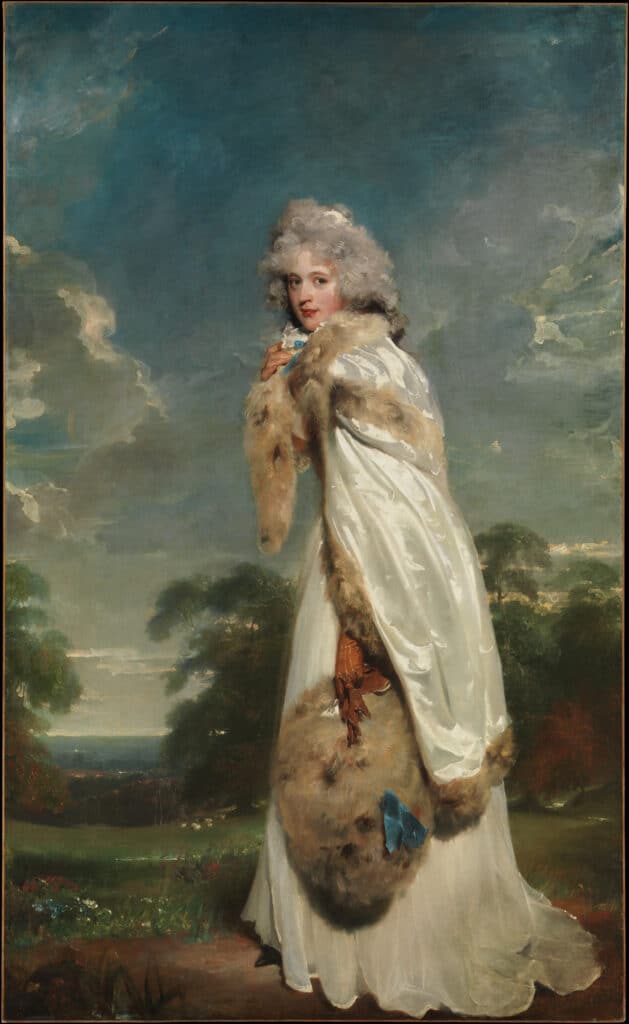
A life-size portrait of Elizabeth by Sir Thomas Lawrence, now in the Metropolitan Museum of Art, was shown at the Royal Academy annual exhibition in 1790. It would be fitting if this new discovery found its way to a museum.
Elizabeth died on April 23, 1829 at Knowsley Park, a stately home near Liverpool. This may leave you pondering her title and its connection, if any, to Derby.
The Earl of Derby title was first adopted by Robert de Ferrers, 1st Earl of Derby, in 1139. Ferrières in Normandy was the hometown of the de Ferrers family. Lord of Longueville, Normandy, a Domesday Commissioner, built Tutbury Castle and Duffield Castle and had large holdings in Derbyshire as well as 17 other counties.
The portrait will be offered in Hansons’ March 30 Fine Art Auction.
Fine Art Auction entries invited
Hansons holds monthly Fine Arts sales and entries are invited. To book a free valuation email Victoria Sheppard: [email protected]