







For most of the world Shrove Tuesday signifies not much more than pancakes, ahead of 40 days of Lenten sacrifice.
But for those of us born and bred Derbyshire it means something even more sacred.
I am referring to one of the county’s oldest – and some would say oddest – sporting traditions.
That being the annual Ashbourne Royal Shrovetide football game which is nothing sort of a phenomenon dating all the way back to the 1660s.
As many of you may know, it is one of the longest-running “football” games in the world and sees those born north of the River Henmore (Up’ards) compete against those born south of it – the Down’ards.
Fought over two days – Shrove Tuesday and Ash Wednesday – hundreds of players try to reach their opposite goal over a “pitch” made up of three miles of rivers, fields and even Ashbourne town centre.
The only place the ball isn’t allowed to go is cemeteries and the graveyard.
Play starts when a town dignitary “turns up” the ball by throwing it into the air before landing in the “hug” – the assembled crowd. Goals are “goaled” rather than scored.
Rare hand-painted footballs from the contest can be as fiercely fought over in the saleroom as on the streets of Ashbourne.
Many can sell for thousands of pounds – especially those that had been “turned up” by someone famous (the Prince of Wales did the honours in 1928 and King Charles – then also the Prince of Wales – in 2003).
Tomorrow <feb 17> we privileged at Hansons Auctioneers to have one of these iconic footballs going under the hammer – on Shrove Tuesday, the very day of the long-awaited contest.
In fact, as lot 311, the football should appear on the rostrum at roughly the same time the rival teams are assembling some 20 miles to the north of the Etwall saleroom.
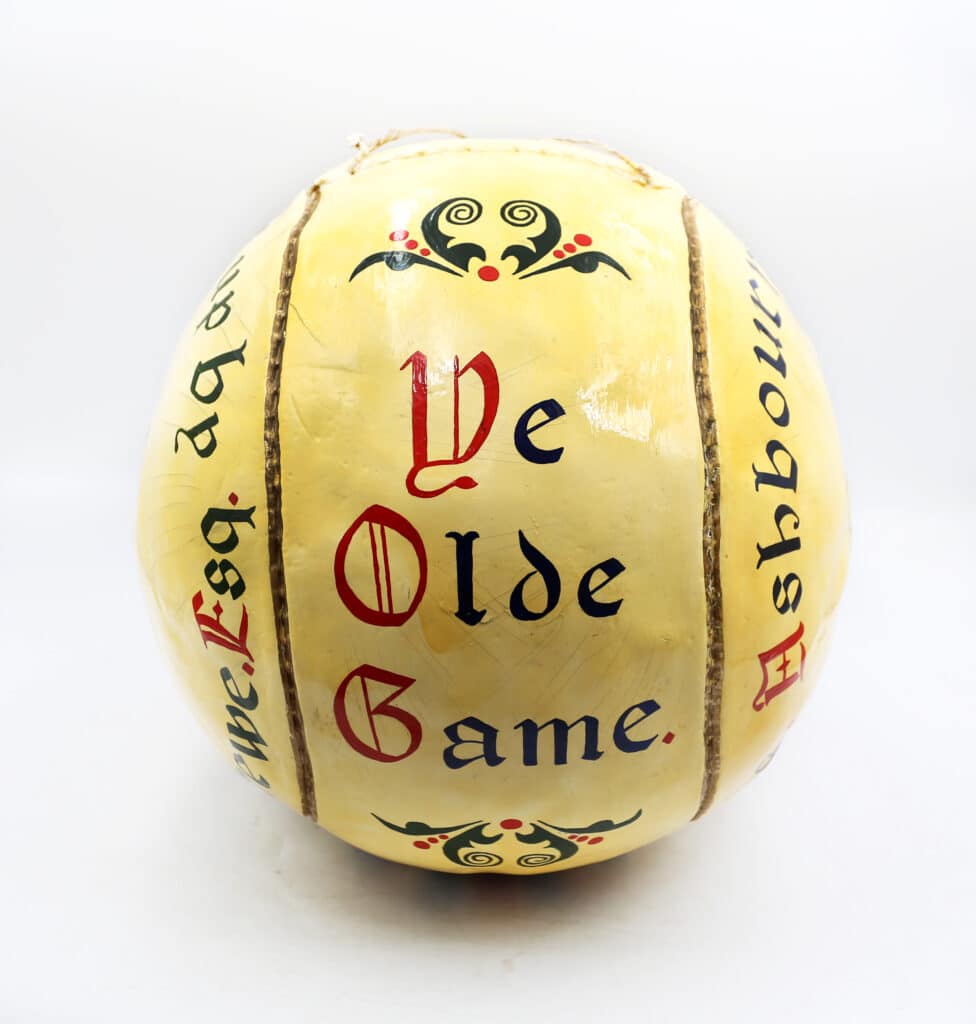
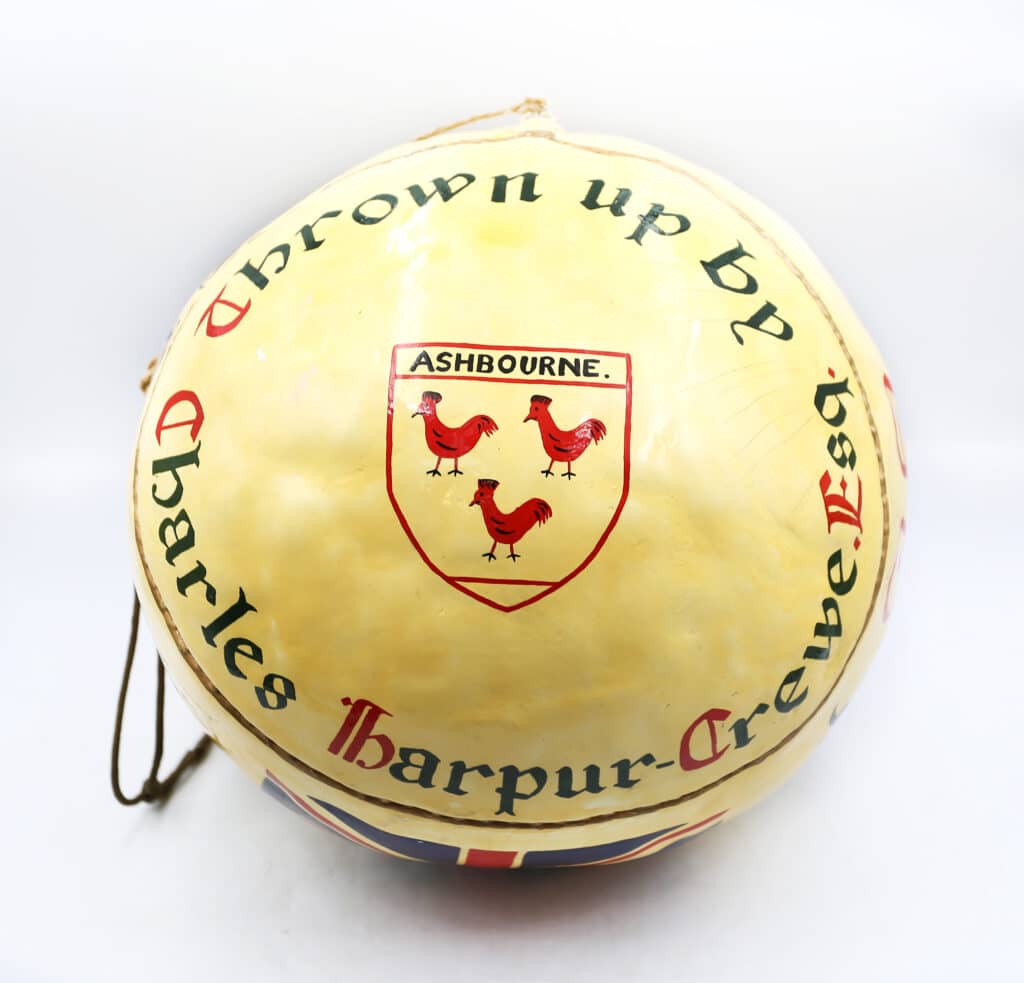
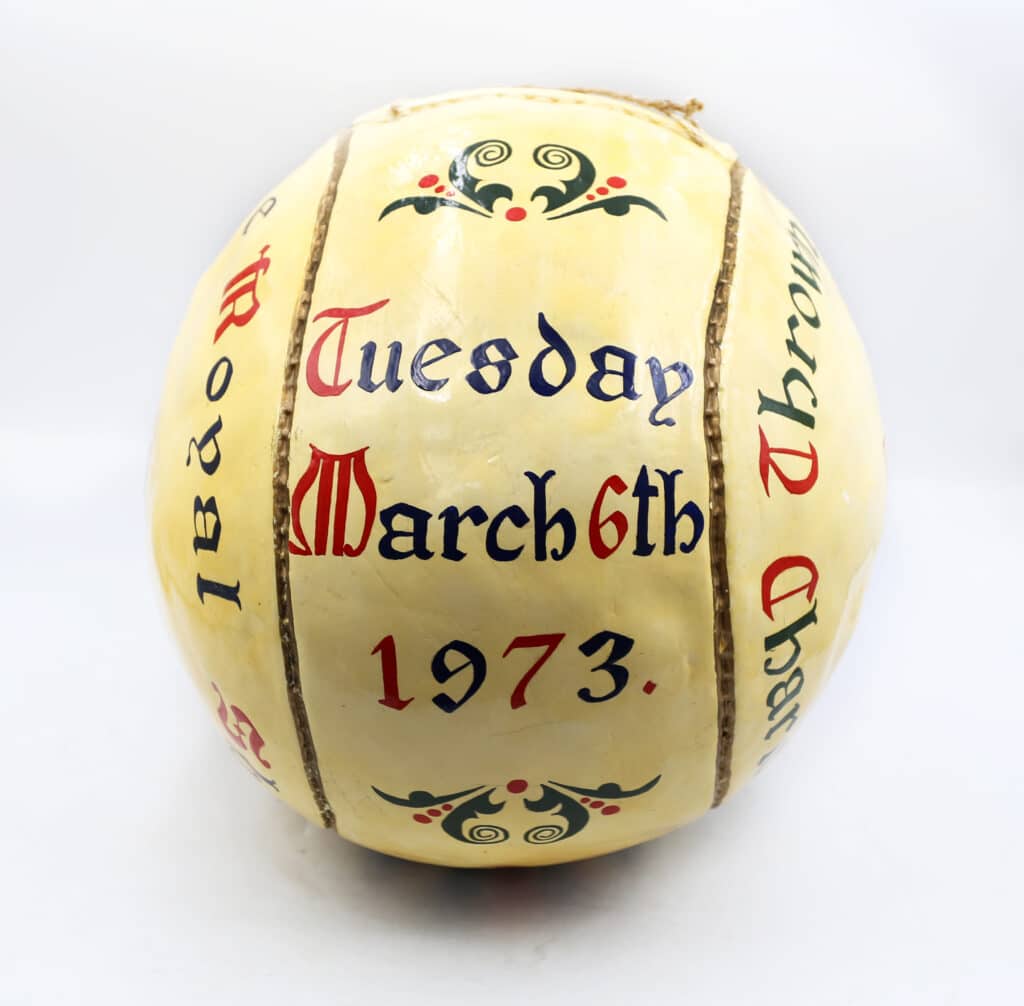
Brightly-coloured and hand painted, I came across the football during a routine house valuation in north London.
Its owner, who had just moved in, unearthed it while clearing debris from the attic left by the previous owner.
Not sure of its significance, it became her footie-mad son’s backyard kick-about ball.
That was until I turned up, told them what it was, and gave it an auction price tag around the £4,000 mark.
Just how this piece of Derbyshire history made its way 150 miles from where it originated to London we may never know.
But it did offer up some secrets of its history, including the date of the match it appeared in and the dignitary who had turned it up.
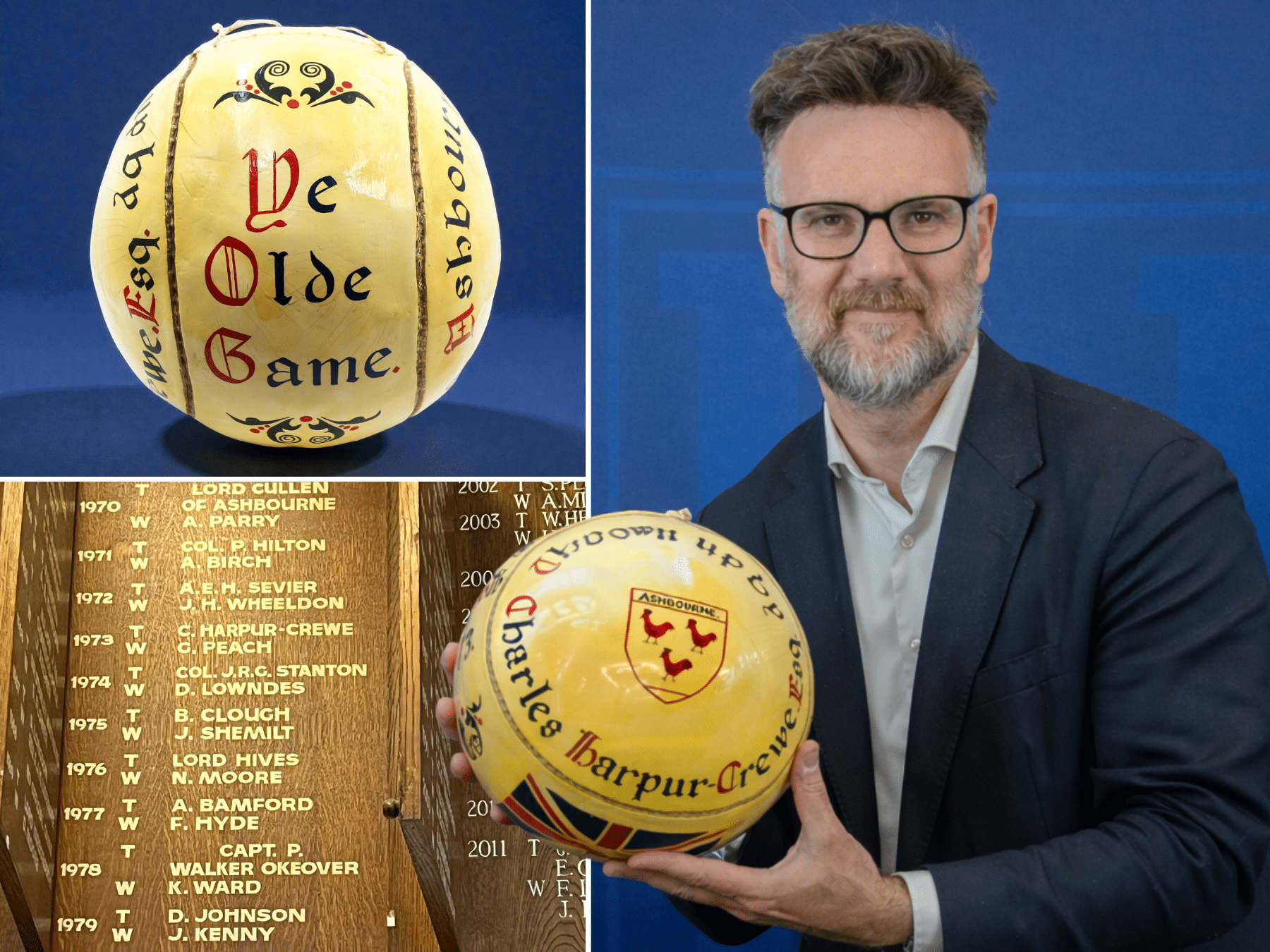
The yellow and gilt-painted ball is dated 1973, with the words “Ashbourne Royal Shrovetide” on one side and “Thrown by Charles Harpur-Crewe Esq” on the other.
These highly-prized balls are hand-painted by local artists, with the design usually related to whoever was given the honour of turning up the ball.
Once a ball is goaled it’s repainted with the name (and design) of the scorer and is theirs to keep.
But if a ball is not goaled it is repainted in the design of the dignitary who turned it up and given back to them.
The 1973 game was not goaled hence the lack of painted inscription.
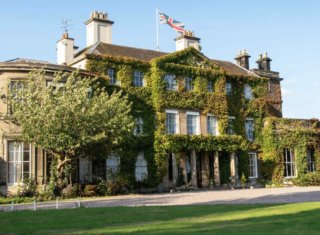
Charles Harpur-Crewe (1917–1981), who served as High Sheriff of Derbyshire in 1961, was part of the dynasty who owned Calke Abbey – a grade I listed country house near Ticknall in the Peak District, now owned by the National Trust.
Over generations his ancestors amassed one of the largest collections of natural history to appear in an English country house.
Charles, who didn’t marry, made Calke his home for 32 before dying suddenly in March 1981 while setting mole traps in the park.
This year’s Ashbourne Royal Shrovetide kicks off tomorrow at 2pm, with the match repeated the following day at the same time.
The football will be one of the star lots at Etwall saleroom on the same day, about 1pm, with an estimate of £3,000-£4,000.
How wonderful that this magnificent part of Derbyshire’s history has made it back to the county and how auspicious to be selling on the day of this year’s event.
Talk about football coming home.

Auction Details
Auction: The Derbyshire February Silver, Jewellery & Watches Auction to include Bargain Hunt Filming and Sporting Memorabilia
Auction date: 17th February 2026 | 10am
Location: Hansons’ Derbyshire Saleroom
Auction contact: [email protected]
Catalogue/bidding: www.hansonslive.co.uk | www.the-saleroom.com