








Depending on your age, you are either a devotee of Halloween, or Bonfire Night.
For me it is most definitely the latter, although I can hardly remember the last time I saw kids pushing a homemade dummy around the streets in a wheelbarrow asking passersby for “a penny for the guy”.
Growing up on a farm in Mackworth, there was the space to make the most of November 5, with a huge fire, homemade parkin and treacle toffee.
I well remember being told off for using a pair of my mum’s tights, stuffed with newspaper,to create the bottom half of a scarecrow-like Guy Fawkes.
The money collected went into a pot to buy fireworks, sparklers and sweets from the corner shop.
I also remember guarding the bonfire to stop rivals setting fire to it, or steal the bigger bits of wood for their own creations.
Today, due to a number of reasons, the old traditions are dying out.
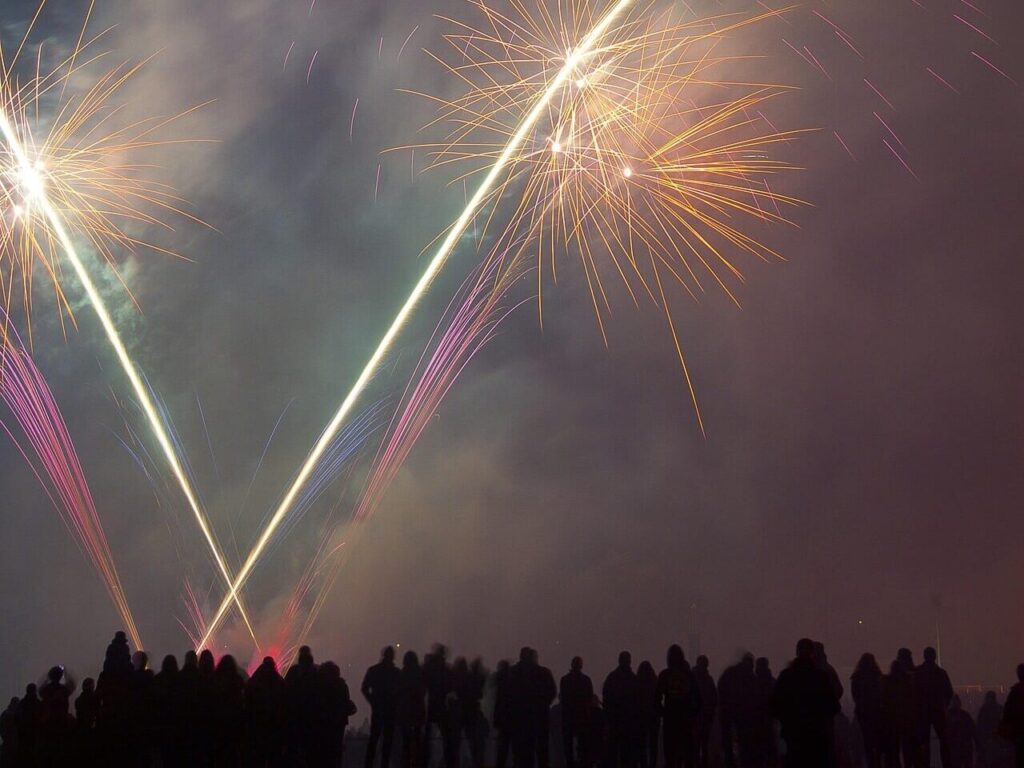
Bonfires themselves, a fixture in most gardens 40 years ago, have been replaced by public firework displays.
Tomorrow will see families head to Derbyshire County Cricket Club’s annual do – which is set to be the biggest for miles around.
But if you were under the impression Catherine wheels, rockets and sparklers were a new phenomenon, think again.
A 400-year-old book, which recently came to light at our rare books division – Rare Book Auctions in Lichfield, shows just how ancient our love of fireworks is.
It shines a light on the first British pyrotechnics and is, we believe, the earliest written reference to a firework in the English language.
Of course, the very first fireworks were invented in ninth-century China, when alchemists accidentally discovered gunpowder (a mixture of potassium nitrate, sulphur and charcoal).
Before long they were using bamboo tubes to shoot all manner of sparking illuminations into the air, mostly in combat to ward off evil spirits.
But it was the pomp-mad Tudors who first went crackers for fireworks in the UK, with Elizabeth I even appointing an official Fire Master of England.
After Guy Fawkes’ failed attempt to blow up parliament in 1605, an annual pyrotechnic display became the norm.
At first this was more about burning effigies and blazing bonfires – but fireworks soon became part of the festivities.
The book consigned to us for sale, dates to 1634, almost 30 years after the failed attempt to kill James I and lay waste to parliament.
Titled The Mysteryes of Nature and Art, it was written by John Bate and is essentially a 17th-century guide to making your own fireworks.
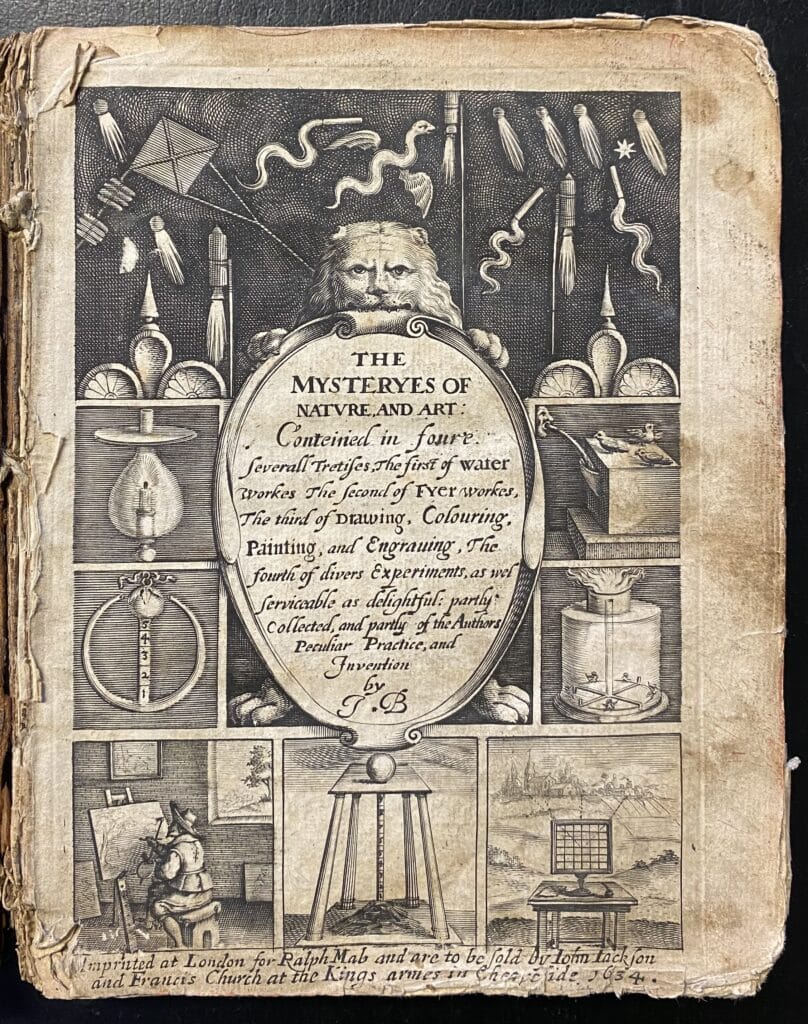
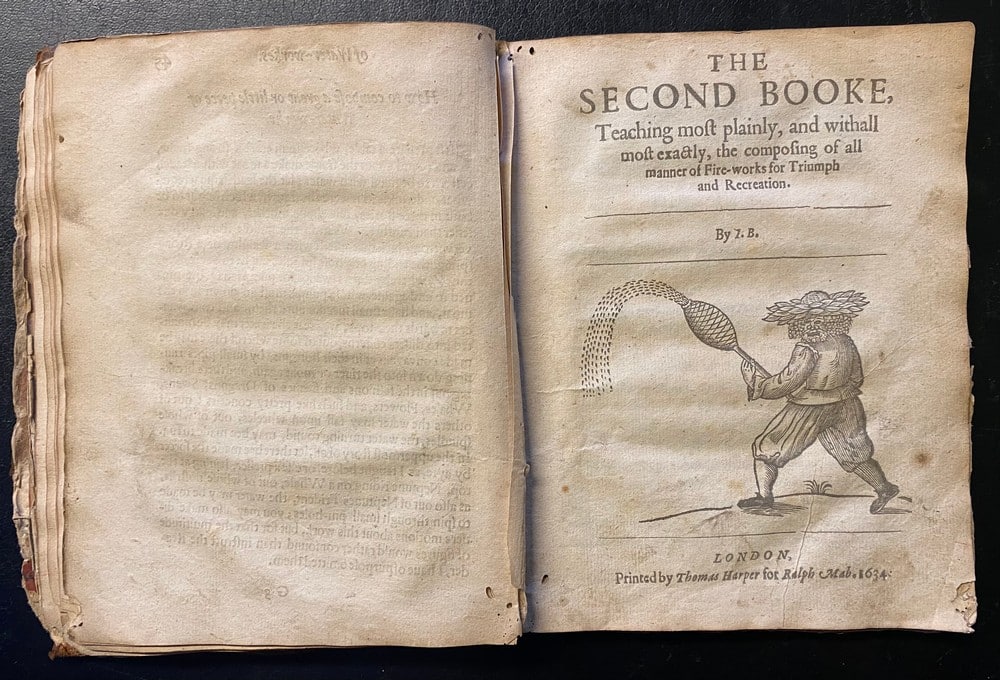
One of the chapters, in Old English, reads: “Teaching most plainly and withall most exactly the composing of all manner of Fire-works for Triumph and Recreation.”
It includes instructions on creating rockets, crackers, and the more unusual “flying dragon” – a firework in the shape of a spark-spouting wooden beast designed to fly between two houses on a rope.
It also introduces “fire‑drakes”, kites fitted with small fire charges or crackers on their tails, so they appear to trail fire across the sky.
And for the modern audience it shows a remarkable sense of health and safety.
Readers advised to keep a safe distance between the device and spectators, mounting fireworks on poles, and using slow-burning “match cords” to allow the operator to retreat before the main charge ignites.
In the event of an accident, readers are advised to keeping a bucket of sand nearby –much in line with today’s safety code.
Aside from the fireworks, the book includes a chapter of home cures and remedies of a quasi-medical nature.
“For the Byting of a mad Dogge” the reader is told to cut open two live pigeons and lay them – still warm – the hands or soles of feet.
Crushed snails steeped overnight in milk and flowers of “white Lillies” could cure pimples while powdered ox and deer bones were a remedy for fractures or joint problems.
Published just before the rise of the Royal Society (founded 1660), Bate’s book was influential in spreading scientific knowledge in England.
It may even have inspired the young Isaac Newton, who was, say historians, particularly taken by the fire-drake.
The book has everything I love in an antiquarian volume. Crude woodcut illustrations, dangerous experiments and bizarre medical advice.
It has it all and in addition to which it’s a first edition, and very rare.
It deserves to spark interest, light up the saleroom and go off with a bang.

Auction Details
Auction: The Library Auction
Auction date: 29th October – 12th November2025
Location: Rare Book Auctions – Lichfield, Staffordshire
Auction contact: [email protected]
Catalogue/bidding: www.hansonslive.co.uk | www.the-saleroom.com