








A secret hoard of taxidermy birds and animals found in a Worcestershire loft, part of an extraordinary Victorian/Edwardian collection, has excelled at auction.
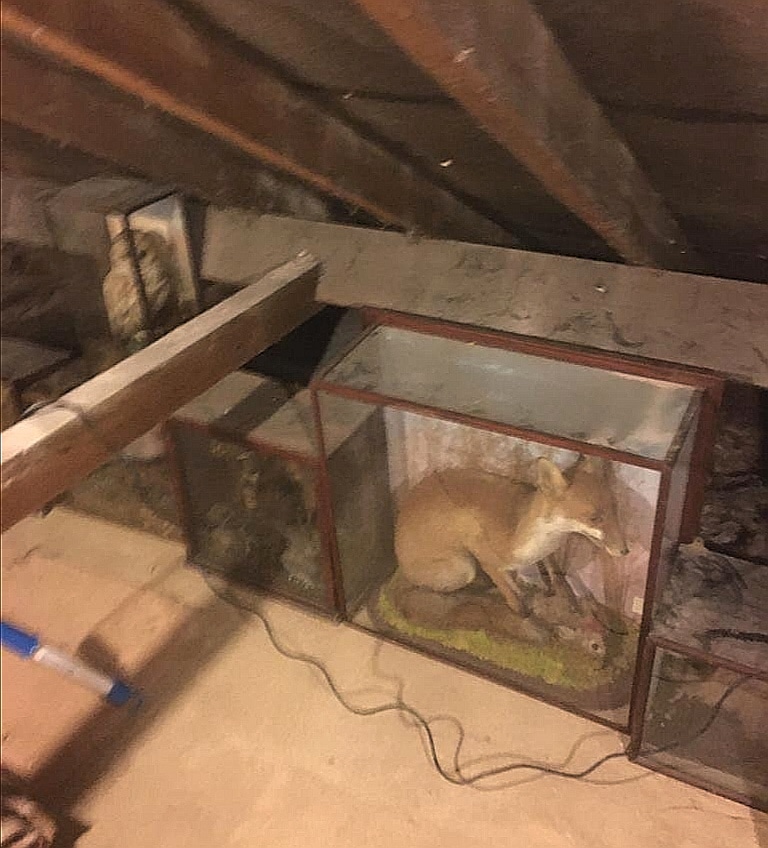
The late Kevin Gittoes amassed taxidermy over decades but his wife, Julie, didn’t realise the extent of his collection until after he passed away in August 2021. She discovered 12 cased animals hidden in the loft and the garage housed many more examples.
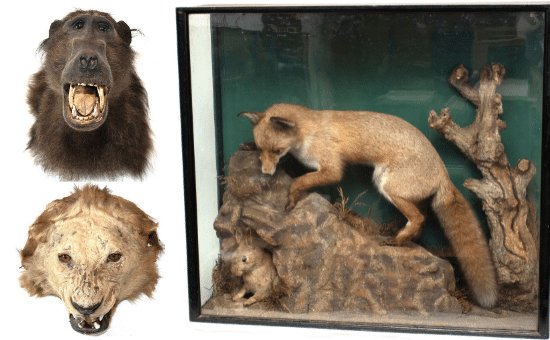
The menagerie of items included a circa 1920s lion’s head with real teeth, Conger eel, otter, white rabbit, badger, fox, hartebeest (African antelope), plains zebra and albino blackbird. Some 69 lots went under the hammer at Hansons Auctioneers on February 28. Every item sold achieving a total sales figure in excess of £11,000.

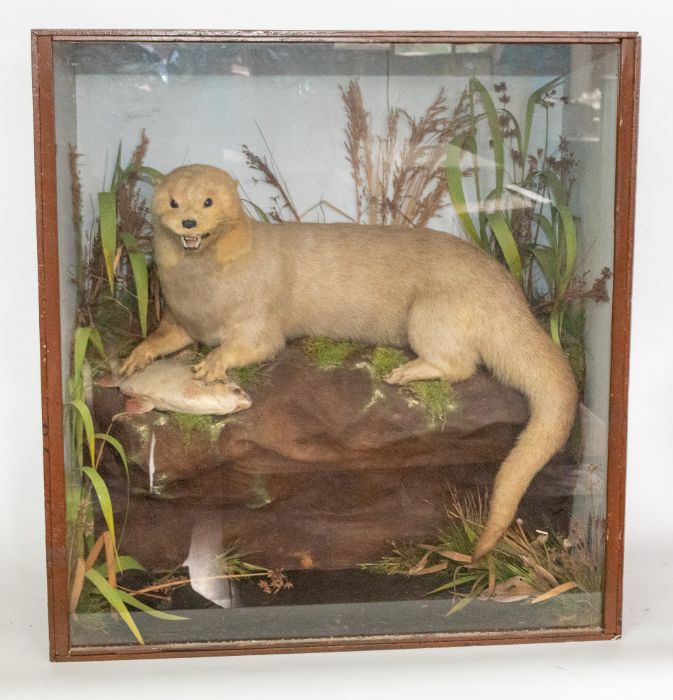
The top-selling item was lot 36, an Edwardian cased full mount fox which reached £850. Also sought after was lot 14, an Edwardian cased full mount Otter, by T E Gunn, 89 St Giles Street, Norwich, £520; lot 64, a baboon (Papio ursinus) shoulder mount, 20th century, £640, and lot 66, an African lion (Panthera leo), head mount on shield, early 20th century, £541.
Charles Hanson, owner of Hansons Auctioneers, said: “I am delighted Hansons achieved a strong result for this collection, particularly as I know Julie plans to make a donation to charity Sarcoma UK to honour Kevin. He lost his life to sarcoma, a form of cancer, aged only 69.”
Julie, 62, from Blakedown near Kidderminster, explained how she uncovered her late husband’s collection: “I was never allowed into the loft but after I lost Kevin I needed some work done in the attic. The workman said to me, ‘Did you know there are a lot of boxes up there?’ I found 12 pieces of taxidermy I had no idea about. I’m amazed Kevin managed to squirrel them away without me knowing.”
The finds surprised Julie but there was more to come: “The garage was Kevin’s domain. I didn’t go in there much. I knew he had some taxidermy in there but I never realised the extent of it. They were stacked one behind another on deep shelves. I think he felt a bit guilty about buying so many pieces so didn’t tell me.”
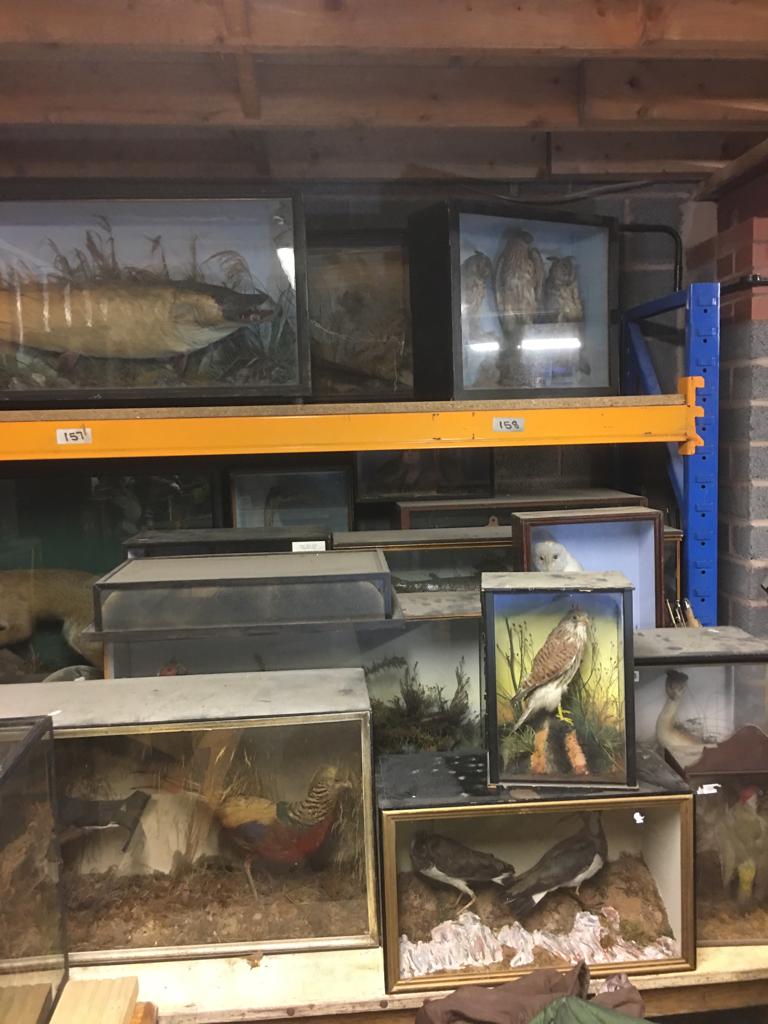
Kevin collected taxidermy for more than 30 years and accumulated 150 items. However, the day job gave no clue to his historical interest. He worked as an engineering manager for the Mirror Group. However, in retirement, he got a part-time job at an auction house – something he loved, according to Julie, and the perfect place to source taxidermy.
Julie said: “When I met Kevin 32 years ago, he had a couple of pieces. Though it was never my thing I never stopped him displaying them in the house. I just limited it a bit. I never begrudged him doing it. Our 1926 bungalow has a large hall so they were mainly displayed there. We had some in the lounge, too, including a badger which I’m keeping. He’s part of the family now.
“Kevin was very proud of his collection. That’s one of the reasons why I decided to sell it at auction. I wanted to pay tribute to Kevin and share something that was really important to him.
“I know some people think taxidermy is a bit strange but Kevin was fascinated by it. He loved country pursuits. When our daughter, Esther, was small and had sleepovers, some of her friends were terrified when they walked into the hall. Esther did a school project on taxidermy when she was 10. The teacher must have thought we were a bid odd.
“I used to feel a little bit embarrassed when people went into the hall but most people were fascinated by the collection, even the medics who came to look after Kevin when he was ill. It makes me smile now to think of Kevin smuggling those pieces into the loft. I found out his son, James, helped him lift them in.”

Mr Hanson said: “Kevin’s collection was quite extraordinary with examples dating back to the 1860s. Some people may find it a little bizarre but you have to put taxidermy into its historical context. In Edwardian and Victorian times people had a deep fascination with natural history, just as we do today. However, they couldn’t switch on the TV to watch nature programmes or tune into the latest series from Sir David Attenborough.
“Consequently, taxidermy became popular in the 19th century, particularly among the middle and upper classes who used it for educational purposes. It was regarded as an art form. Some of the species had died naturally while others would have been trapped or shot. But you must remember that death was part of life in Victorian times. In 1850 people rarely lived much beyond 40.
“We’re deeply aware of the sensitivity around taxidermy and took extreme care to catalogue this collection carefully respecting the complex regulations surrounding the sale of animal-related items.”
The Kevin Gittoes Taxidermy Collection was sold on February 28 in Hansons Auctioneers’ Fine Art and Antiques Auction at Bishton Hall, Wolseley Bridge, Staffs. To find out more or to arrange a free valuation at Bishton Hall, email [email protected].