






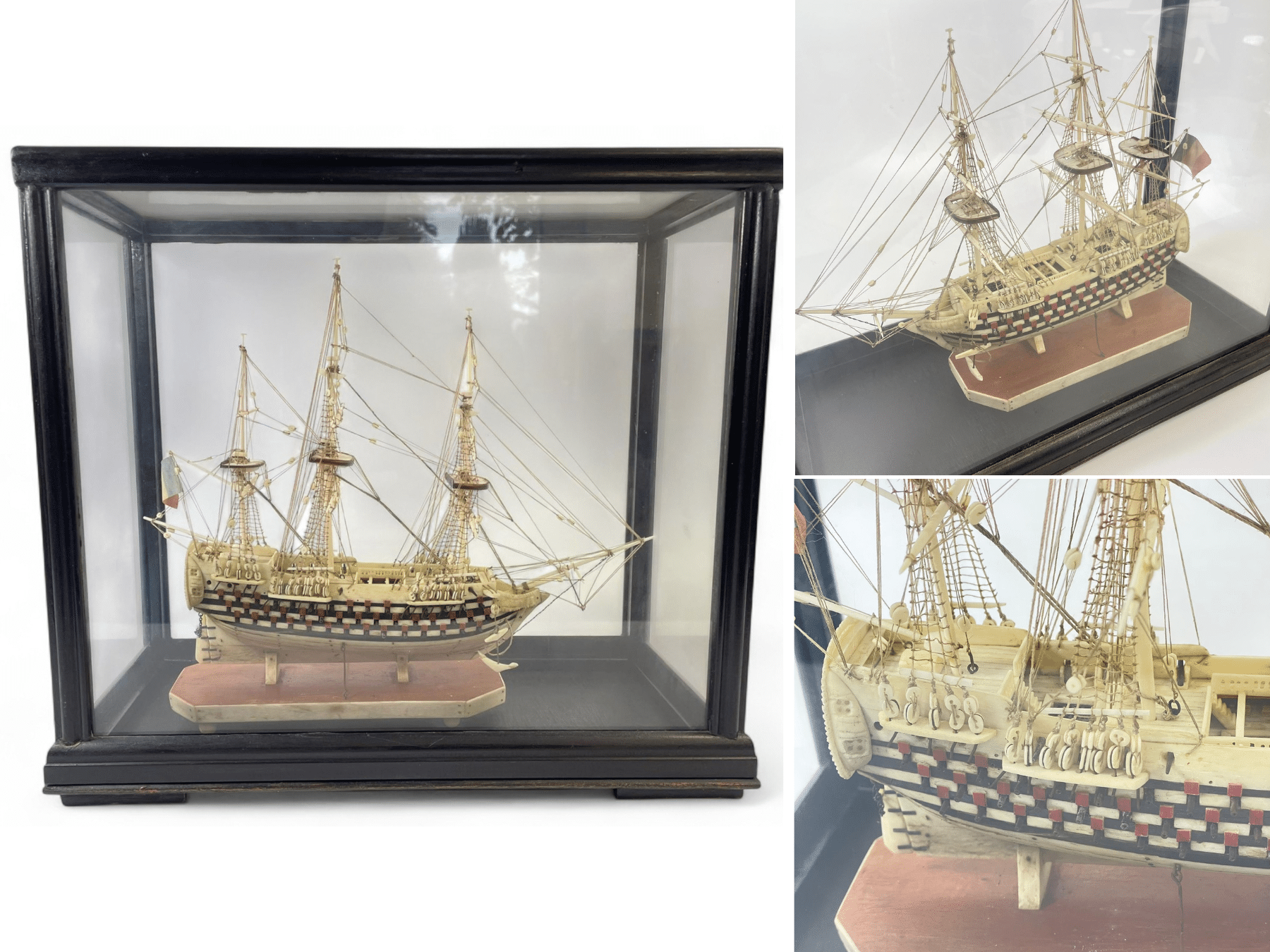
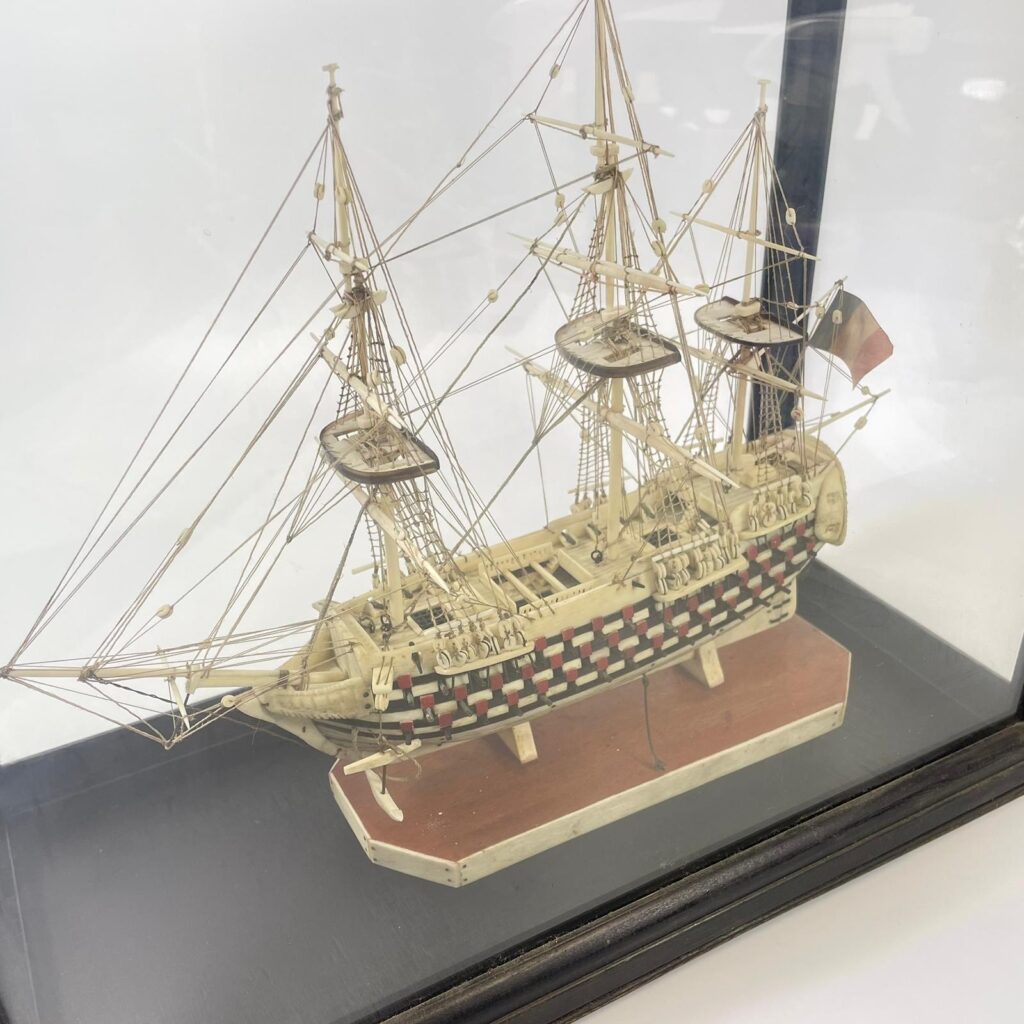
A rare 88-gun warship made by Napoleonic prisoners of war from beef bone sold for £1,000 at auction in Hertfordshire.
Found in a routine house valuation in Baldock, the three-mast model was likely made by French prisoners at the Norman Cross prison in Huntingdonshire which no longer exists.
The ship, which is 28cm (11in) tall, went under the hammer at Hansons Auctioneers’ saleroom in Royston on November 7.
Valuer and auctioneer, Stephen Drake, said: “The intricacy of the work is mind boggling,even more so when you think it would have been done from memory. Aside from the craftsmanship, it is a wonderful insight into a particular part of this region’s history and the remarkable prison which once stood on our doorstep.”
The prison, which stood on land off the A1(M) at junction 16 for Yaxley and south Peterborough, was built in 1796–1797, to incarcerate prisoners from the Napoleonic Wars.
Some 90 miles from the coast it was considered landlocked enough that prisoners couldn’t flee back to France.
The 43-acre site was made up of four barrack blocks which housed up to 7,000 prisoners of war.
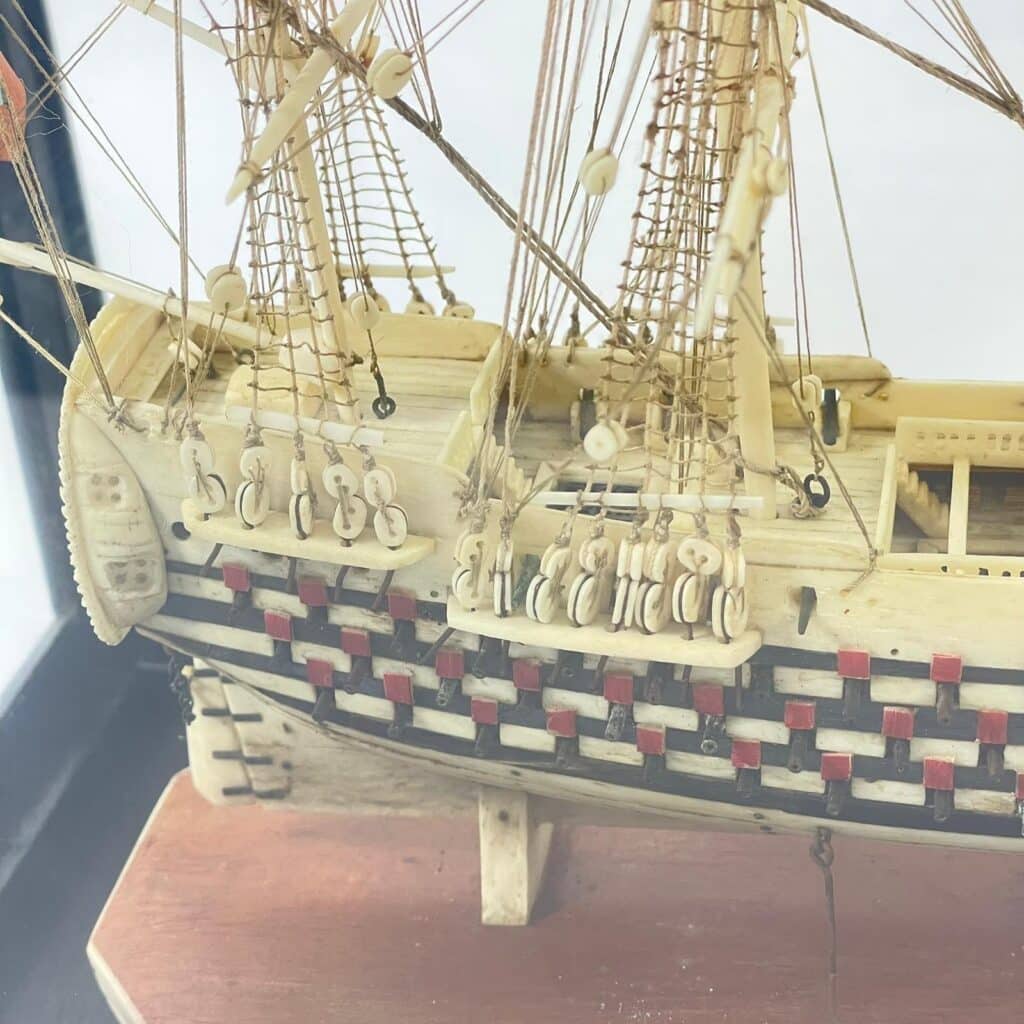
Prisoners traded beef and mutton bones saved from their meat ration to make anything from chess sets to fully-rigged vessels. Bones were boiled and then bleached using sulphur and lime with the glued from the boiling used as a natural glue.
Not only did the activity alleviate boredom, it could be a profitable enterprise with prisoners permitted to sell their wares at the local market, or at the prison gate.
A handful of highly-skilled prisoners were even commissioned by wealthy locals, becoming rich in the process.
Stephen continued: “We don’t know who crafted this particular model, or if it was a team of men working on it. We do know some entrepreneurial prisoners banded together to produce pieces jointly.”
The ship for sale, with protruding cannons and red-painted port lids, was known as a first-rate ship-of-the-line – the largest and most powerful class of sailing warship.
With up to 100 guns across three-gun decks, they carried a crew of around 850 men, designed to lead the battle line and act as flagships for commanding admirals.
Stephen said: “The prisoners carved what they knew, or remembered from the ships they served on. As well as being greatly skilled, these were canny makers who knew the market. In some examples the yardarms were deliberately shortened to fit on a mantlepiece.”
Examples of POW artwork can be seen at museums and private collections across the world, with Peterborough Museum home to 800 pieces.
Auction Details
Auction: Hertfordshire – November Fine Art & Antiques Auction
Auction date: 7th November 2025 | 9:30am
Location: Hansons Derbyshire Saleroom
Auction contact: [email protected]
Catalogue/bidding: www.hansonslive.co.uk | www.the-saleroom.com