







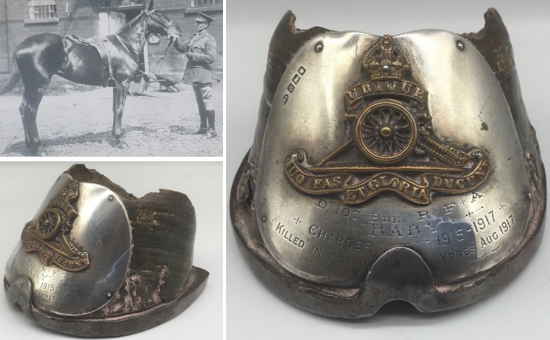
A newly-discovered silver-mounted hoof honouring a horse called Baby killed in the First World War is set to gallop to glory at auction.
The unique piece of war memorabilia, which highlights the suffering endured by animals in conflict, has sparked huge social media and pre-sale interest at Hansons Auctioneers. Potential bidders have been clamouring to buy it in advance.
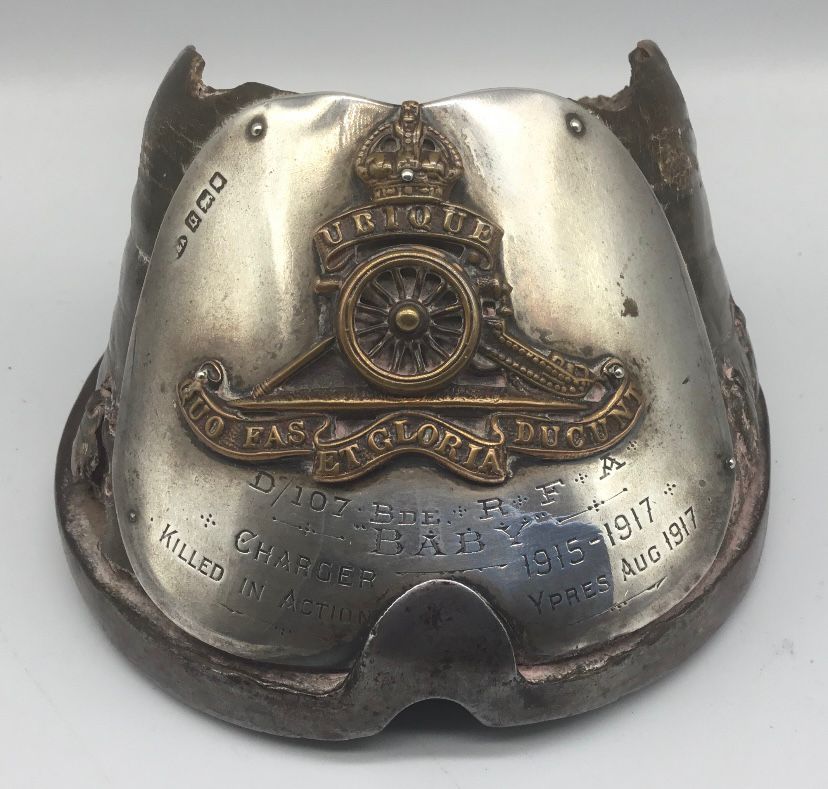
Matt Crowson, Head of Militaria at Hansons, said: “I realised it was an important and emotive object but I was still taken aback by its enormous impact when when I shared the find on social media. Many people wanted to bid immediately and some privately messaged me to ask if it could be withdrawn from sale so they could secure it. It’s set for auction with a guide price of £200-£250 but, judging by the interest, it will gallop much higher.”
Commissioned by an officer from the Royal Field Artillery in 1917, the inscribed hoof pays tribute to ‘Baby’, a wartime ‘Charger’ from 1915-17. Baby was killed in action at Ypres, Belgium, in August 1917. Eight million horses, donkeys and mules died in WW1, three-quarters from extreme working conditions.
Matt Crowson said: “The hoof was found among the belongings of Captain Robert Charles Couldrey CBE, (1890-1974), a highly-decorated officer with D/107 Brigade Royal Field Artillery during WW1. It’s likely it was commissioned by him. There is no direct reference to the horse hoof in his belongings but, given that he was a middle ranking officer within the corps, it’s likely he would have directed this piece to have been made.
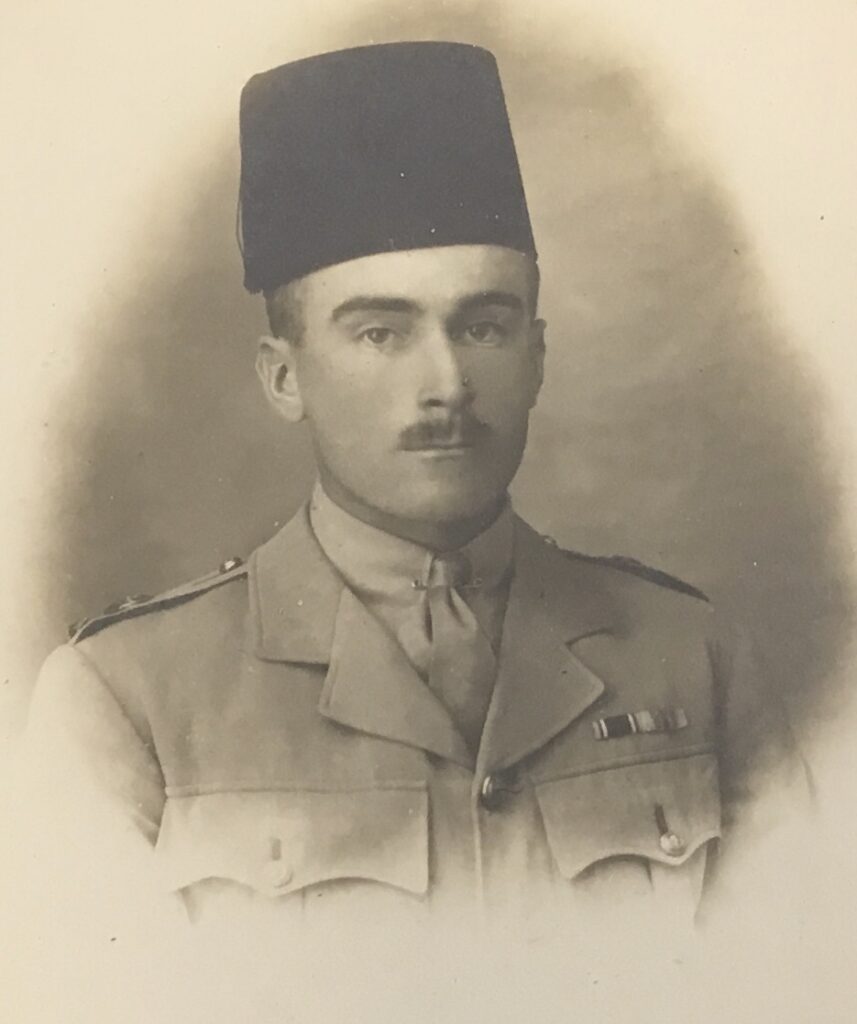
“Captain Couldrey may have been familiar with Baby and wanted to commemorate her service, or it may even have been his horse. Officers sometimes supplied their own, hence an emotional attachment. Nothing relative to Baby’s demise appears in 107 Brigade’s war diary during August 1917. However, there are references to hostile German shell fire from Gheluvelt on August 6, which would relate to the Gheluvelt Plateau actions from July to August 1917 during the Third Battle of Ypres. This may account for her demise.
“Whatever happened to Baby, this find has pulled on the heartstrings of animal lovers and acted as a poignant reminder of their role in war. Horses like Baby were used in the cavalry and as officers’ mounts. Draught horses switched from pulling buses to hauling heavy artillery guns or supply wagons. Small but strong multi-purpose horses and ponies carried shells and ammunition. By 1917, the Army employed over 368,000 horses on the Western Front.
“During WW1 Army farriers had to account for service animals killed in conflict, hence a sharp blade was carried to chop off the deceased hoof which would often be stamped with a service number. This sounds brutal by today’s standards but it was standard practice at the time, particularly in an active war zone with obvious danger and time limitations. Army farriers still carry axes to this day but only for ceremonial occasions. Baby may have had a number stamped into her hoof but this would now be obscured by the silver plaque.
“What we can be certain of is that Baby lost her life in the Great War. However, thanks to this commemorative hoof she will never be forgotten. This discovery has also reminded us of a distinguished officer who served his country for decades.”
Captain Couldrey entered WW1 in September 1916 in France, earning himself a British War Medal and Victory Medal. He was decorated for distinguished service by the award of an oak leaf added to the ribbon of the Victory Medal. This notification appeared in the London Gazette in December 1917. Couldrey was seconded to the Egyptian army in the latter part of WW1 and into the early 1920s. He later took a civilian role of Controller General of the Sudan War Supply Board in the 1920, a position held through WW2. He was further decorated with the Egyptian Order of the Nile 4th class in 1929, with this award being upgraded to the 3rd class in 1937. His distinguished colonial service saw him awarded the Commander of the British Empire in 1942. In the post-WW2 era he was responsible for part of the team organising the reconstruction of Germany.
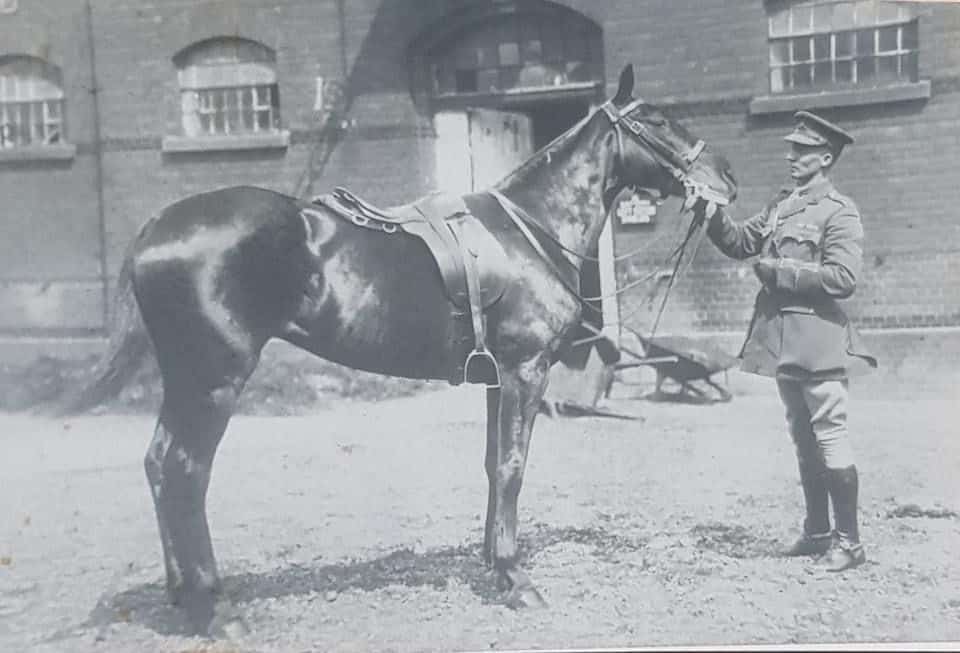
Matt said: “Captain Couldrey was a military hero which elevates the hoof’s importance even more. Interestingly, its appearance on social media prompted a reader to share an image of his great grandfather, Lt Col John Henry Barton, a member of the Royal Field Artillery in Ypres in circa 1917, with a magnificent steed called Sunset. Sadly, Lt Col Barton had to reluctantly shoot his own horse.
“As well as serving the army in practical ways, horses boosted moral during WW1 and were held in high esteem. This led to mementos being made to honour them. It has long been customary to turn the hoof of a much-loved horse into a commemorative item, often an ink well. Victorian examples exist. But Baby’s silver hoof is extra special. It honours a horse killed in combat, for king and country. War Horse, a 2011 film based on Michael Morpurgo’s novel of the same name, brought this history lesson to life.”
Auction: The hoof, estimate £200-£250, will be offered in Hansons Auctioneers’ August 7 Militaria sale. Further entries invited.
Enquiries: [email protected] or call 01283 733988.
WW1 horse/soldier image credit: Christopher Greenhough (with thanks to George Greenhough)