







More than 200 concrete animal sculptures have been saved for posterity thanks to an auction battle to find them a new home.
And the news couldn’t be better for fans of the zoological garden menagerie, which gradually turned into a tourist attraction in Branxton, Northumberland, after being made decades ago by a father for his disabled son.
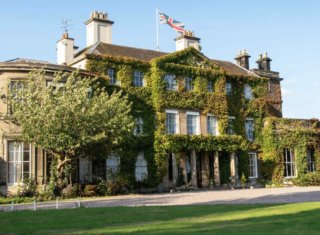
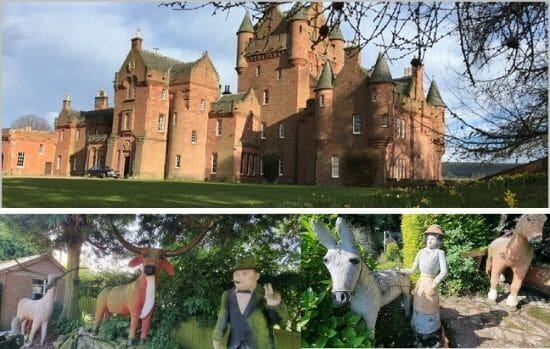
It was feared it would be lost forever but the sculptures, which include everything from giraffes, rhinos, a panda and birds to Winston Churchill and Lawrence of Arabia, are set for a new life at Ayton Castle in Berwickshire.

The visitor attraction paid a hammer price of £20,000 to secure the collection in a tense auction battle at Hansons Auctioneers (Oct 26). And that means the garden menagerie can be enjoyed once again by members of the public.
Castle co-owner Brian Parsons said: “I found out about the sculptures two years ago from a carpenter on the castle’s estate. I visited the garden and thought it would be good acquire them if the opportunity arose. We’re very excited and delighted the animals are coming to us.
“We will look after them and it will enhance our offering which includes a new narrow-gauge railway. Due to the work involved in repairing, refreshing and installing the statues in our woodland area, they won’t be available to view until sometime next year. The seller will be very welcome to visit us when they’re in place.”

The castle news was a dream result for the sculptures’ current owner, Samantha Brattisani, 47. She burst into tears when the hammer fell – and again when she heard the good news about the buyer. Due to ill health, she put the sculptures up for auction in a bid to save them. The land – and animals – had to be cleared to make the garden accessible for her.
She feared the sculptures, part of her family’s heritage, might be lost forever and asked Hansons to seek potential buyers. Despite the quirky nature of the lot, and the fact that moving the sculptures is a logistical hurdle in itself, interest was high.
Samantha said: “I burst into tears at the end of the auction. I had a wee cry. I watched the sale live online. It was an emotional moment for me because I never wanted to part with the animals but, due to health issues, I had no choice.
“I’m so pleased the sculptures are going to a good home. I’m happy they’ll be maintained and I’m happy they’ll bring pleasure to people for years to come.”

Rik Alexander, the auctioneer who managed the sale on behalf of Hansons, said: “There was so much love for this garden menagerie. People wanted to save it. It delighted visitors for decades until Samantha was forced to close the attraction. Now it’s destined for the high life.
“Ayton Castle is a Scottish baronial mansion to the east of Ayton in the Scottish Borders. It dates largely from the 19th century, is a category A listed building and is regarded as possibly the finest example of Scottish baronial architecture in the country. I can’t think of a finer place for the animal menagerie to go.”
The zoological garden was created in the 1930s and 40s by Samantha’s great uncle John Fairnington for his disabled son, Edwin. She said: “My great uncle made the animals to get Edwin to go into the garden – and it worked. He loved it. I remember seeing it for the first time when I was three and being enthralled by it.

“Over the years, thousands of people have visited the garden. It became a popular tourist attraction. We’ve had busloads of school children, people who returned year after year, even Alan Titchmarsh.
“But, due to ill health and the loss of my parents, I can no longer maintain the garden or welcome visitors. I’m disabled due to back problems and can only stand for a few minutes. My walker is too wide for the paths in the garden.”
In 1935 John Fairnington, a master joiner, and his wife Mary, had their only child, Edwin. To entice Edwin into the garden, John started building concrete animals and dotting them around the quarter-acre plot behind his semi-detached home in Branxton. The project launched with a life-size panda. Edwin loved it and, spurred on, John made more concrete friends.

Soon the garden brimmed with every type of animal imaginable – rabbits, cows, a giraffe, goats, donkeys, camels, cart horses, even a unicorn. And John didn’t just confine himself to animals. Sir Winston Churchill and Lawrence of Arabia were added to the scene.
Eventually there were 75 large statues, each fashioned out of concrete on a base of rubbish-filled wire netting, and nearly 150 smaller sculptures. Edwin explored his strangely fascinating garden until he died at the age of 36. John died in 1981 at the age of 98 content in the knowledge he’d done his best for Edwin. Being a religious and charitable man, John left his house and garden to Oxfam. However, Samantha’s grandad bought it back because it was so important to the family.
Samantha, who is retired due to ill health, said: “I hope visitors to the castle will get as much joy out of the animals as I have.”
The concrete animal menagerie was sold on October 26 at Hansons Auctioneers, Etwall, Derbyshire.