








When people ask me to list my ideal guests for a fantasy dinner party, I always have one person in mind.
You can forget Marilyn Monroe, JFK and even Albert Einstein, for me it would be a local lad.
Because the 18th-century artist Joseph Wright of Derby (1734–1797) is the diner I would most want to share a meal with.
If you’ve been to the Derby Museum & Art Gallery at The Strand you will know his work.
This month two of his most famous paintings, The Orrery and The Alchymist are on their way to National Gallery in London for an exhibition showcasing his jaw-dropping talent.
If you can’t make it to London, the exhibition is heading to Derby next May.
To my mind, Joseph Wright of Derby is one of the best artists that not just the UK has produced, but the world.
His mastery of dramatic light and shade, known as chiaroscuro – especially by candlelight – is unparalleled.
It harks back to the artistic traditions of the Renaissance and the great Italian artist Caravaggio.
But Joseph Wright of Derby, born at 28 Irongate, is all ours.

One of the things I most admire about him – apart from his astonishing artistic talent – is the fact he had no interest in leaving his home town.
When the famous portraitist Joshua Reynolds asked him to move to London and join the Royal Academy, he flatly refused.
Rather than hanging out with the metropolitan elite, Wright preferred to stay right here. At the time Derby was at the centre of one of the most remarkable movements of the 18th centre – the Midlands Enlightenment.
While the capital was the home of aristocratic fops and dandies, Derby was a hothouse of scientists and industrialists – the Silicon Valley of its day.
Wright’s pals included James Watt, famous for his improvements to the steam engine; the famous potter and entrepreneur Josiah Wedgwood, Erasmus Darwin, grandfather of Charles Darwin, and Richard Arkwright, who pioneered the mechanised cotton-spinning machine.
These famous industrialists powered the Industrial Revolution and put Britain at the centre of the world.
Calling themselves “natural philosophers”, they banded together in a club known as the Lunar Society and Wright’s paintings show them taking part in scientific experiments — a rare focus in art at that time.
I well remember first setting eyes on Wright’s candlelight masterpiece An Experiment on a Bird in the Air Pump painted in 1768.
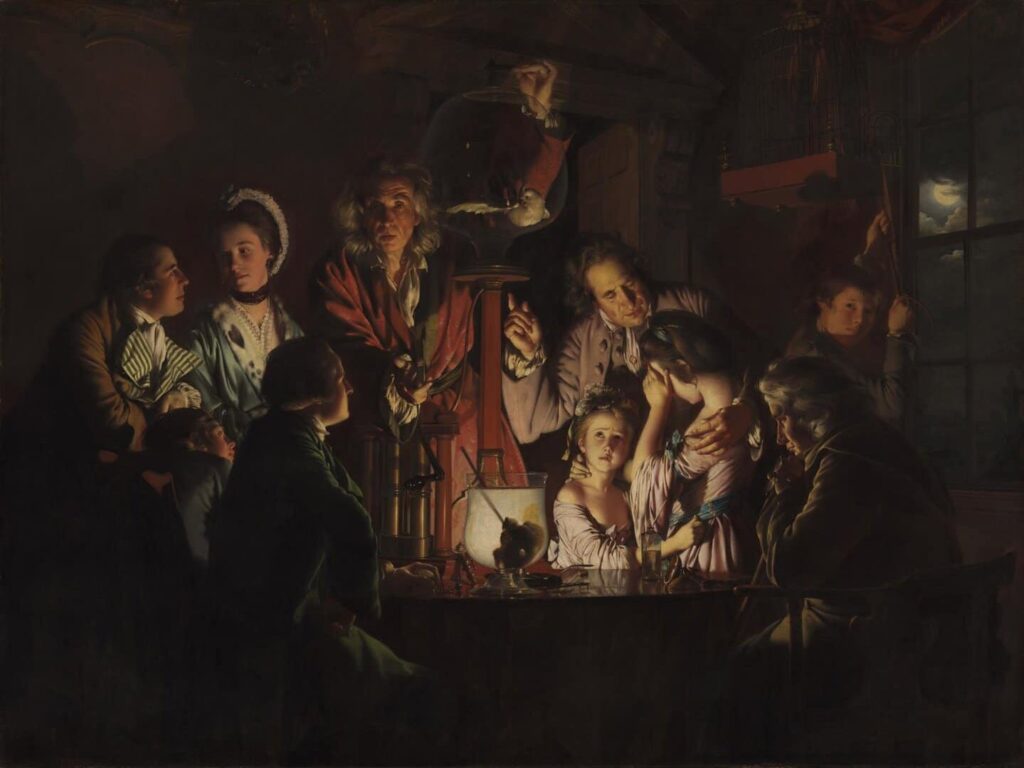
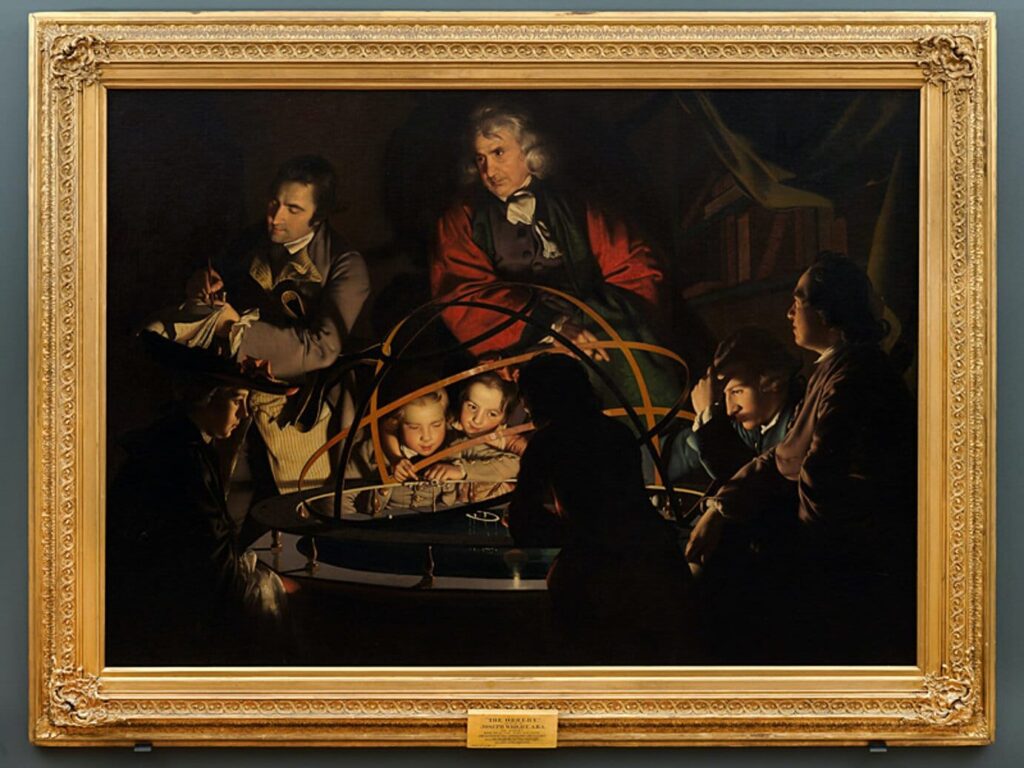
Not a scene from nobility or mythology, but working-class people, mechanics and – with a vacuum pump at the centre – scientific apparatus.
Wright’s works quite rightly sell for millions. His painting An Academy by Lamplight sold for £7.26m but lesser known, or less dramatic pieces, still do well.
But in 2013 a ‘lost’ painting unrecorded for 200 years, sold for £162,000 at a Sussex auction house.
How I would love to find a similar painting on his home turf.
Other works can sell in the tens or low hundreds of thousands of pounds.
But Joseph Wright of Derby is not the only superb artist our region has produced.
George Turner (1843-1910), who was known as the “Derbyshire’s John Constable” was born in Cromford near Matlock but moved to Derby with his family.
An oil on canvas by Turner, called A Scene at Barrow on Trent, Derbyshire, dated 1882, is expected to make £600-£1,000 at this Thursday’s <Oct 9> fine art sale in Etwall.
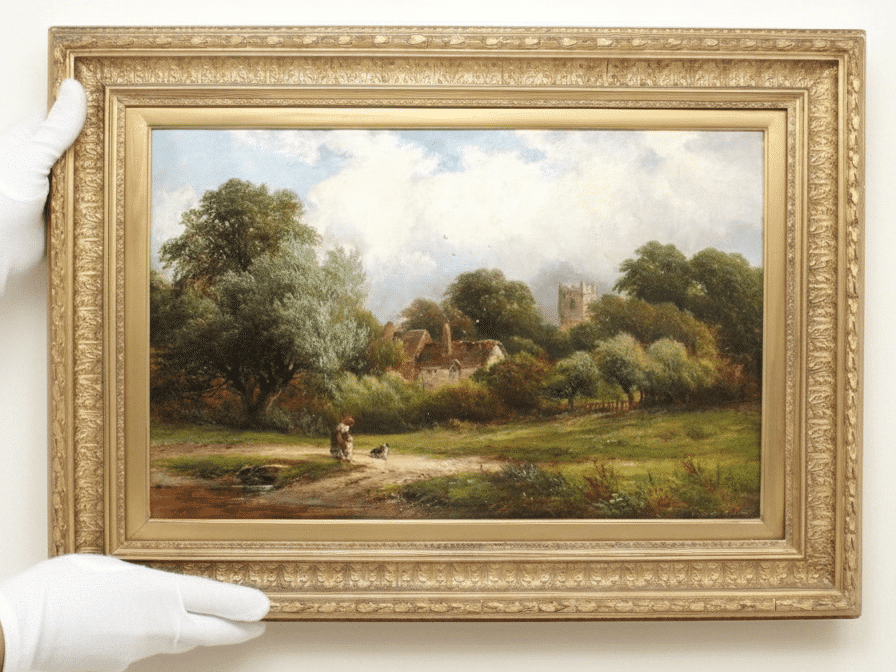
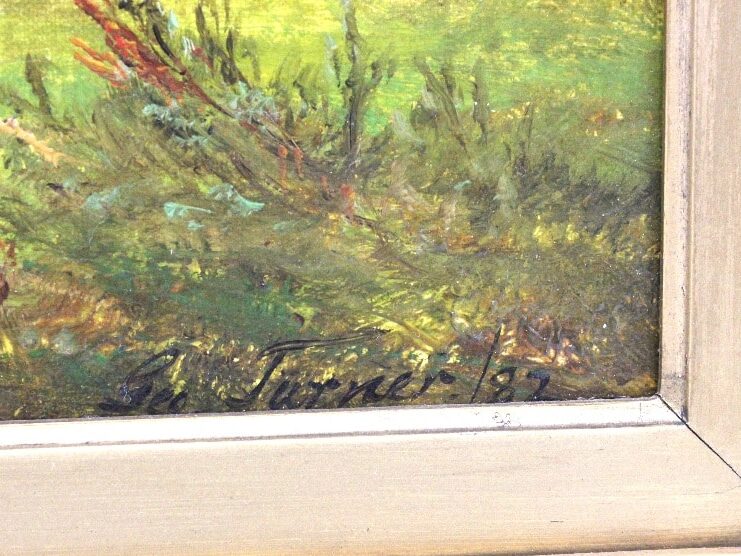
His atmospheric art wonderfully captured his home county, with its rolling hills, rivers and streams as well as lush valleys, woodland, cattle and wildlife.
In their different ways Wright and Turner highlighted what his county has to offer, from its industrial pioneers to its exceptional countryside.
It reminds us all why we should be so proud to call Derbyshire our home.

Auction Details
Auction: Hansons Derbyshire Fine Art Auction
Auction date: 9th October 2025 | 9:30am
Location: Hansons Derbyshire Saleroom
Auction contact: [email protected]
Catalogue/bidding: www.hansonslive.co.uk | www.the-saleroom.com