









Few things excite as much interest in the auction world as wartime collectables and memorabilia.
There is a thriving collector market globally, especially in this country and America.
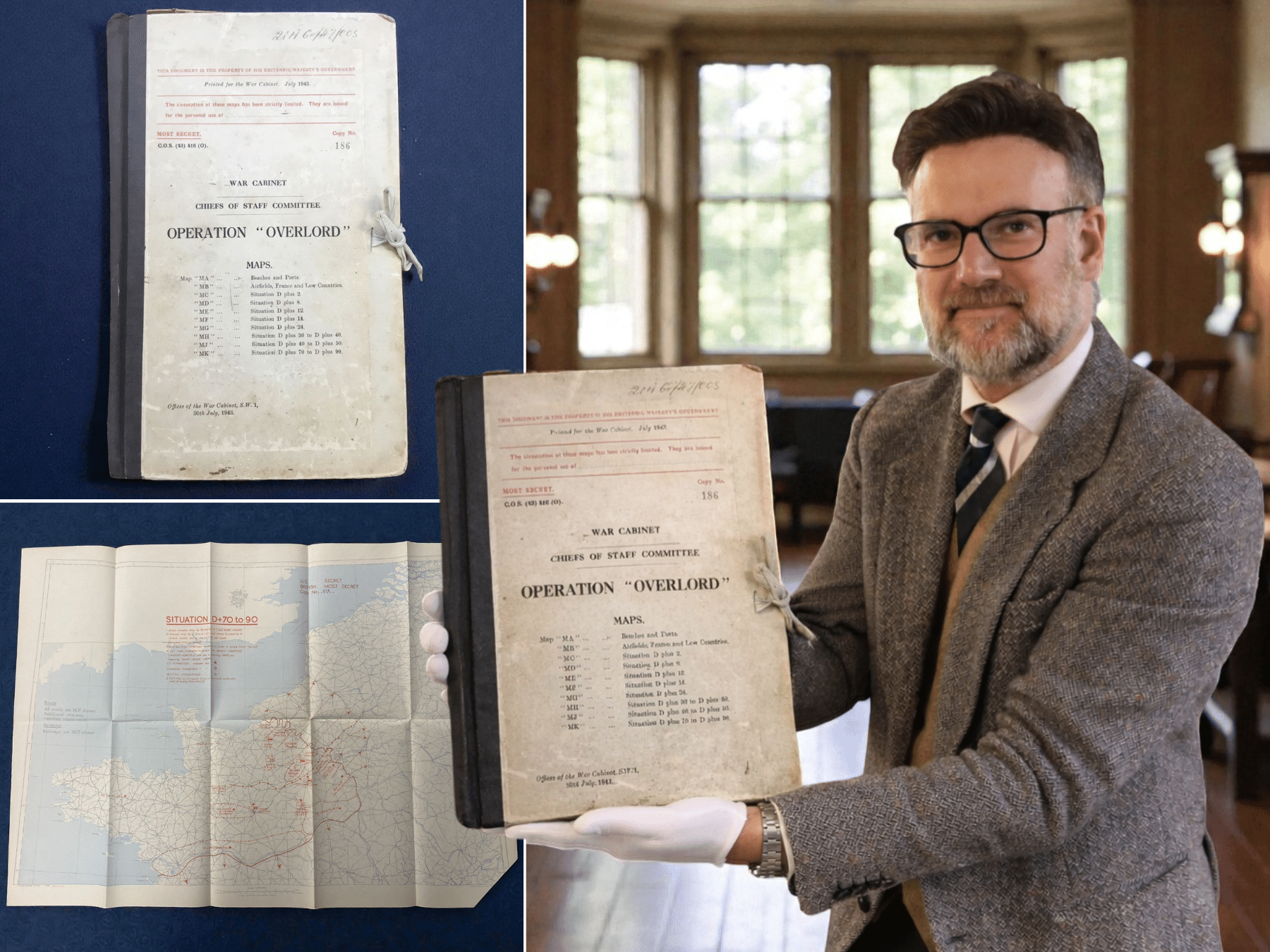
So when a top-secret blueprint of the D-Day landings was consigned for sale, our military expert Matt Crowson – one of the best in the business – was cock-a-hoop.
In fact, he called it the “rarest and most important item” he had ever handled.
And coming from Matt that is saying a lot.
For anyone who needs a quick reminder, D-Day on 6 June 1944 was the pivotal Allied invasion of Nazi-occupied Europe.
It saw Allied forces from the United States, the UK and Canada storm the beaches of Normandy and establish a crucial foothold on the continent.
Troops and supplies poured into France, beginning the liberation of western Europe, and forcing Hitler to fight a debilitating two-front war.
Without it, the war in Europe would have lasted far longer, with greater casualties and destruction.
So anything relating to D-Day, known as Operation Overlord, gives collectors goosebumps like little else.
These jaw-dropping top-secret maps, consigned by a relative of a senior military officer who had owned them since 1960, are dated July 30, 1943.
Almost a year before the actual invasion.
At this point D-Day wasn’t a forgone conclusion, it was something only whispered about at the very highest levels.
Had the Germans got wind of it, it might have changed the entire course of the war, and history.
And so this document was intended for the eyes of only a handful of the most senior members of the British and Allied command.
Hand numbered Copy 186, it included preparatory measures prior to D-Day; the invasion itself, and ongoing action in France.
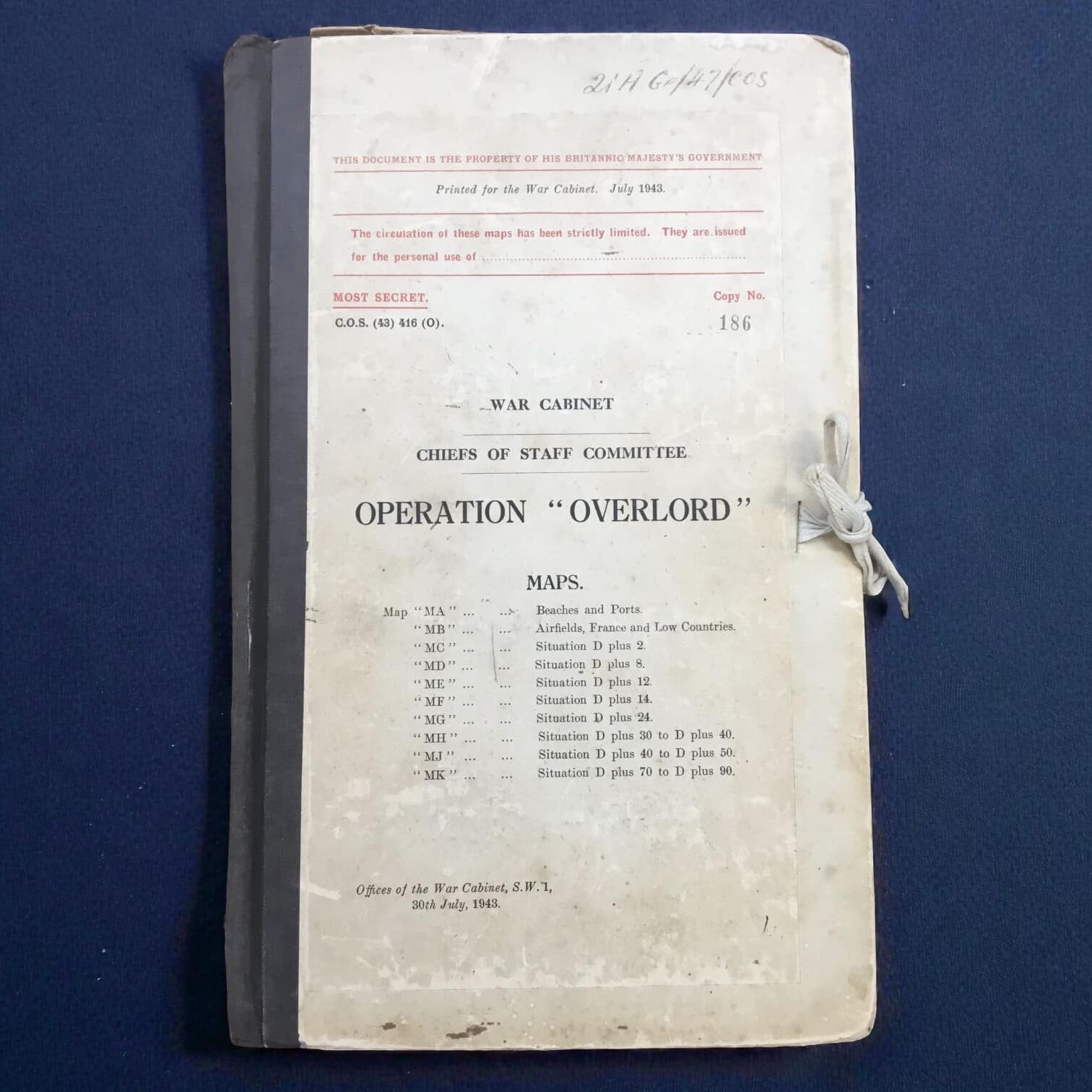
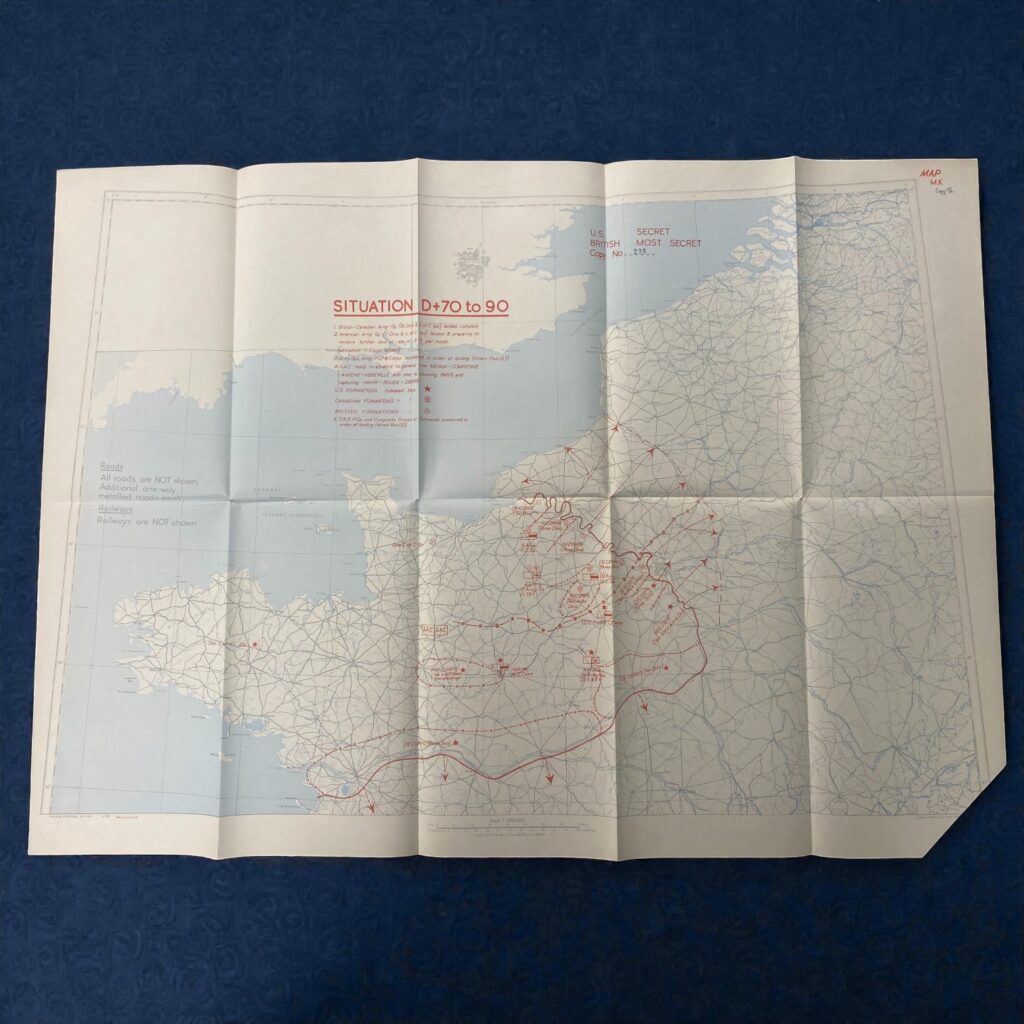
It was the work of Lieutenant General Frederick E. Morgan known as “the forgotten architect of D-Day” and highlights the divergence in US and British strategy ahead of the assault.
Of course, today we recognise D-Day was a resounding, if costly, success.
But in 1943, some four months before Churchill, Stalin and Roosevelt even approved Operation Overlord, the situation was very different.
Morgan was determined to avoid earlier defeats such as Gallipoli and Dieppe which revealed the dangers of poorly prepared amphibious assaults.
So the document details Morgan’s more cautious approach.
Rather than the five beaches we think of as the landing points – Omaha, Sword, Juno, Utah Gold, Morgan’s blueprint proposed landing points at just three beaches.
He was deeply concerned about troops logistical vulnerability and the danger of being stuck on beaches with no tactical support.
But, in December 1943, General Dwight D. Eisenhower and Field Marshal Montgomery took command.
Morgan’s three-division plan immediately expanded into a massive five-division invasion.
With more beach landing craft required, the operation was delayed from the original May 1 until June 6, 1944.
A further 10 loose maps are marked ‘U.S. Secret’ and ‘British Most Secret’ and project how ongoing action would unfold in Caen area and the port of Cherbourg.
Original Operation Overlord planning documents are exceptionally rare, with some important WWII archives lacking them completely.
Other surviving archives have been broken up, with maps separated or lost.
This complete archive is one of the most important museum-grade finds to appear on the open market in recent years.
As insights into the course of history go, it doesn’t get much better than this. The blueprint on which the course of WWII was set.

Auction Details
Auction: The Hansons Medals, Militaria & Firearms Auction
Auction date: 25th February 2026 | 10am
Location: Hansons’ Derbyshire Saleroom
Auction contact: [email protected]
Catalogue/bidding: www.hansonslive.co.uk | www.the-saleroom.com