







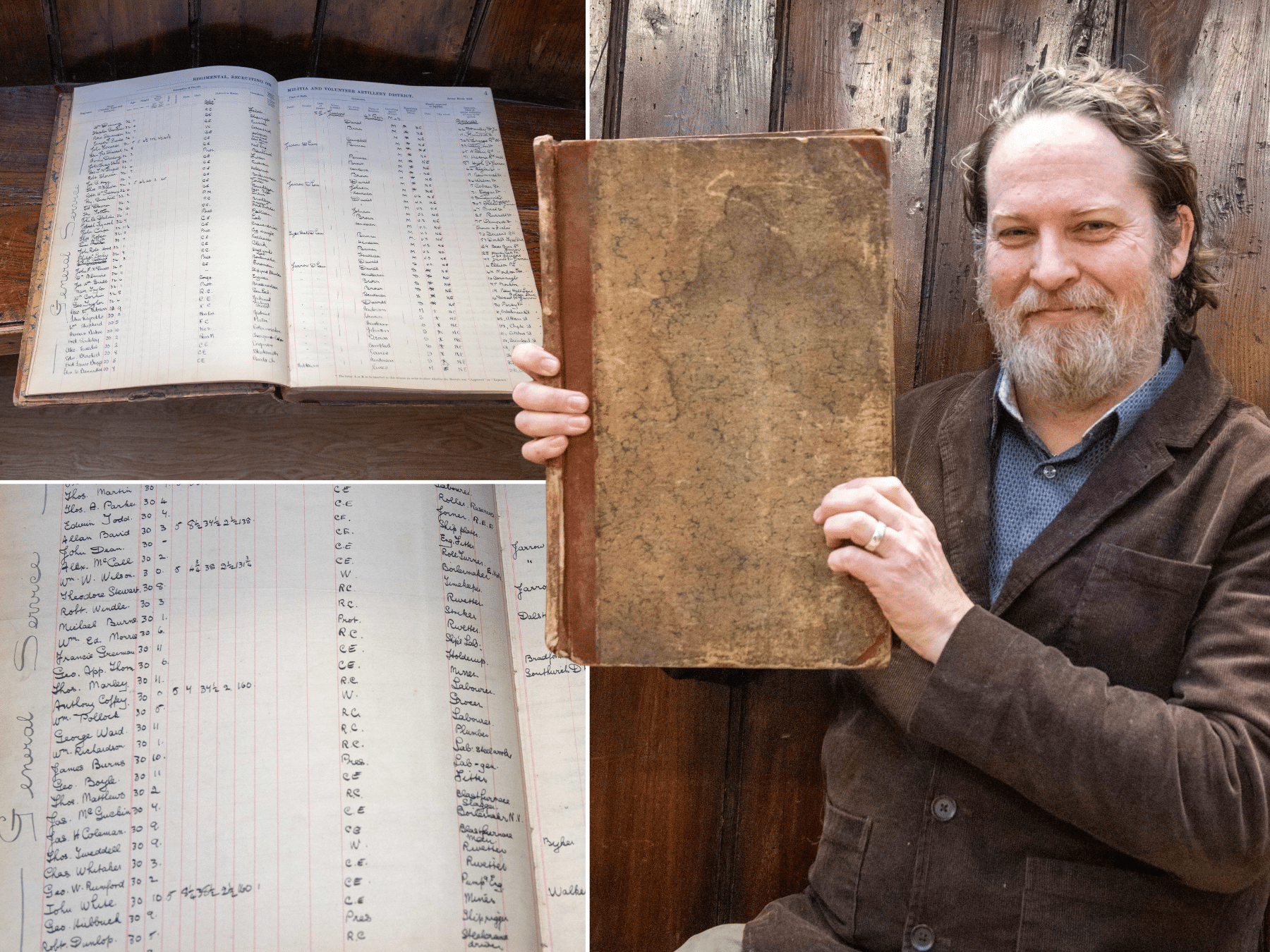
A rare handwritten ledger of WWI County Durham volunteers, many of whom signed up to revenge their coworkers’ deaths, is expected to make £1,500 at auction this month <feb 25>.
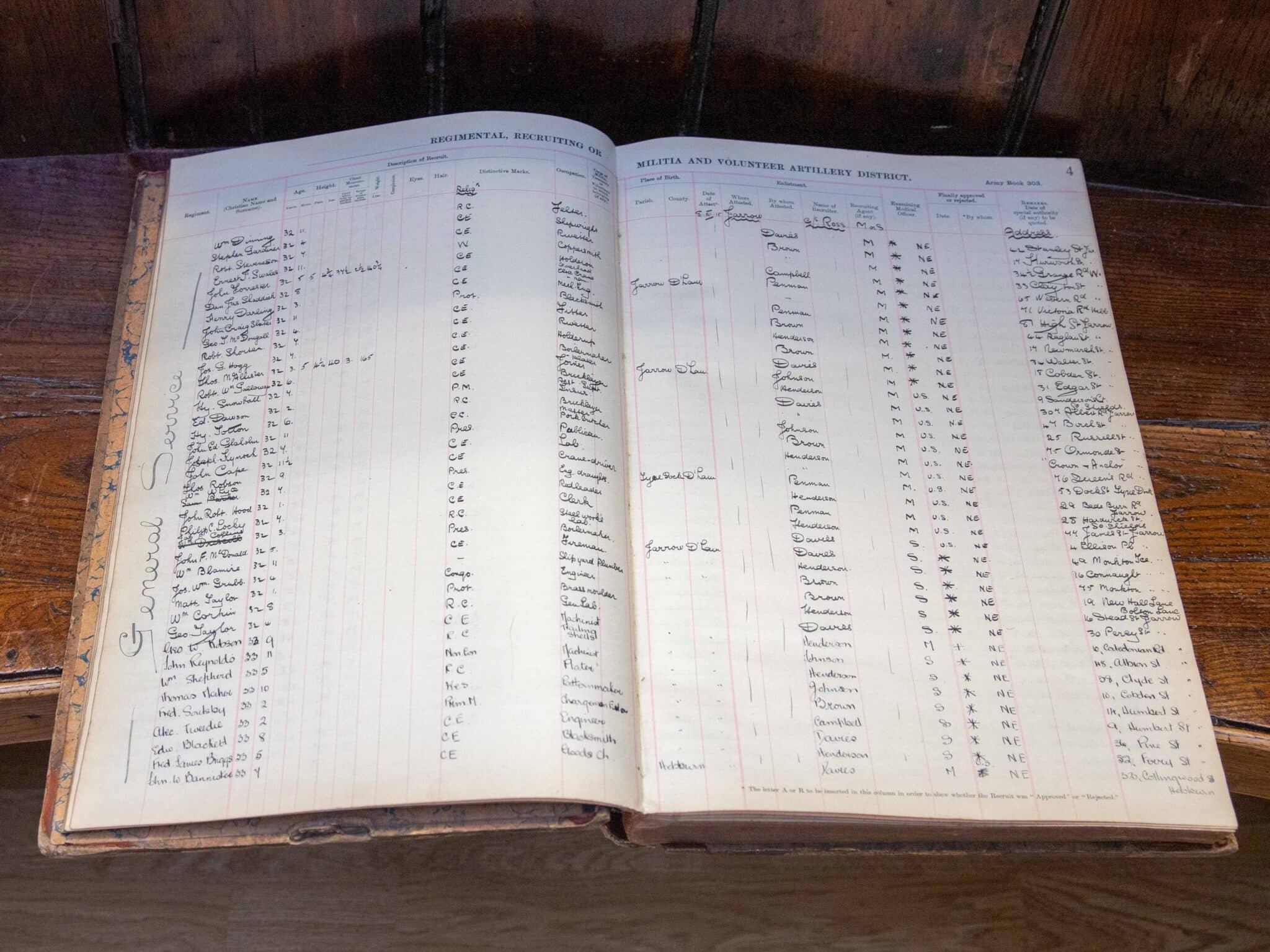
Bought at a car boot sale for just £20, the museum-quality register lists the names of 900 men who signed up in just three days in December 1915.
Of these some 140, almost one in six, would lose their lives in the conflict.
Many worked at Palmers Shipbuilding and Iron Company in Jarrow which had been decimated in Zeppelin raid just six months before, killing 17 and injuring 72.
Hansons Auctioneers’ militaria expert Matt Crowson said: “There’s no doubt the raid would have brought home the seriousness of the war to the brave Jarrow workers many of whom would have wanted retribution. Books like this are extremely rare as records were supposed to have been destroyed after WWI. How it came to light hundreds of miles away we may never know but I am very glad it did.”
The ledger goes under the hammer at Hansons Auctioneers’ militaria sale at its Etwallsaleroom near Derby on February 25 with a guide price of £1,000-£1,500.
During WWI, the River Tyne was a powerhouse of British shipbuilding, with firms like Swan, Hunter & Wigham Richardson Ltd and Palmer’s – which employed around 10,000 men and boys – constructing more than 3 million tonnes of shipping.
A failure of communication on the night of the raid meant a black out warning wasn’t heeded, its bright lights making an easy target.
After the attack, an unprecedented number of shipyard workers signed the “attestation” register over a staggering 23 double-page spreads – despite theirs being a reserved occupation.
The vendor, a builders’ merchant from Maldon in Essex who didn’t want to be named, said: “I saw the ledger lying on the ground and couldn’t get the money out of my wallet quick enough. When I read the word ‘military’ on it, I knew it was something special.”
In the early years of WWI, before forced conscription, Britain tried to boost army recruitment with a voluntary initiative called the Derby Scheme, named after its instigator, Lord Derby.
This was a voluntary recruitment drive with a twist. Men aged 18-40 were given two options: enlist immediately or “attest” to their willingness to be called up at a later date.
Matt said: “They were each given a well-known grey Derby Scheme armband, which was designed to be worn with civilian clothes (showing that a man was ‘doing their bit ‘), and a signing bonus of 2s 9d before being sent back to their homes and jobs until their group was mobilised.”
Most of the men listed in the book as clerks, timekeepers, plumbers, roll turners or blast furnace workers, went on to fight with the Durham Light Infantry, with some joining the Royal Navy.
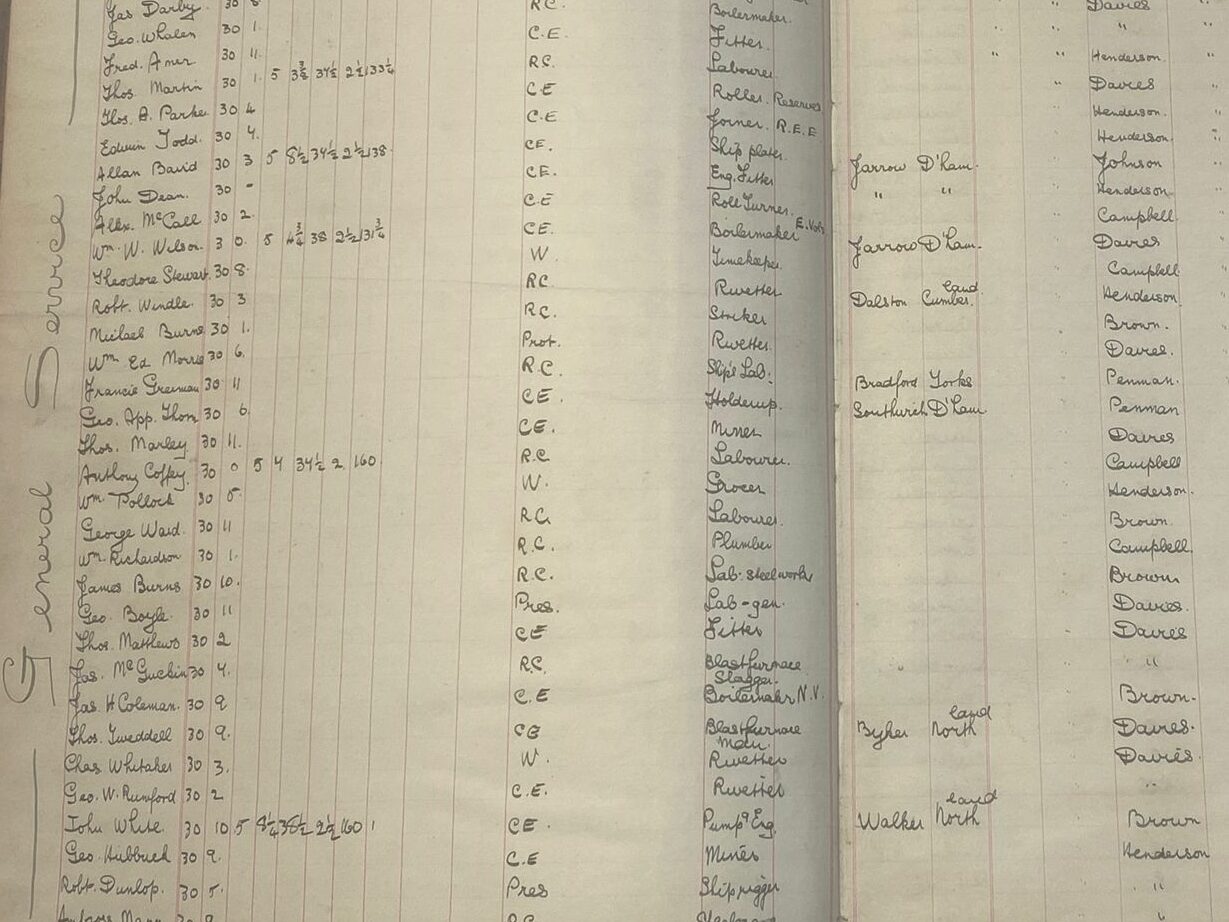
The ledger records their names, age, height, chest measurements and any distinctive marks.
Men listed include Theodore Stewart (timekeeper), James McAtominey, (plumber), George A. Thom (holder up), Anthony Coffey (blast furnace man), and James McGuckin (blast furnace man).
The vendor continued: “I just want these names and their sacrifice to be known. It is the least they deserve that they are remembered.”
Matt Crowson continued: “Having an original primary source ledger of volunteers from this era is almost unheard of outside of a regimental museum or archive. It’s likely that the details within the book have not been digitised yet, making it invaluable for WWI researchers.”
A war memorial for Palmers Shipbuilding and Iron Company lists a total of 185 men who died in the war.
The ledger goes under the hammer at Hansons Auctioneers’ militaria sale at its Etwallsaleroom near Derby on February 25.
Auction Details
Auction: The Hansons Medals, Militaria & Firearms Auction
Auction date: 25th February 2026 | 10am
Location: Hansons’ Derbyshire Saleroom
Auction contact: [email protected]
Catalogue/bidding: www.hansonslive.co.uk | www.the-saleroom.com