







We know that religion can save lives. Think of those countless stories of men and women who have been redeemed by the love of God.
But how many times has the Bible literally saved a life?
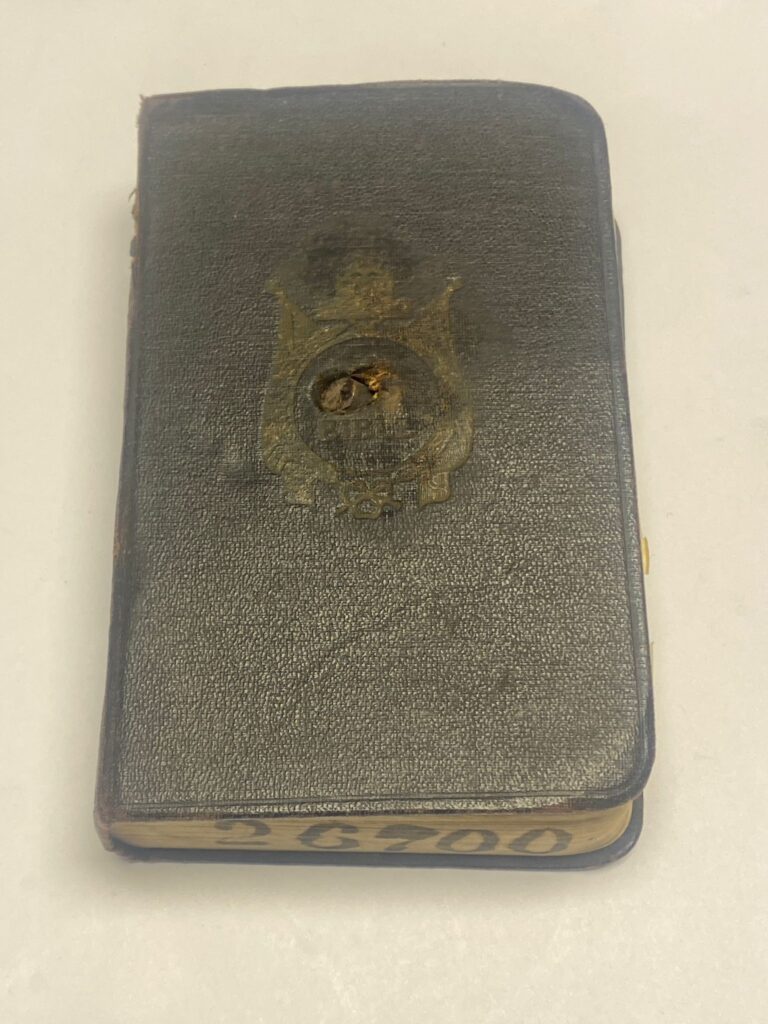
This was the question I asked myself when we had a very special New Testament was consigned to our militaria department.
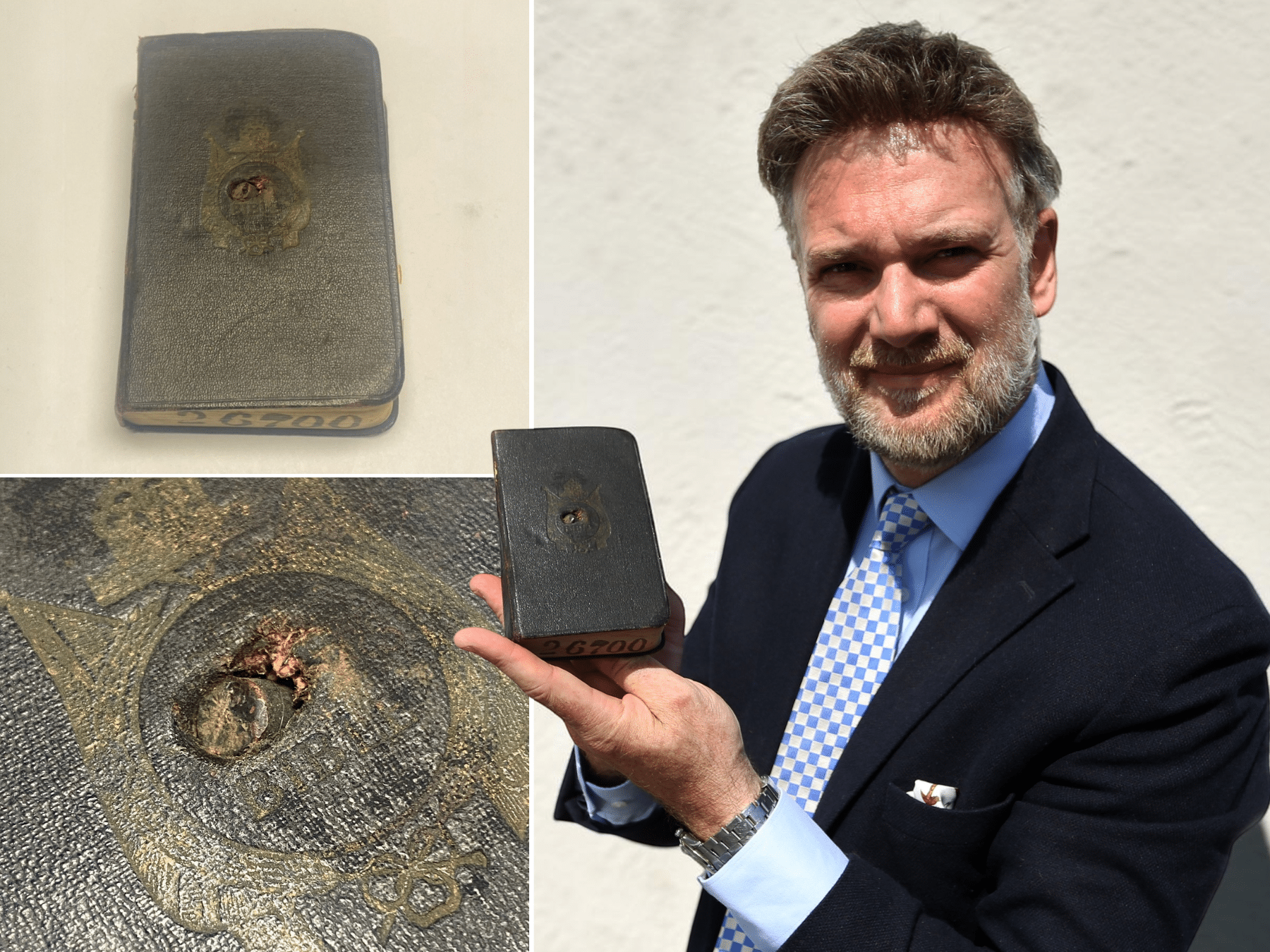
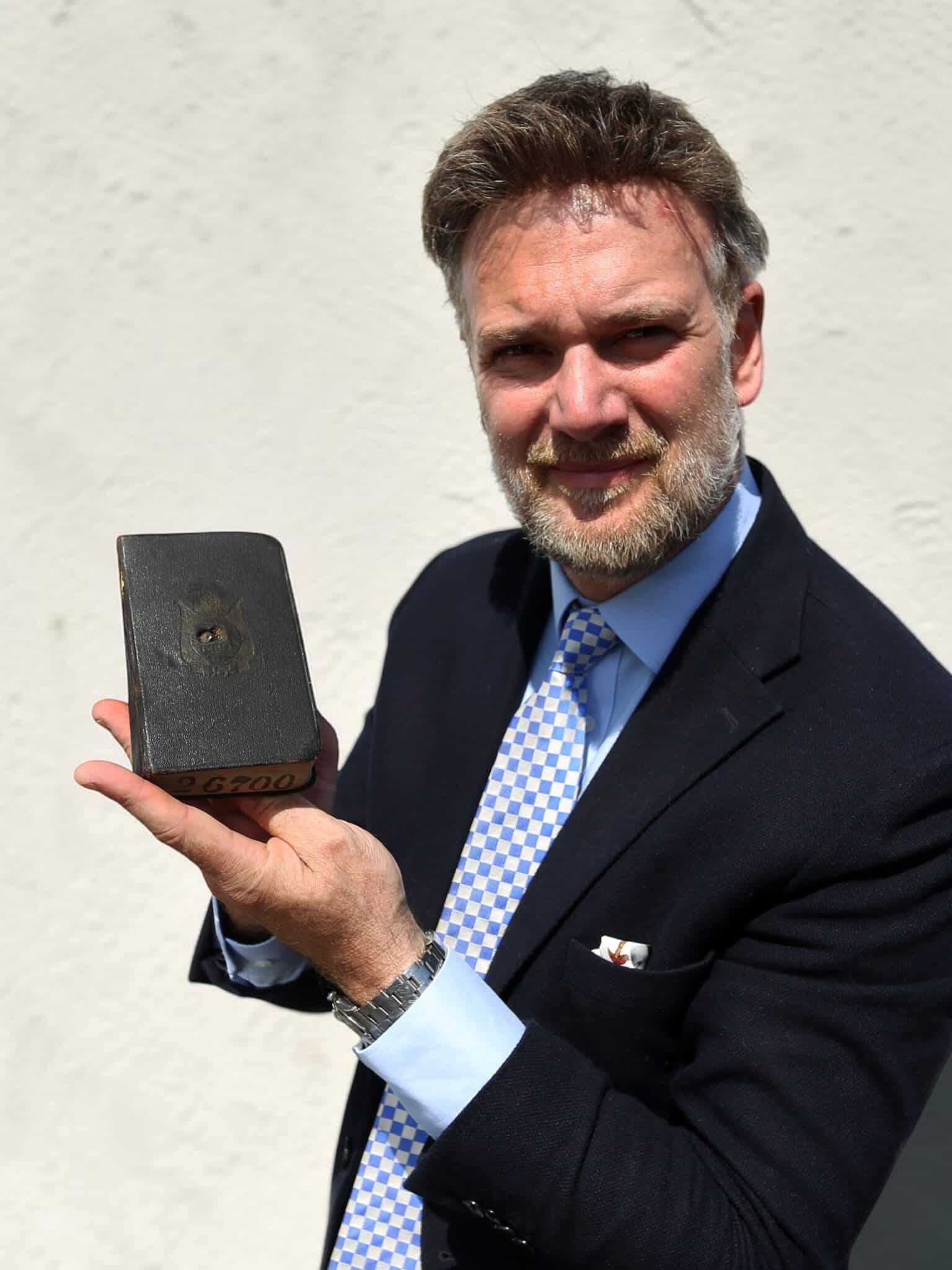
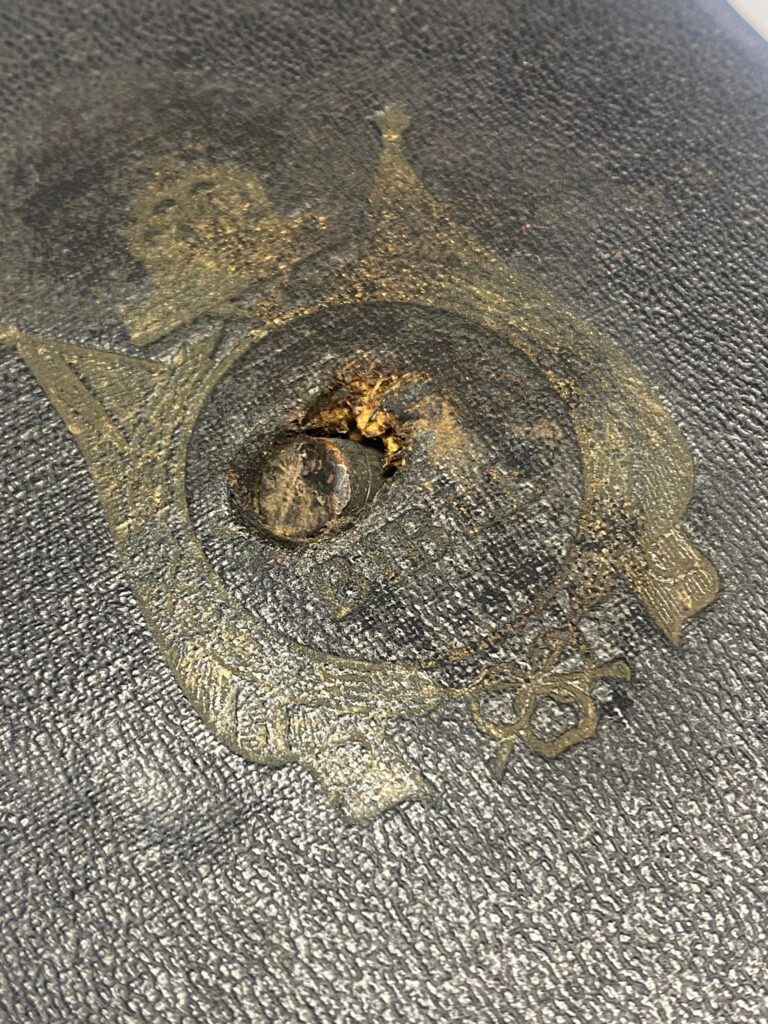
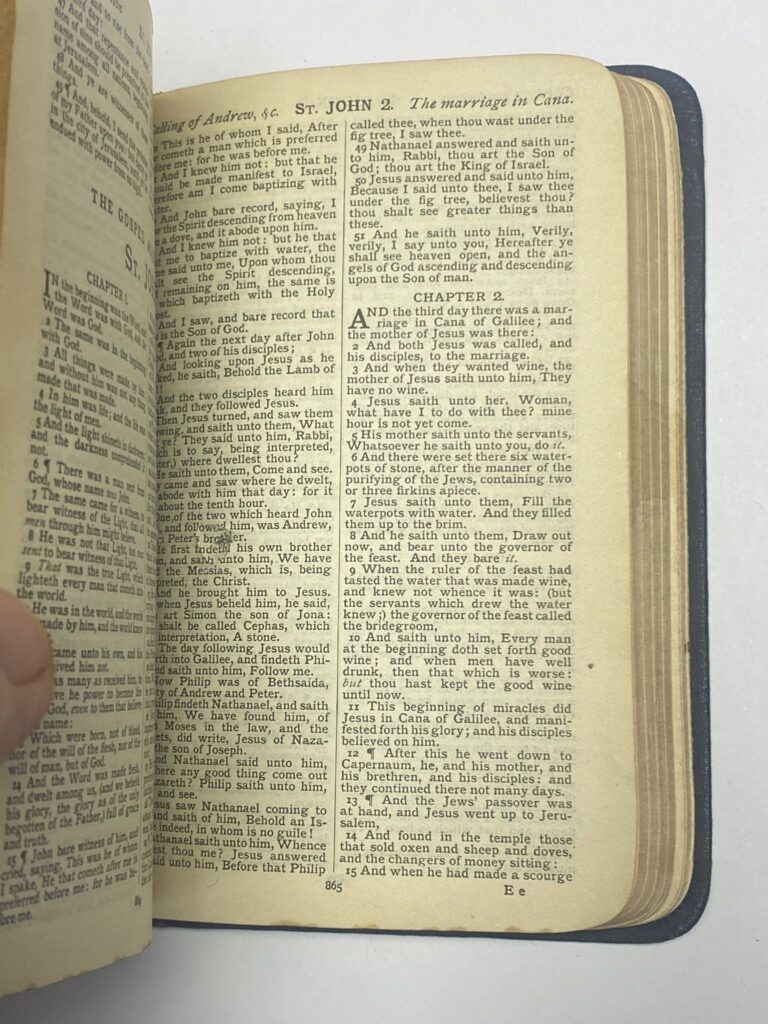
This one had a bullet still lodged in it – stopped at page 865 – and had, in a very literal sense, saved the life of its brave owner.
Talk about divine intervention.
It also offers a remarkable window into the life – and near-death – of Private John William Webb, a soldier who survived some of the fiercest fighting of the war’s final weeks.
Born in Gloucester on December 12, 1877, Webb was nearly 38 years old when he first stepped forward under the Derby Scheme in December 1915.
By the time he was approved for service in June 1916, Britain was deep in a war that had already reshaped a generation.
Unlike the teenage volunteers of 1914, Webb belonged to an older group of men – those with established lives, trades and families – called upon as the conflict demanded ever more manpower.
He joined the army with the service number 26700, carefully stencilled into the pages of the very Bible he carried. Such markings were common, ensuring personal belongings could be returned if lost—or if their owner fell in battle.
Webb would go on to serve with the 2/6th Battalion of the Royal Warwickshire Regiment, a unit closely associated with Birmingham and the Midlands.
Like many Territorial battalions, it was composed largely of ordinary working men – clerks, labourers, tradesmen—transformed into soldiers and sent to the Western Front.
By 1918, the nature of the war had changed. The static trench deadlock of earlier years had begun to give way to more mobile, fast-moving operations. In the autumn of that year, as Allied forces pushed forward in what became known as the final “Hundred Days,” soldiers like Webb advanced through a shattered landscape of ruined villages, orchards and fields churned by years of shellfire.
On October 24, 1918, Webb’s battalion took part in an attack on the German-held French town of Vendegies, near Cambrai.
The fighting was intense. As British troops moved forward from position to position, they came under sustained machine-gun fire from nests hidden in houses, and snipers in upper windows.
This was not the slow grind of trench warfare, this was terrifyingly intimate.
Private Webb would have been tasked with clearing houses, crossing open ground, and pushing the enemy back step by step.
And it was during this action that Webb’s service record notes he suffered a “G.S.W. Chest” – a gunshot wound to the chest.
At that moment, the small Bible he carried may have made the difference between life and death.
Carried in the breast pocket, close to the heart as was common practice, the Bible likely absorbed the impact of a round that might otherwise have proved fatal.
Webb survived the attack and continued to serve until 1919, when he was discharged due to his wounds. For his service, he was awarded the British War Medal and Victory Medal, along with the Silver War Badge – issued to those honourably discharged as a result of injury.
He returned home to Gloucestershire, living a long life that spanned both world wars, and died in March 1963 at the age of 85.
Today, his Bible is a personal reminder of the fine line between life and death, never more keenly observed than in combat.
The book’s scarred pages, pierced but not destroyed, remain a poignant reminder of how close one man came to becoming another name among the millions who did not return.
Stories like these remind me why my job is so worthwhile. We are keeping Private Webb’s war alive and in this increasingly troubled world his experiences seem more important than ever.
Bibles like the one owned by Private Webb, known as ‘Soldiers Bibles’ weren’t the full text. Most were pocket-sized New Testaments, often just a few inches tall, designed to fit into a uniform pocket or kit.
Our militaria expert Matt Crowson, one of the best in the business, expects the Bible to sell for £800-£1,200 at next month’s militaria sale on May 27.
If you have any medals, or pieces of interesting militaria. and would like to learn more about them Matt carries out valuations every Thursday at our Etwall from 10am-2pm.
Like me he is passionate about keeping the stories of our fallen heroes alive – just like Private Webb and his life-saving Bible.

Auction Details
Auction: The Hansons Medals, Militaria & Firearms Auction
Auction date: 27th May 2026 | 10am
Location: Hansons’ Derbyshire Saleroom
Auction contact: [email protected]
Catalogue/bidding: www.hansonslive.co.uk | www.the-saleroom.com