








You don’t have to be a ceramics expert to recognise one of the most distinctive pottery styles ever produced.
I am talking about Moorcroft, the legendary pottery, which has its roots in neighbouring Staffordshire in the heart of what we call The Potteries in Burslem, Stoke-on-Trent.
(Think of the historic bottle kilns on The Great Pottery Throw Down which is filmed at the town’s Gladstone Pottery Museum.)
In 1897, pottery maker James Macintyre discovered a prodigious talent in the shape of 24-year-old designer William Moorcroft.
Within a year he was in charge of the company’s art studio and, in 1904, his art nouveau-inspired designs – using a trailing slip known as tube-lining – won a gold medal at the St Louis International Exhibition.
When William Moorcroft died in 1945 his elder son Walter took over management and design at the increasingly successful company.
But last year was a rocky one for Moorcroft. Production halted in April only to restart in June when Will Moorcroft (William’s grandson) stepped in to refire the kilns.
Pottery today is once more in production, designed by members of the Moorcroft Design Studio – a handful of select artists, each highly skilled to produce its distinctive art nouveau style.
We are thrilled to offer vases for sale from the personal collection of one of Moorcroft’s best-loved contemporary designers – the Staffordshire-born ceramicist Kerry Goodwin.
The collection, which goes under the hammer at Hansons Auctioneers’ Etwall saleroom on February 13, includes rare prototypes which never went into production, as well as sought-after pieces from limited editions.
One of the highlights of the 14-piece collection, is a hand-decorated “trial” vase in the Moonshine design, dated 2013, which is expected to make up to £500.

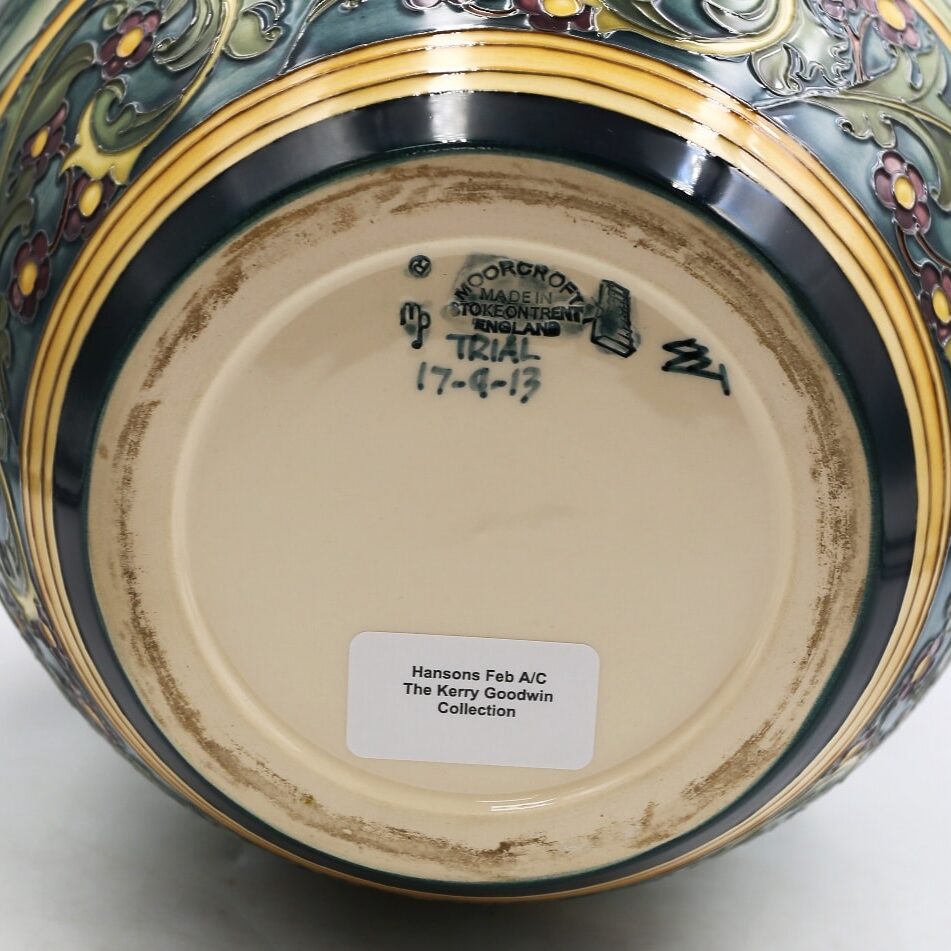
Art pottery like Moorcroft does not jump straight from idea to shop shelf. It is the result of a long process which includes trial designs by the artist.
Trial pieces are loved by collectors – not only are they rare (they never went on sale) but they provide an insight into exactly how the designer first envisaged her piece would look.
Some never went into production, or went into production in different colours or in very limited numbers.
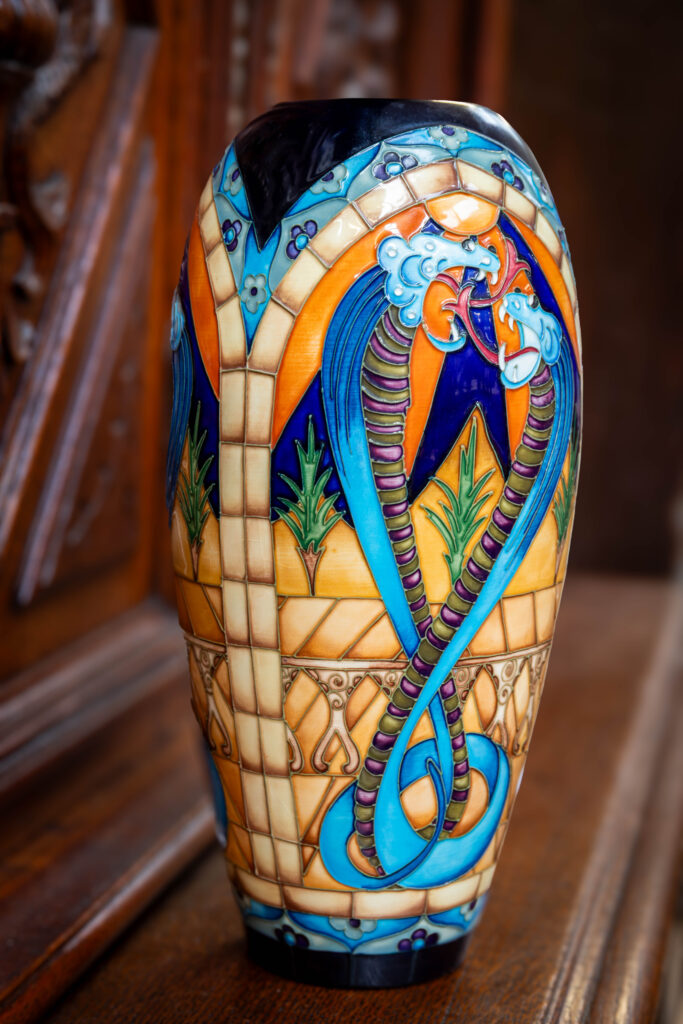
Other trial pieces include a rare Snake vase, which Goodwin designed in 2006 – one of only two ever produced – which is expected to make £250-£350.
The design, featuring two entwined cobras is as stunning as it is rare because the design never went into production.
The bottom of the 31cm-tall vase is marked “Des Trial” standing for designers’ trial.
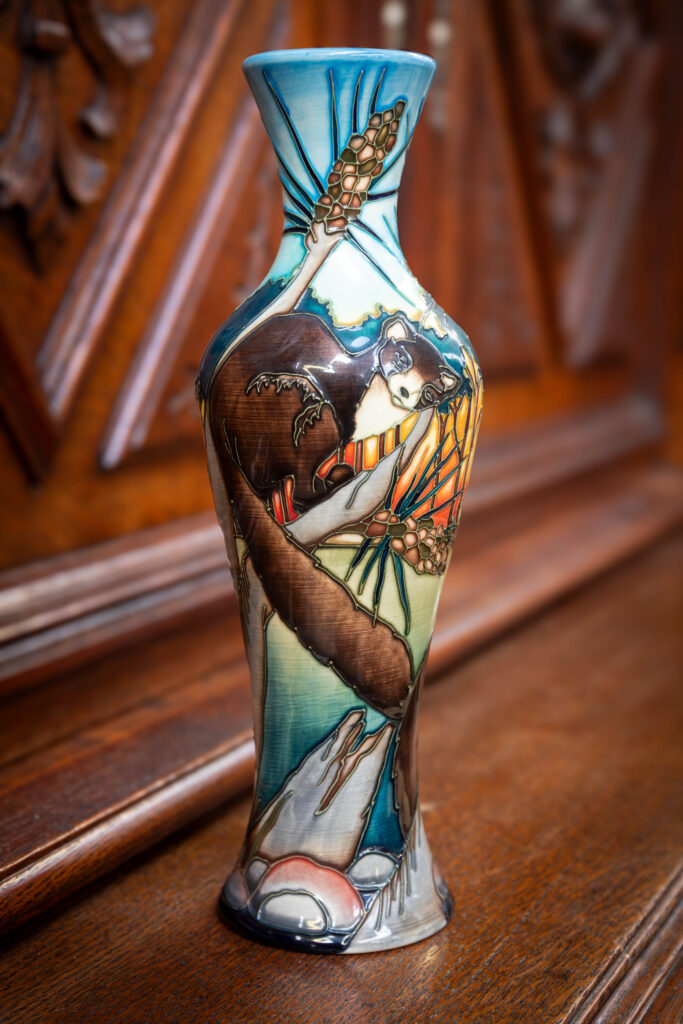
Another trial vase, this one in the Pine Marten design, created by Goodwin in 2009, is also in colours different from those that ultimately went into production. The 25.5cm high vase has an estimate of £80-£120.
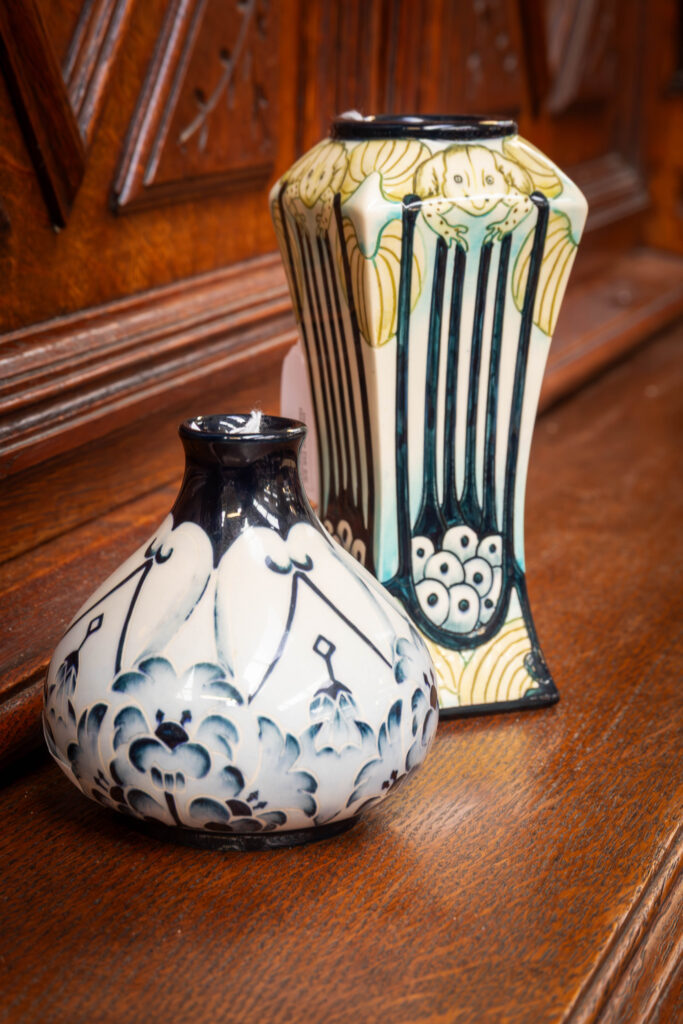
As well as trial pieces the collection includes signed, limited-edition vases including Goodwin’s Highland Stags, number 84 from an edition of 100, which has an estimate of £300-£400.
Goodwin, who trained at the Burslem Art College, joined Moorcroft in 2000, having previously worked at Beswick where she decorated Beatrix Potter figures.
Within a short period Moorcroft spotted her potential as an artist and promoted her to its prestigious design studio.
Known for her quirky designs, many inspired by wildlife, she also created pieces for the Moorcroft’s offshoot companies Cobridge Stoneware (1998–2005) and Black Ryden (2002–2005).
Like other Moorcroft designers, Goodwin’s work was developed first in freehand before being translated to clay and finished with Moorcroft’s famous tube-lined technique.
Among her most iconic designs is Potteries in Recession, her tribute to the economic turmoil of 2008 depicting the cityscape of Stoke-on-Trent in the manner of LS Lowry.
Her work is loved by Moorcroft aficionados around the world, so we are expecting a global online audience to take part in the sale.