









In the ‘70s the phrase ‘losing your marbles’ had very different connotations from today.
As every child who ever rolled a clearsie or a dobber towards their opponent will remember, nothing stung quite as much as losing one of your most-prized marbles to an opponent.
The fierce competition, the rivalries and the joy of the win – there was nothing quite like it. And then there was the lexicography of the game, with each playground having its own rules and names.
An alley was a marble made of alabaster, but it could also refer to a shooter or taw – the large marble used to knock around the smaller ones (known as mibs or ducks).
Bumblebees had yellow and black stripes, onionskins were resplendent with swirls of layered colours and the smallest marbles were known as pee-wees.
To our young minds nothing was quite as intriguing or beautiful as the marbles clinking in our pockets.
But as wondrous and prized as these shining orbs were to us, you would be hard pushed to give them any monetary value.
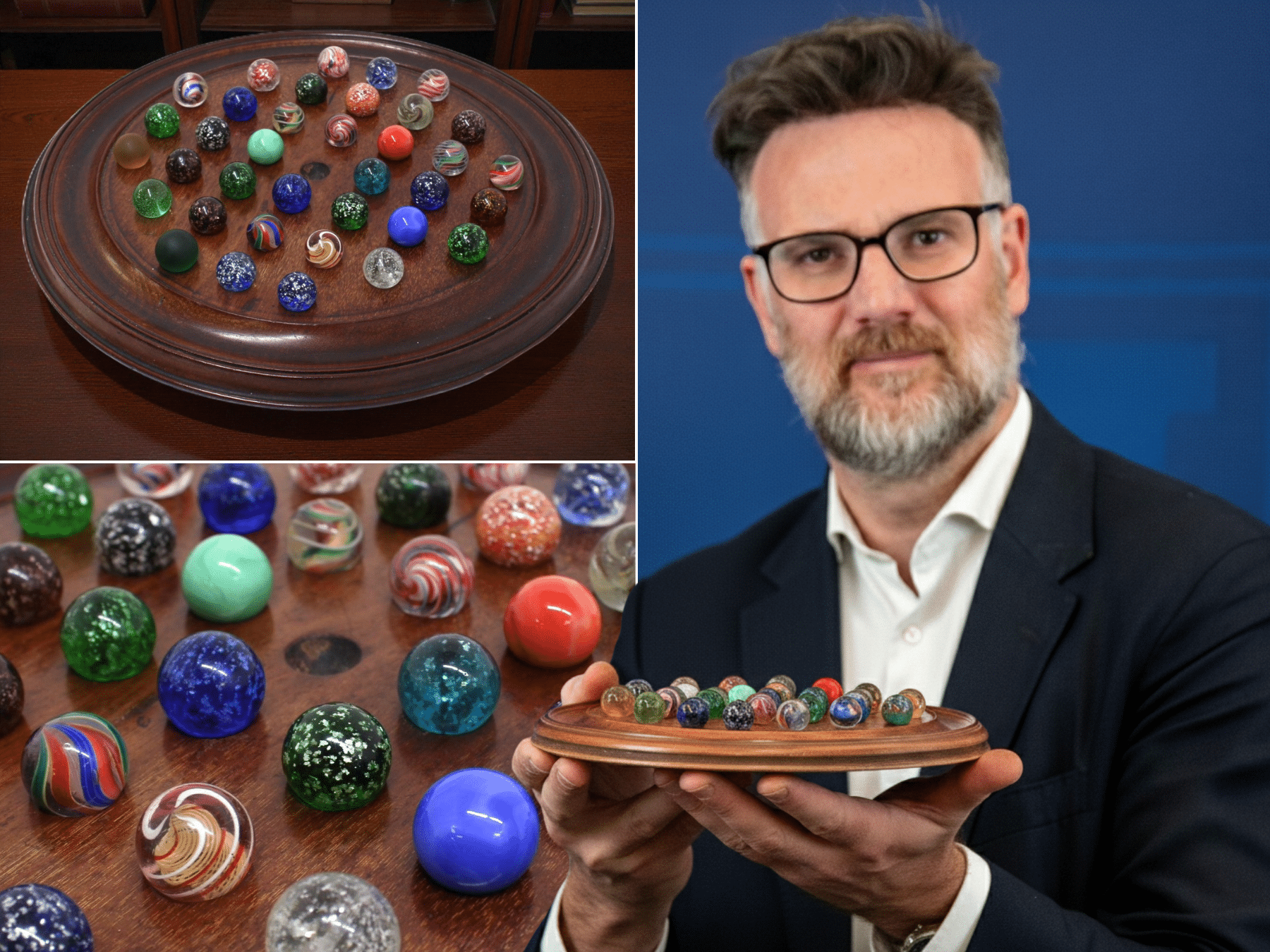
Unlike a collection of 33 marbles recently consigned from Doncaster.
These beauties, which date from Victorian era and were handblown by German glass makers,are a long way from the mass-produced marbles of our youth.
In fact the set, which goes under the hammer at this week’s toy sale on Thursday <jan 22> could make up to £5,000.
As our toy specialist, David Wilson-Turner, made clear these stunning examples are made up of some of the most wonderful glass orbs ever created.
They include latticino cores – delicate lattices of twisted white or coloured glass – as well as marbles enriched with mica inclusions creating a distinctive “blizzard” effect.
Their large size, each measuring 20-25mm, also sets them apart as being rare, mini works of art.
Most of the high-quality marbles on sale in Britain during the Victorian era came from central Germany, particularly in the forested regions of Thuringia, where glassmaking had been practised for centuries.
Villages such as Lauscha and Sonneberg supported cottage industries where skilled artisans worked molten glass by hand over small furnaces.
The finest marbles required several stages of gathering, reheating and shaping, often involving two or more workers coordinating their efforts.
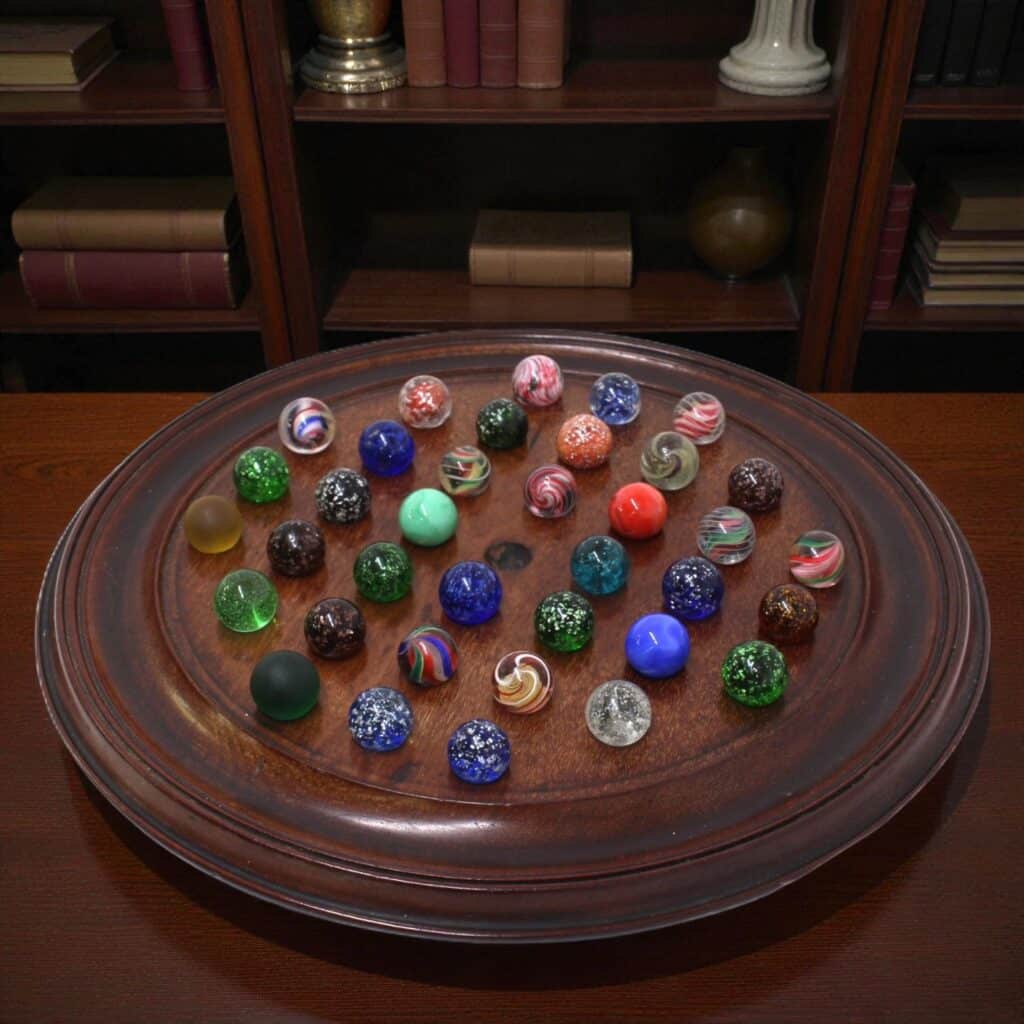

Most difficult to achieve were those with shrunken or divided internal core, formed when the interior glass cooled and contracted away from its casing, producing a floating, dimensional appearance.
By the mid-19th century, Britain was one of the largest importers of German marbles, rivalled only by the United States, with the most elaborate examples kept as prized possessions rather than played with extensively.
But as industrialisation spread throughout Europe German makers began introducing simple mechanisation with designs becoming less complex.
True mass production arrived around 1895, with the development of rotary marble machines capable of producing vast quantities of uniform glass spheres.
The decisive blow came in the early 20th century, when American inventors perfected fully automated marble-making machines.
By 1915, companies such as Akro Agate and Peltier were producing millions of marbles annually and by the 1970s every marble was mass produced.
Today, surviving Victorian handmade marbles, especially large, complex examples like theseare valued not merely as toys but as artefacts of a vanished craft tradition.
The market for collecting them today is booming both here and in America. As I have said many times, nothing sparks true passion among collectors like nostalgia.
In 2012 a rare pink swirl lutz marble sold for $25,800 (£20,000) setting an auction record.
Let’s see if we are on a similar roll at this week’s auction.

Auction Details
Auction: Hansons Diecast, Model Railway, Live Steam & Collectable Toy Auction
Auction date: 22nd January 2026 | 10am
Location: Hansons Derbyshire Saleroom
Auction contact: [email protected]
Catalogue/bidding: www.hansonslive.co.uk | www.the-saleroom.com