







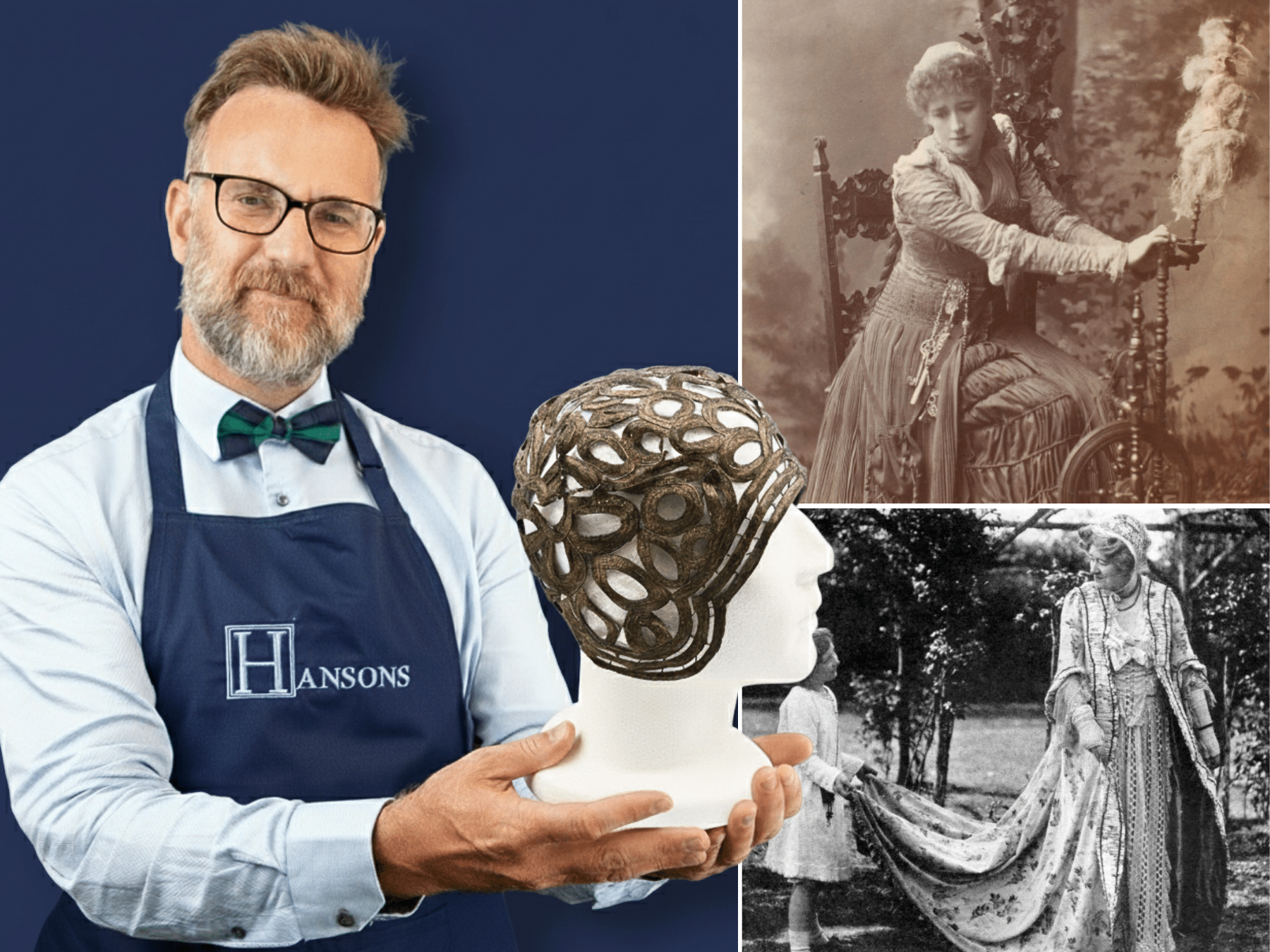
One of the most famous actresses of the late 19th and early 20th century was born in relative poverty just 50 miles to the south of Derby, in Coventry.
She clawed her way out of destitution to become the first global superstar.
If you don’t know the name Ellen Terry, you really should.
She was born in an era when appearing on the stage was seen as a sign of dubious morality, but transformed acting into the art form we see it today.
Combine the star appeal of the Beatles and Judi Dench and you might have some idea of her celebrity appeal on both sides of the Atlantic
A report from the 1890s recounts how she was mobbed by fans after a show in Boston, one of whom fainted upon receiving her signature — a sign of the almost film-star level of adoration she inspired.
So when an elegant cloche worn by Terry was consigned to our Etwall saleroom, for a sale starting on Thursday <nov 20>, it is safe to say it added more than a pinch of pizzazz.
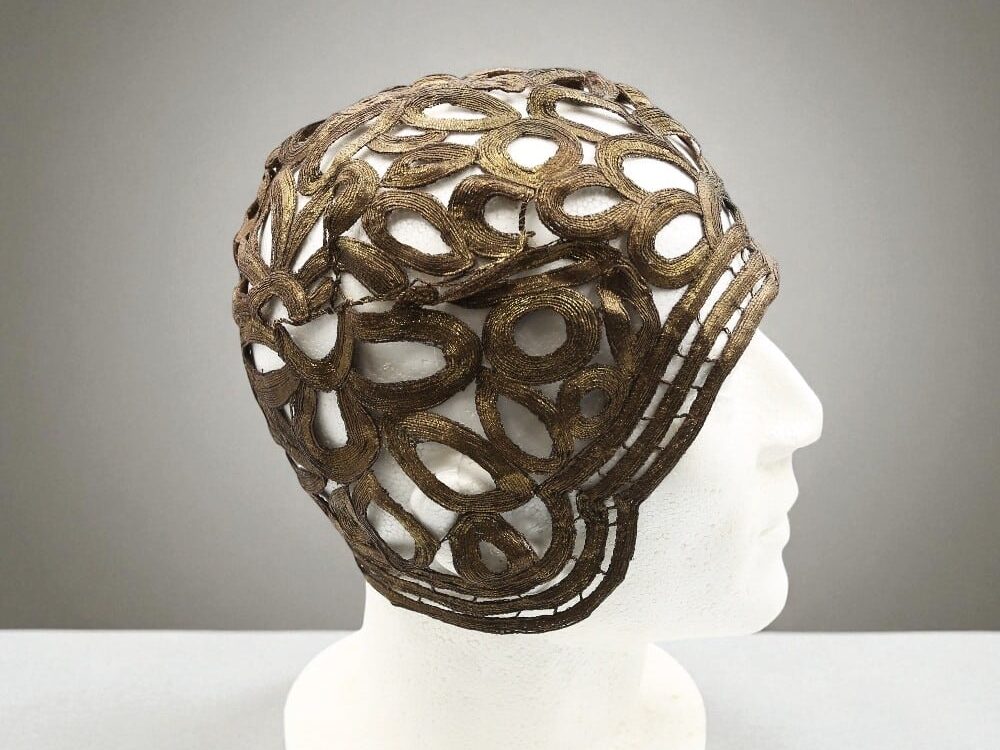
Its vendor is a textiles collector from Ireland who bought it from a London dealer 30 years ago.
Now aged 81, the owner, who doesn’t want to be named, is downsizing and keen the beautiful piece should get the plaudits it deserves, perhaps even going to a museum
The dealer assured her of the provenance to Terry and later research proved the actress was in the habit of giving personal items, including hats, to her legion of fans.
The quality of the hand stitching is exceptional, it must have taken days to produce.
It deserves to be on display on a mannequin, not lying flat in a drawer.
Lowly origins
Like all the best celebrity back stories, Terry came from humble beginnings.
The daughter of comic actors from a Portsmouth-based touring company, she was one of 11 siblings, five of whom became actors.
Starting a child, Terry toured the UK in impoverished circumstances, she later recalled having to walk from Bath to Bristol because her parents didn’t have the money for the train.
She likely entertained our predecessors in Derby. In the mid-Victorian era, the city had a thriving local theatre scene centred around the Grand Theatre (originally on Babington Lane)and the Theatre Royal on Bold Street, which hosted visiting companies including the Terry family.
There are even documented instances of Ellen and her siblings performing in Derbyshire villages as part of regional troupes.
Perhaps looking for a more stable life, she married the 46-year-old Pre-Raphaelite painter, George Frederic Watts.
30 years her senior, Watts was captivated by her looks and, seeing her as a potential muse, first thought of adopting her.
Instead, they got married in the church of St Barnabas, Kensington on 20 February 1864, a few days before her 17th birthday.
It was then the young Terry entered the orbit of the well-off intelligentsia, including poets Robert Browning and Alfred, Lord Tennyson, as well as prime ministers William Gladstone and Benjamin Disraeli.
A romantic liaison with the architect Edward William Godwin produced a daughter Edith Craig, in 1869 and a son, Edward Gordon Craig, in 1872.
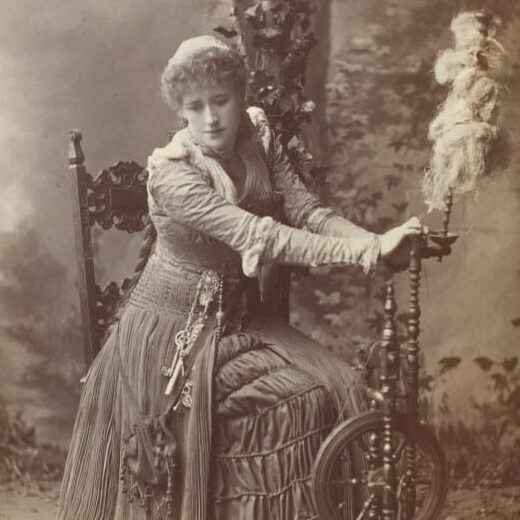
When Terry returned to the stage in 1874, she was feted for her beauty, charisma and actingskills.
In 1878 she became the leading lady of Sir Henry Irving’s Lyceum Theatre Company before long becoming a household name playing to packed houses.
Fashion icon
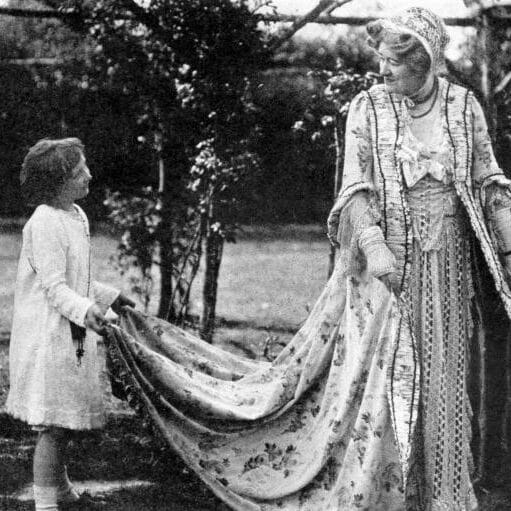
A true Bohemian at heart, Terry’s unconventionality extended to her sense of style.
She turned her back on the overdecorated clothing of Victorian and later Edwardian fashion.
Terry’s style was much more rooted in Aesthetic Movement’s ideals which rejected tight corsets, bustles and tailored suits in favour of flowing garments, often inspired by medieval dress.
She loved rich textures of velvet and silk, or the majestic gold thread seen in the hat we have coming up for sale.
Terry’s principal costume maker at the Lyceum, Ada Nettleship revealed how one of her dresses was “twilled by girls entirely of gold thread”.
The hat’s unusual scallop shape, emulating the hair curls it was designed to cover, is a fitting reminder of what fin de siècle style icon Terry was.
In 1899 Terry moved to a half-timbered 16th-century cottage in Smallhythe, Kent. By then she was a friend and confident of the Irish playwright George Bernard Shaw and, knowing Terry’s life story, I can’t help wondering if she was an inspiration for his famous play Pygmalion.
In one of his countless letters, he wrote he wanted to write a play for her.
Ellen Terry died in 1928, at the age of 81, one of the first true acting icons.
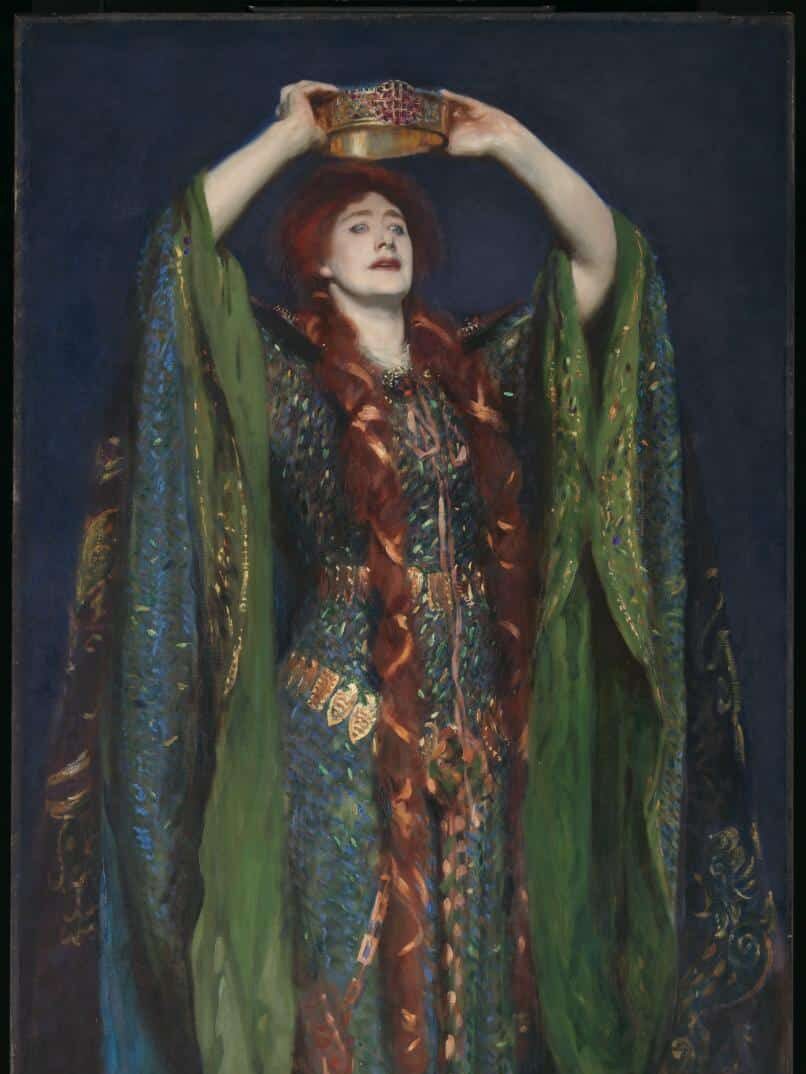
Smallhythe is now owned by the National Trust, with one of the rooms dedicated to the former owner’s costumes, including one created for Terry’s role as Lady Macbeth which was made out of thousands of beetle wings.
How wonderful if the hat was to join the cast of clothes.

Auction Details
Auction: Derby November Four-Day Antiques & Collectors Auction
Auction date: 20th – 25th November 2025 | 9:30am
Location: Hansons’ Derbyshire Saleroom
Auction contact: [email protected]
Catalogue/bidding: www.hansonslive.co.uk | www.the-saleroom.com