







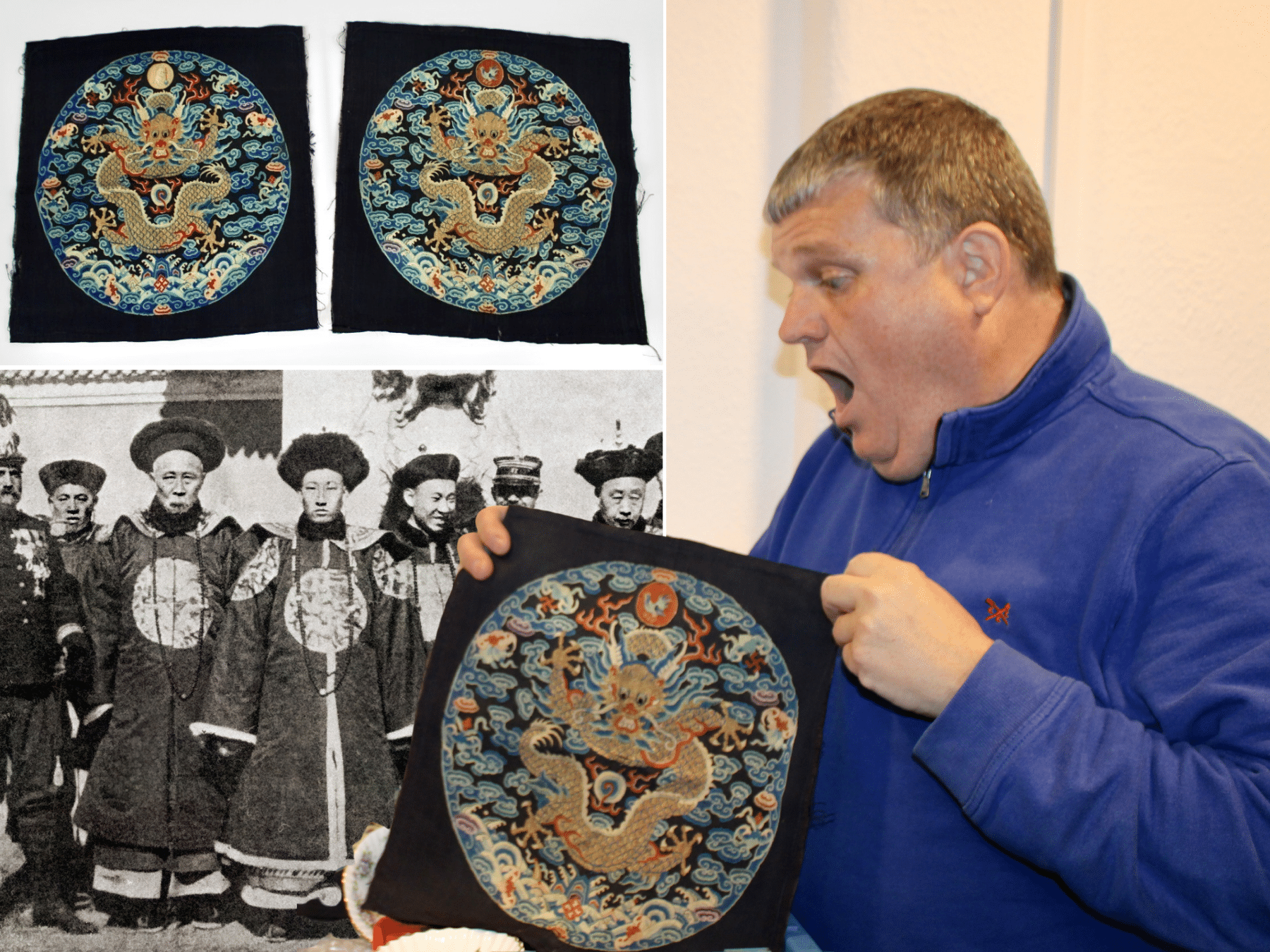
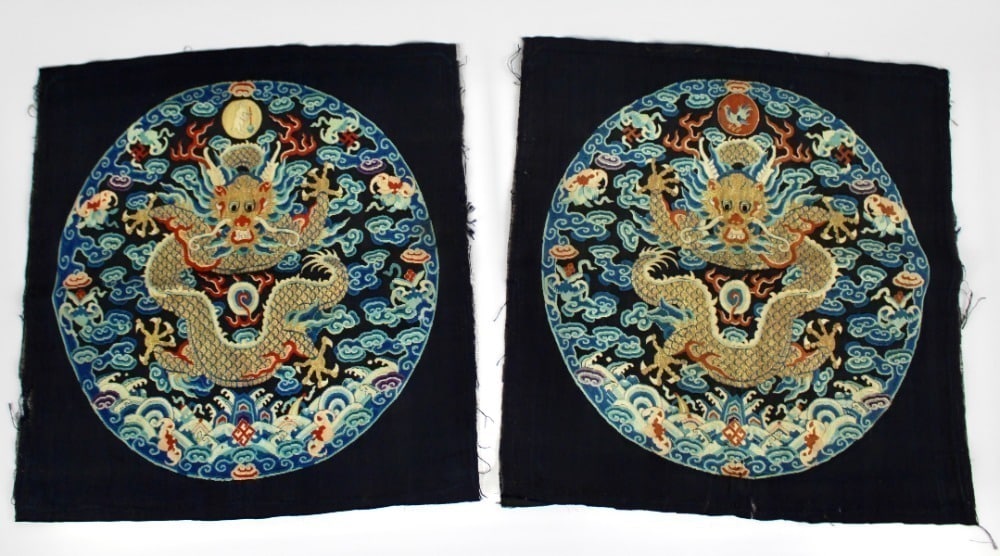
A pair of silk panels bought at a jumble sale for pennies sold for £5,500 at auction after it was discovered they could have been part of a ceremonial robe worn by the Chinese emperor.
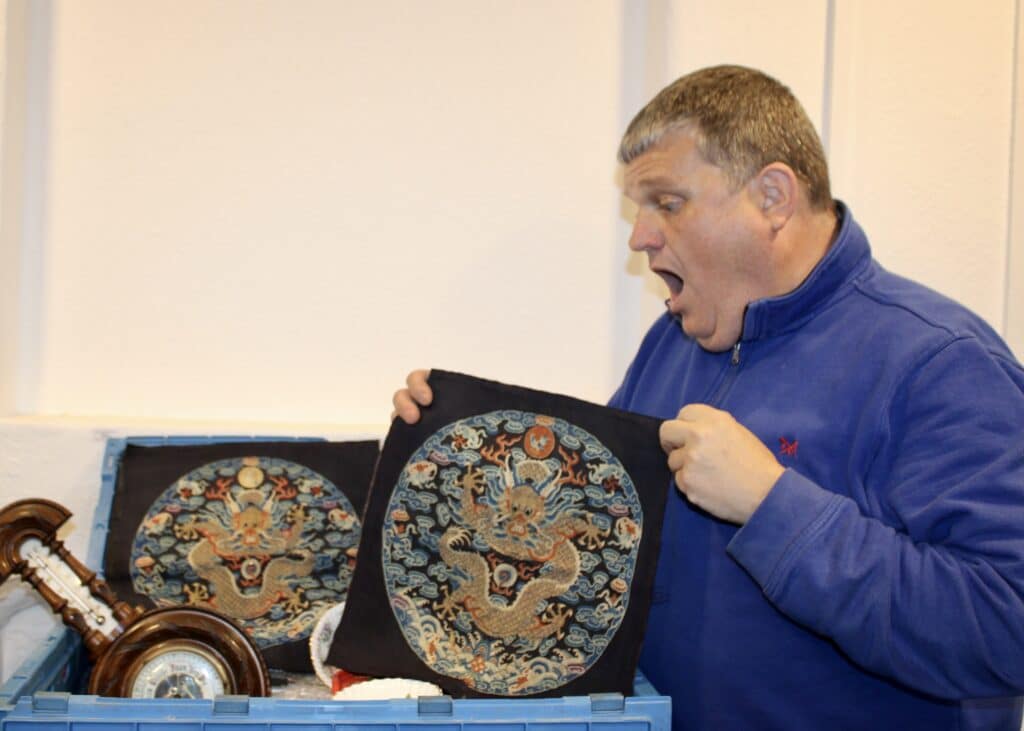
Neil Bathgate, from Fordcombe in Kent, was “gobsmacked” at the sale of the tapestries which his nan, Nora, bought in the 1970s.
He said: “Nan who died aged 92 always told us they were worth something, but we just ignored her. Now we know differently. I can just imagine her looking down and saying ‘I told you so’. And she’d be right!”
The panels, depicting two dragons, are similar to examples in museums around the world.
They are now making their way to Hunan Province having been bought by a Chinese collector.
The textiles, which were sold at Hansons Auctioneers’ Kent saleroom in Penshurst, had a pre-sale guide price of just £40-£60.
Charles Hanson, who conducted the auction, said: “The auction was a real battle between East and West with bidders in London and China. The saleroom was electric. In the end the panels went to China and it is fitting such wonderful pieces should return to the country they came from.”
What canny collectors had spotted was a five-clawed dragon – a design only worn by the emperor, empress, consorts or crown prince.
Neil, 53, an electrical engineer, continued: “My nan, who died in 2012, wasn’t a collector but she loved a jumble sale. I remember she had the panels framed on the wall for a while because she was convinced they were really worth a lot. Before that I think she kept them under the bed.”
Neil and his partner were amazed when they watched the auction live.
He said: “We couldn’t believe it when the bidding went up and up. We were gobsmacked and still in shock. I’m sure nan would have loved to have seen her words come true.”
Dating from the Qianlong period (1736-1795), the round silk panels, known as buzi, would have decorated a satin overcoat, known as a gun fu, worn only by the highest circles.
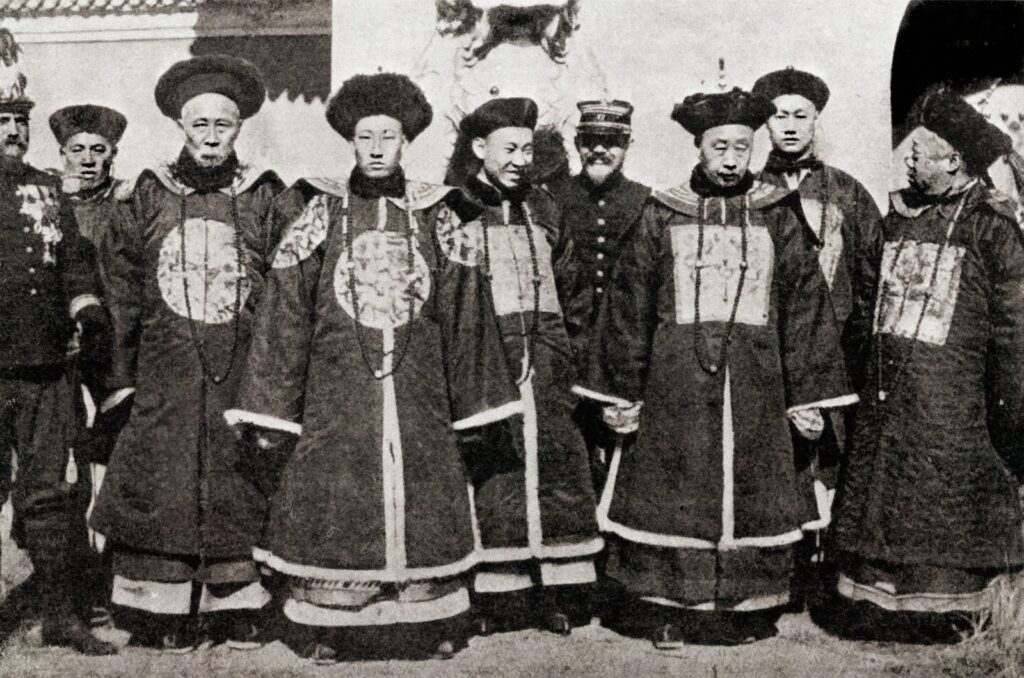
Hand stitched using the finest silk, every element, including shape, design and the position on the robe would have been an indicator of rank.
Auctioneer, Justin Matthews, said: “Even though the panels are no longer attached to the robe, they tell us a lot about who might have worn them. And in this case, it could very likely have been the emperor himself.
“Circular designs were reserved for the imperial family, as was any depiction of a five-clawed dragon. The fact the dragon is facing the front is significant as this was also the preserve of high-profile wearers only – with the dragon in profile used by lower ranks.”
But the most significant element can be found in the red and gold discs above the dragon’s head – one showing an upright jade rabbit pounding a pestle, the other a three-legged rooster.
Justin continued: “The Qianlong emperor added the first two symbols of imperial authority, the sun (yang) and moon (yin) – as depicted by the rabbit and rooster – to the shoulder roundels on his coat. When he did so he stated they were for the exclusive use of only the emperor and empress.”
Added to which the left roundel has a background of imperial yellow – a colour also reserved exclusively for the emperor, he added.
Auction Results
Auction: Penshurst Silver, Jewellery, Watches & Fine Art Auction
Auction date: 16th September 2025 | 10:30am
Location: Hansons Kent Saleroom
Auction contact: [email protected]
Catalogue/bidding: www.hansonslive.co.uk | www.the-saleroom.com