







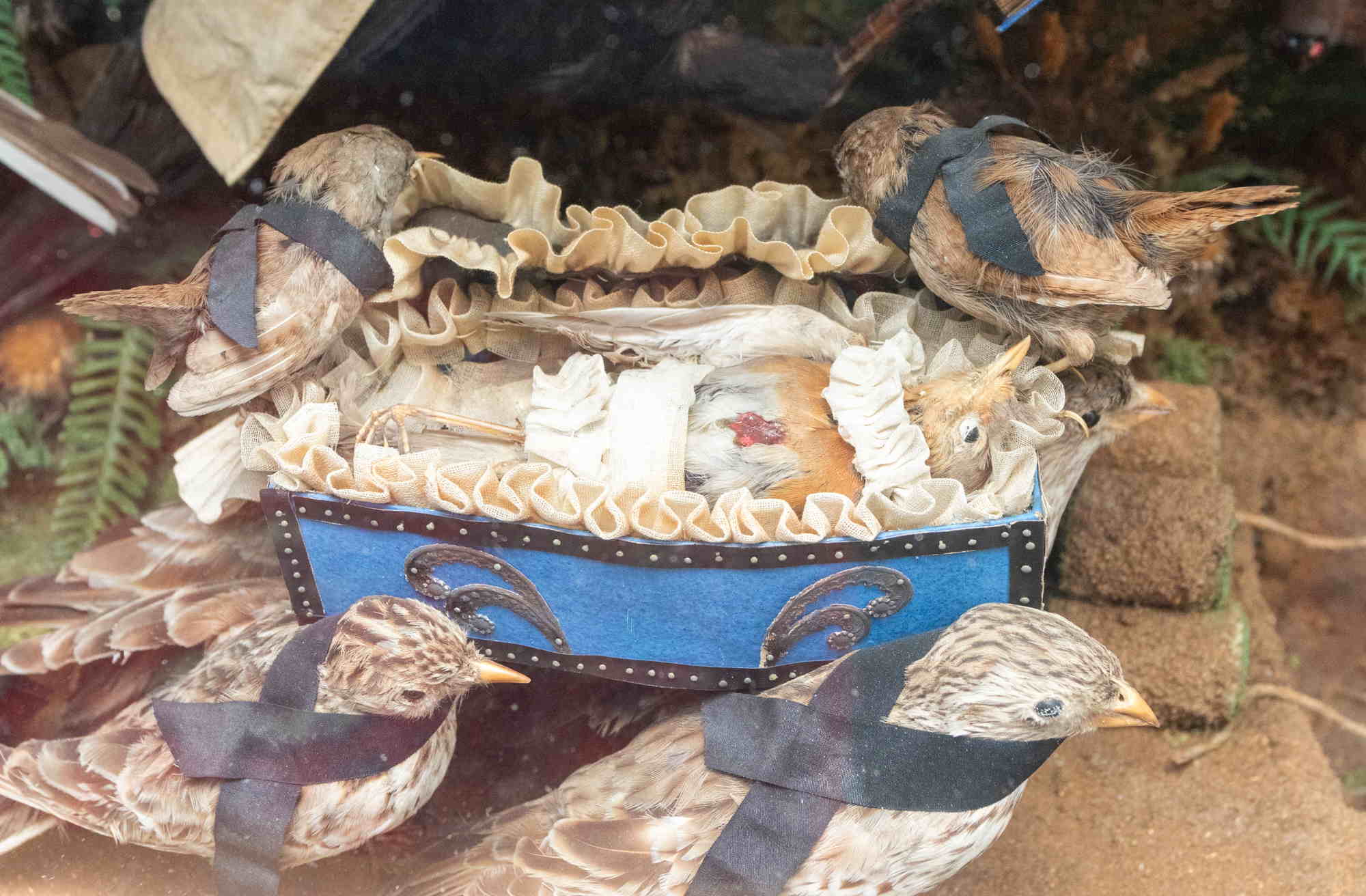
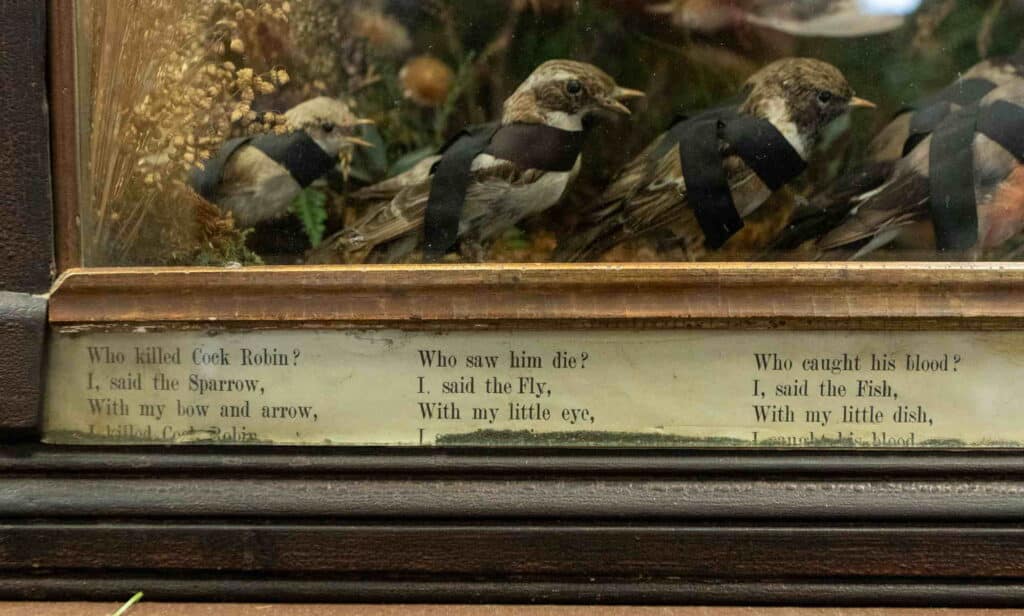
A creepy Victorian taxidermy box depicting ancient nursery rhyme Who Killed Cock Robin? Has been hailed as the strangest find ever made by an antiques expert.
The quirky farmhouse discovery, which dates back to circa 1870, was uncovered in Leicestershire by Charles Hanson – and he could hardly believe his eyes.
Charles, owner of Hansons Auctioneers and a familiar face on TV’s Bargain Hunt and Antiques Road Trip, said: “I have never seen anything like it in more than 20 years in the antiques industry. It’s creepy but incredible, weird but wonderful. It’s one of the most amazing oddities I’ve ever come across. To see stuffed birds in such vivid, human-like poses is quite bizarre. We suspect this find may fly away to America.”
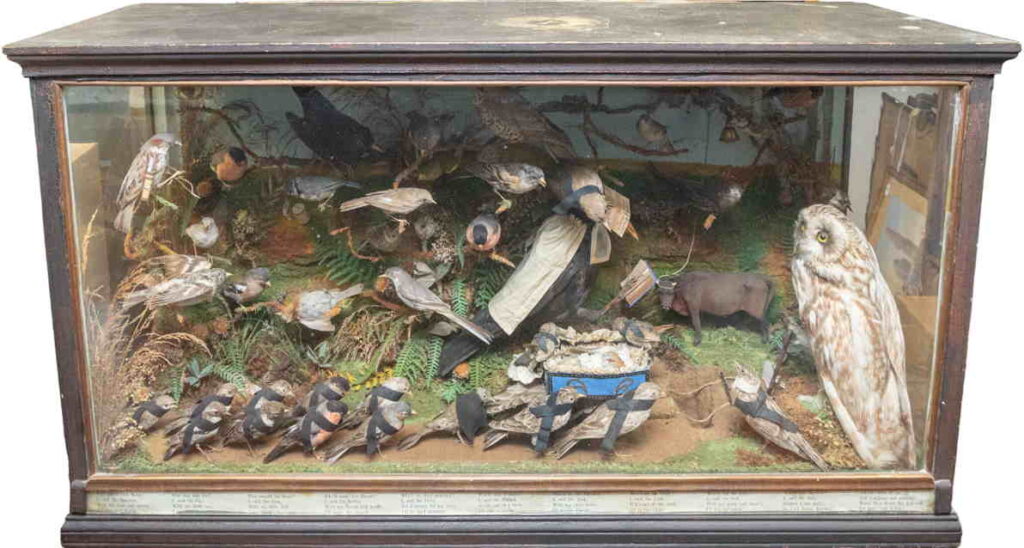
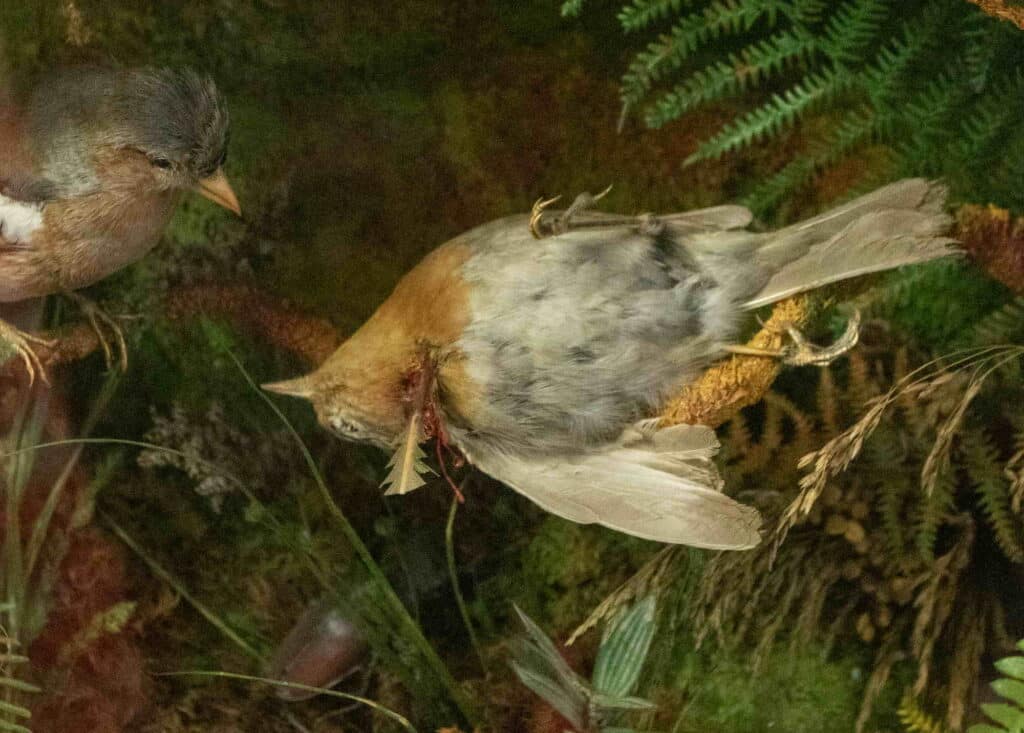
The 150-year-old antique depicts the nursery rhyme in a display using more than 30 birds. They include Cock Robin hanging from a branch with an arrow though his heart and in death repose in an open casket, a blood-red wound to his chest. According to the rhyme, Cock Robin was killed by a bow and arrow.
But the macabre display gets more bizarre. Pairs of birds wearing black mourning sashes follow the casket in procession. A wise owl looks on and a multitude of birds ponder the sombre scene from branches above.
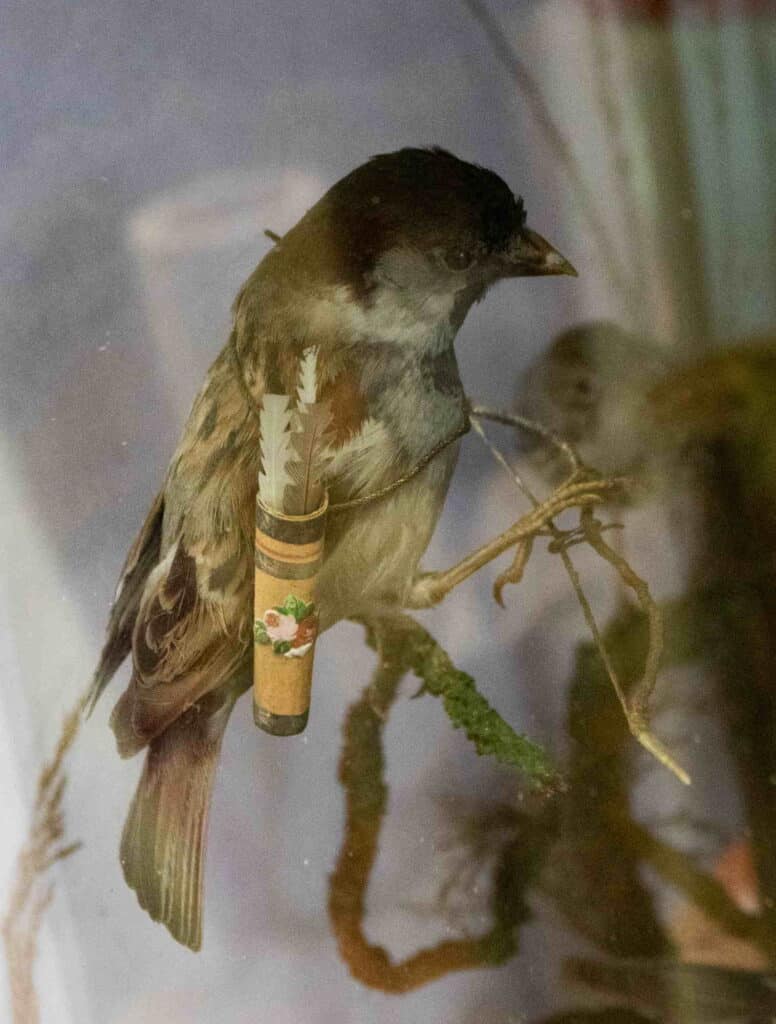
The nursery rhyme famously begins, ‘Who killed Cock Robin? I, said the Sparrow, with my bow and arrow’. It then goes on to list a host of creatures from beetles to fish and a multitude of birds who play their part in Cock Robin’s demise.
For example, ‘Who’ll dig his grave? I, said the Owl, with my pick and trowel, I’ll dig his grave. Who’ll be the parson? I, said the Rook, with my little book, I’ll be the parson. Who’ll be the clerk? I, said the Lark, if it’s not in the dark’.
The taxidermy is set for auction with a guide price of £400-£600. However, it’s so unusual Charles believes it could achieve £5,000 in Hansons’ November 30-December 1 Fine Art Auction.
He said: “The historical context of this object is fascinating. The earliest record of Cock Robin is in Tommy Thumb’s Pretty Song Book published in 1744. However, it noted only the first four verses. The extended version was not printed until circa 1770.
“But evidence points to the rhyme being much older. The death of a robin by an arrow is depicted in a 15th-century stained glass window at Buckland Rectory in Gloucestershire.
“There are also similarities to poem Phyllyp Sparowe penned by John Skelton in circa 1508. It laments the death of a pet bird. Versions of the story also appear in other countries, including Germany.
“It’s also been suggested it’s a parody of the death of King William II, who was killed by an arrow while hunting in Hampshire’s New Forest Hampshire in 1100. He was known as William Rufus, meaning ‘red’.
“Another theory is that it’s connected to the fall of Robert Walpole‘s government in 1742. Robin is a diminutive form of Robert and the first printing of the rhyme is close to the time of the event.
“But it may go back further and have its roots in Celtic traditions. Lugh, the sun god who dies as the nights get longer after the summer solstice, is marked in the old Celtic pictographic calendar with a bow-and-arrow shape. Lugh was the primary god representing the red sun and was also known in Welsh as Coch Rhi Ben, anglicised to ‘Cock Robin’.
“Cock Robin could also be a nod to the belief that souls became birds after death. People who see a robin after a bereavement sometimes take comfort in thinking the departed soul has come back to visit them in the shape of the robin.
“However it was conceived the theme of Cock Robin’s death along with the poem’s distinctive cadence have become archetypes used in literary fiction and other works of art. So perhaps we should not be surprised to see the story emerge in taxidermy at a time when it was extremely popular. In 19th century England nearly every town had a taxidermist and this example may have been commissioned.”
According to the item’s provenance, it was purchased in 1870 by Mr W Wright, a farmer at Thorpe Acre adjoining Garendon Park, near Loughborough, Leicestershire. He bought the case of birds from a Mr G Creswell of Thorpe Acre who carried out taxidermy in his spare time. After Mr Wright died his wife gave the case to their granddaughter, Minnie, and her husband Will Antil. They were caretakers of the Westminster Bank in High Street, Loughborough. When Will Antill passed away Minnie made a will leaving the Cock Robin case to the current owner’s family. It was inherited around 1950.
Auction: The Cock Robin case of birds will be offered in Hansons’ November 30-December 1 Fine Art Auction. Further entries invited. To book a free valuation, email [email protected] or call 01283 733988.
Nursery Rhyme | Who Killed Cock Robin?
Who killed Cock Robin?
I, said the Sparrow,
with my bow and arrow,
I killed Cock Robin.
Who saw him die?
I, said the Fly,
with my little teeny eye,
I saw him die.
Who caught his blood?
I, said the Fish,
With my little dish
I caught his blood.
Who’ll make the shroud?
I, said the Beetle,
with my thread and needle,
I’ll make the shroud.
Who’ll dig his grave?
I, said the Owl,
with my pick and trowel,
I’ll dig his grave.
Who’ll be the parson?
I, said the Rook,
with my little book,
I’ll be the parson.
Who’ll be the clerk?
I, said the Lark,
if it’s not in the dark,
I’ll be the clerk.
Who’ll carry the link?
I, said the Linnet,
I’ll fetch it in a minute,
I’ll carry the link.
Who’ll be chief mourner?
I, said the Dove,
I mourn for my love,
I’ll be chief mourner.
Who’ll carry the coffin?
I, said the Kite,
if it’s not through the night,
I’ll carry the coffin.
Who’ll bear the pall?
We, said the Wren,
both the cock and the hen,
We’ll bear the pall.
Who’ll sing a psalm?
I, said the Thrush,
as she sat on a bush,
I’ll sing a psalm.
Who’ll toll the bell?
I, said the Bull,
because I can pull,
I’ll toll the bell.
All the birds of the air
fell a-sighing and a-sobbing,
when they heard the bell toll
for poor Cock Robin.