








Derbyshire’s rich antiques heritage boasts many stars and one of its brightest is the Royal Crown Derby Porcelain Company.
Collectors the world over desire objects made by England’s oldest pottery manufacturer, founded in 1750. Among celebrated wares one pattern in particular turns heads, Imari 1128. It’s brilliance on a plate.
This sumptuous oriental design in bold shades of red, blue and gold was a hit when it emerged as ‘Japan patterns’ in the early 1800s. It’s arguably even more of a hit today.
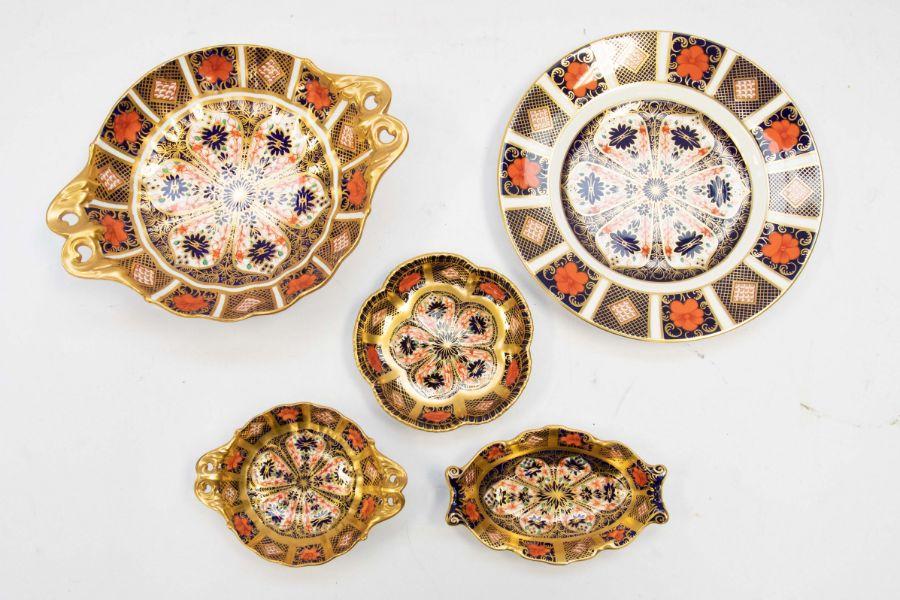
Bidders the world over love Imari 1128 and Hansons’ ceramics auctions have recorded its rise to glory. So, as we watch this collectors’ love affair deepen, why is it held in such high regard? Put simply, it’s a design classic honed to perfection. The combination of intricate oriental decoration in vibrant shades of red, blue and gold has deep appeal, one recognised by our Georgian and Victorian ancestors centuries ago.
In the 1800s ceramics were imported to England from the Japanese port of Imari, which is where the name comes from. Apparently, when this style of layered decoration arrived on our shores in the 1700s, a bright spark at Derby Pottery spotted its potential and copies were made.

It’s possible another porcelain factory copied it first, the history is sketchy. One thing manufacturers didn’t have to contend with at that time was copyright law. You could not be sued or face an EU injunction!
If you saw something you liked you recreated it but it worked both ways. Brilliant original concepts that emerged in Derby could be ‘stolen’. However, in the early 19th century, a highly competitive time in Britain’s porcelain industry, manufacturers just got on with making their wares.
By 1811 Japan patterns were widely known and when Robert Bloor took over the failing Derby porcelain factory in 1815, he utilised their commercial potential to deliver success.
At the time there was a lot of imperfect white ware begging to be utilised in some way. Bloor reached out to the Staffordshire Potteries to find 20 hand painters of Japan patterns. Ornate adaptations of oriental patterns were added to the traditional Derby style.

Aristocratic and wealthy clients were attracted to these wares. Those heavily gilded plates, cups and saucers shouted out splendour and wealth. They looked glorious in flickering candlelight, adding style to Georgian and, later, Victorian homes.
Imari patterns sold and they sold well. Consequently they were produced at Derby’s Nottingham Road Factory until its closure in 1848. They were then produced at the King’s Street factory and at the Osmaston Road Factory when that opened in 1878. To underline the infinite appeal of good design, Old Imari is still produced by Royal Crown Derby.
The famous pattern 1128 is what many people define as Imari. However, there are various Imari patterns. One of the original best sellers was Derby Peacock.
Imari’s importance increased thanks to royal patronage, collectors’ passions and the trend to buy it as gifts to mark special occasions. Imari patterned items have been chosen by the Royal Family to give to visiting dignitaries.

It’s an iconic collectible worthy of the finest moments in life, such as a wedding present. Its likely to remain forever popular. I say that because its flower has not faded for centuries. It emerged from ceramic traditions in China and Japan, countries known to recreate styles and patterns of porcelain stretching back centuries. The original design that inspired Imari may be hundreds of years old.
So what could your Imari ceramics be worth today? Well, a comprehensive collection of Royal Crown Derby Old Imari and Imari tableware achieved £2,300 at Hansons.
Even if you have just a couple of pieces it may be worth considering selling them. In February Hansons saw an early 20th century Royal Crown Derby Imari pattern plate, stamped ‘Derby 1915’, together with a 20th century Oriental vase, achieve £290 from a £40-£60 estimate.
In similar vein, two Royal Crown Derby 1128 Imari plates made £50, a set of seven Imari 1128 plates made £140 and a mixed collection of Royal Crown Derby china including 1128 Imari, 2451 old Avesbury and more, reached £160 from a £60-£70 guide.
Royal Crown Derby paperweights are popular too. A collection of five boxed, gold stopper paperweights including a Koala and Baby, LLama, Terrapin, Old Imari Snake, and Event piece 2007 Toad, made £140.
Royal Crown Derby has made objects of beauty that appeal to collectors for more than 270 years. Long may it continue!
Ceramics invited for auction
Entries are invited for monthly ceramics sales at Hansons. To arrange a free valuation or home visit, email [email protected] or call 01283 733988.