









The skull of a seafaring goat which supplied milk to Napoleon Bonaparte aboard ship after he surrendered to the British in 1815 could sell for thousands at auction.
The centuries-old skull, estimate of £2,000-£3,000, is one of the quirkiest animal-related finds ever made by Hansons Auctioneers. However, they say it’s not unusual in the context of 19th century British Navy life.
Hansons said: “A goat serving on one of His Majesty’s ships in the 1800s might seem incongruous but it stood in a long naval tradition. Sailing ships resembled floating farmyards because captains recognised the importance of a good diet, including meat and milk, to keep men healthy on long voyages.
“Goats were good shipmates. Not only did they provide milk they could roam the vessel. Steadiness of foot suited them to a rolling deck. They gained so much respect that on April 4, 1772, a goat obituary appeared in London publication The Craftsman. It stated the animal had ‘been twice round the world, first in the Dolphin, Captain Wallis, then in the Endeavour, Captain Cook’.
“So we should not be surprised a seafaring goat’s skull has been preserved as a souvenir for more than 200 years, particularly bearing in mind its connection to one of the world’s most famous historical figures. The goat, and its skull, belonged to Captain Frederick Lewis Maitland, the man Napoleon surrendered to aboard HMS Bellerophon on July 15, 1815. The goat’s milk was drunk by Napoleon during his time in captivity aboard ship.”
The artefact is part of The Maitland Collection, historical treasures acquired by the captain to commemorate his part in Napoleon’s surrender. It was a turning point in history, ending the Napoleonic Wars (1799-1815).
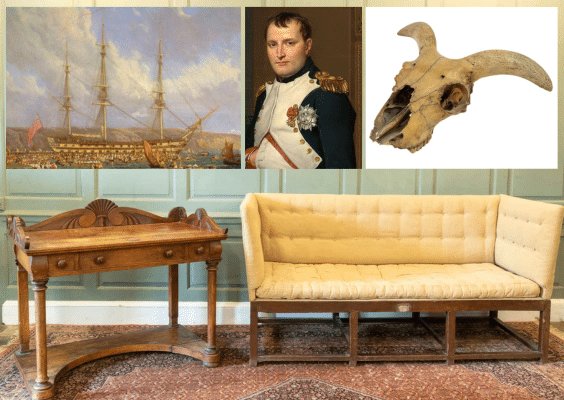
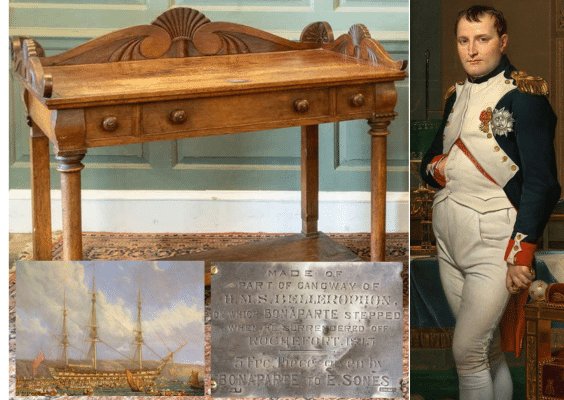
Headlining the October 31 sale is the HMS Bellerophon ship deck timber Napoleon stood on to surrender to the British. The wood was incorporated into a table for long-term commemoration. The auction also includes the sofa the French emperor slept on aboard ship. They come to auction by descent through the Maitland family, their custodians for more than 200 years.
Hansons said: “These breath-taking historical finds emerged during a routine valuation event in Nottinghamshire. We’re privileged to bring them to auction and expect strong global interest. Bidders will be fascinated by their historical significance and the skull in particular opens a window into the past.
“Goats were held in high regard by sailors. Food that wasn’t salted, pickled or dried quickly perished, so anything fresh – particularly goat’s milk – was vital. Sailing ships resembled floating menageries. Not just goats but sheep, cattle, pigs, hens and geese went to sea with the Royal Navy. Most livestock spent their time in a pen or coup but goats, by tradition, roamed free.
“Animals on ships came about after captains noted how badly men were affected by a poor, monotonous diet during long voyages. They instinctively understood that food variety made for good health.
“In October 1760 HMS Somerset, a ship smaller than the Bellerophon, left Messina with 60 oxen. In January 1761 HMS Elizabeth sailed the Indian Ocean with 71 head of cattle aboard. It was thought reasonable that a ship in winter should carry 40 sheep and a dozen oxen for consumption on board.
“This concept was made possible because, unlike steam-powered ships, the sailing warships of Captain Maitland’s era had essentially unlimited endurance. Steam ships needed to come into port for coal. Sailing ships did not. Their time at sea was limited only by what their sailors could stand and by the quantity of food and water they could store.
“This facilitated a form of warfare at which Britain’s Royal Navy excelled – blockade. The safety of the British Isles and of British merchant ships was secured not primarily by stationing warships off British ports but by stationing fleets off enemy ports. Enemy ships were penned into harbour. HMS Bellerophon was maintaining a blockade off Rochefort, France, when Napoleon surrendered.”
Auction: October 31, 2024 | The Captain Maitland Collection: The Surrender of Napoleon Bonaparte.