







Here, Hansons’ furniture expert Scott Markham shines the spotlight on two types of antique chairs causing a stir at auction.
Orkney craftsmanship warms hearts
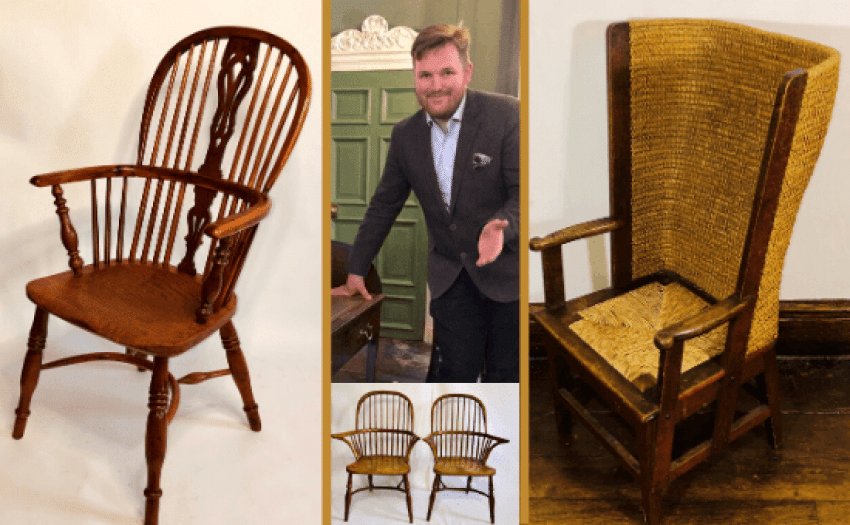
Orkney chairs proved popular in our May 2020 Fine Art Auction and, thanks to their rich heritage, you can understand why. The example below right, a 19th century Orkney chair valued at £300-£500, sold for more than double its high-end estimate, reaching £1,150. That was down to its good condition as well as its quality.
Orkney Chairs were first produced in the 19th Century on the Orkney Islands, which lie off the coast of north Scotland. Its materials are sourced from the islands’ natural environment, even though woodlands are not in rich supply. Consequently, the Orcadians had to scour the shoreline searching for driftwoods like oak and pine to build small, sturdy chairs. They have a straw, hand-crafted back-rest and those ancient traditions of hand craftsmanship are still used today.
There was no set design to the structure of the chair. Every craftsman had their own design, like wingback, dome top, tub shape, etc. They were designed with straw backs to absorb the heat from the fireplace, much needed during bitter Scottish winters. The dome shape designs provide additional shelter and a drawer is fitted for personal belongings.
In 1890 Liberty & Co of London started selling their own Orkney chairs which have an an Ivory label on the underside of the chair stating ‘Liberty & Co, London’. These chairs were produced by D M Kirkness, of Kirkwall, Orkney.

Windsor chair left and bottom centre; Orkney chair right. Scott Markham centre
Windsor chairs prove irresistible
Windsor chairs also soared to success in our May Fine Art sale. For example, a pair of 19th Century elm and ash Windsor chairs, valued at £300-£500, achieved a hammer price of £650. In addition, an early 19th Century elm and yew Windsor chair sold for £230, which matched its estimate.
It’s not clear when the first Windsor chairs were made. However, as early as the 16th century, wheelwrights started coping out chair spindles in the same way they made wheel spokes. The design was probably a development of West Country, Welsh and Irish ‘stick-back’ chairs, but the evidence on origin is not certain.
It’s thought the first Windsor chair made its appearance in Buckinghamshire. The main centre of production eventually moved to High Wycombe. They were originally known as Forest chairs, because they were made from wood from the Forest of Windsor and Thames Valley. The first type of Windsor chair had a comb back. Later in the 18th century other styles emerged like hoop back, rod back and low back. In the 1720’s Windsor chairs were imported to North America by Patrick Gordon and the first American Windsor chair was made in Philadelphia in 1730, based on the British design.
Traditional British Windsor chairs have an elm-moulded seat with beech turnings and yew or ash on the arms and back. The Americans used poplar, pine or tulip for the seat and materials like ash, oak, hickory or chestnut for the turnings, arms and backs. In the late 18th century furniture makers like Gillows of Lancaster supplied Windsor chairs as well as other makers based in London.
Entries invited for future auctions
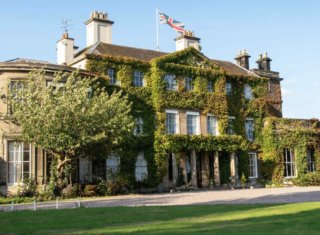
We are sourcing entries of Windsor and Orkney chairs, as well as all types of antique furniture, for our Fine Art Auction at Bishton Hall, Staffs, in October. For a free valuation, please email [email protected] or [email protected]. Alternatively, call 01889 358050.