








An impressive private collection of Staffordshire pottery figures from the 1800s will be offered in Hansons Auctioneers’ October 14 Fine Art Auction.
The lovingly-sourced items were discovered at a property on the Derbyshire/Staffordshire border near Etwall, and according to Hansons’ ceramics specialist Gill Finney, the sale offers an unmissable opportunity for collectors.
She said: “When people develop a passion for Staffordshire Pottery it rarely wanes and these examples were amassed over many years. Some are around 200 years old, dating back to the early 1800s. They offer an insight into history portraying characters from everyday life as well as important historical figures, such as Queen Victoria and her husband Prince Albert.”
Here Gillian, a specialist in early English pottery, shares six of her favourite lots.

Lot 235 | Royal pedigree
A rare pair of Staffordshire pottery figures of The Princess Royal and The Prince of Wales seated on chairs with crowns above, circa 1845-50. £60-£80.

Lot 242 | Young Queen Victoria
Rare Staffordshire pottery figure of a young Queen Victoria, seated on an unusual, shaped throne wearing a crown, circa 1840-50. £150-£200
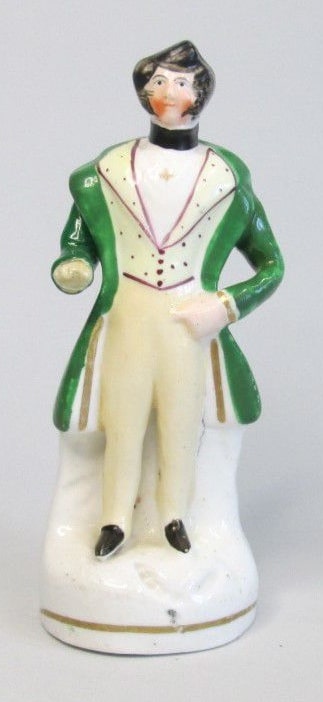
Lot 250 | Dashing Prince Albert
A Staffordshire figure of a young Prince Albert, circa 1840. £60-£80.
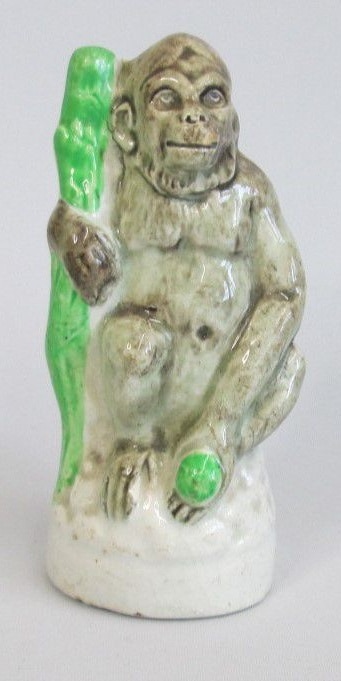
Lot 269 | Gorilla
Staffordshire Pottery model of a Gorilla, circa 1850. £100-£150.
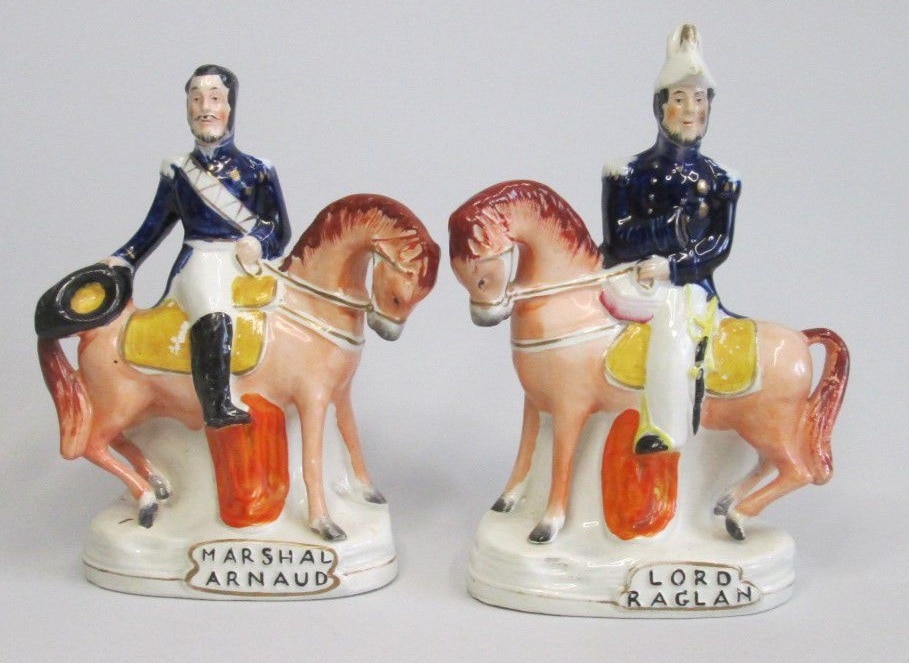
Lot 251 | Military life
Pair of Staffordshire pottery figures of Marshal Arnaud and Lord Raglan on horseback. Titled Date: circa 1860. £50-£60.
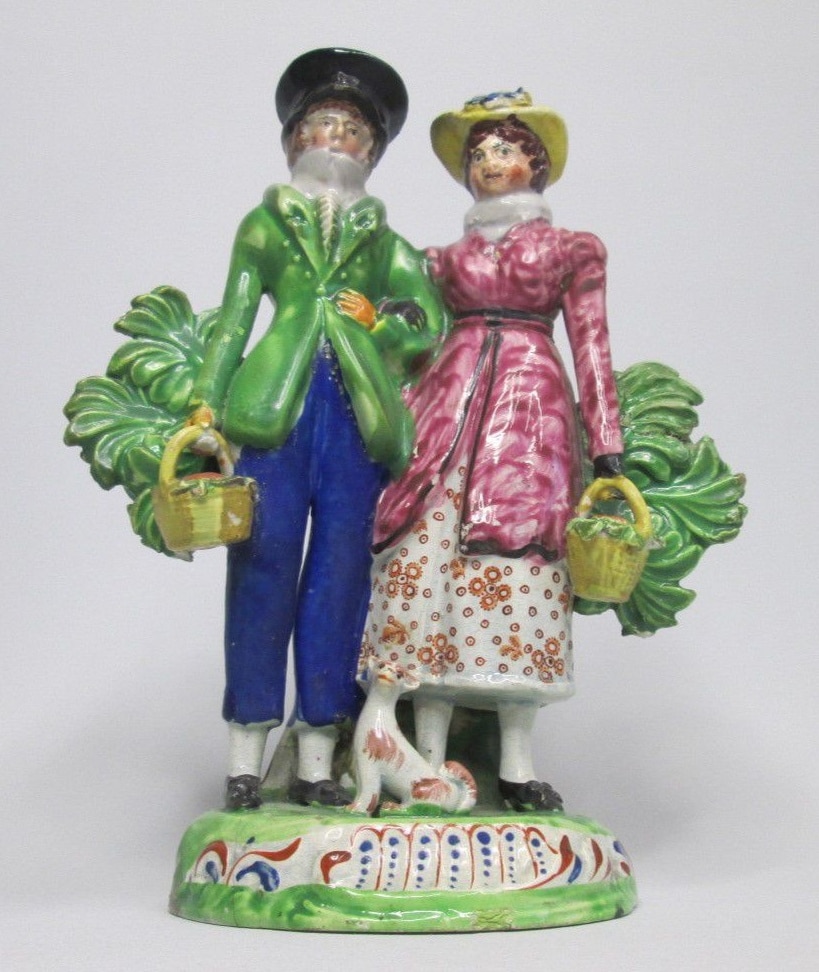
Lot 231 | Fine & dandy
Staffordshire pottery pearlware bocage figure of Dandies, both carrying baskets with a dog sitting at their feet, circa 1820-30. £250-£350.
CLICK HERE TO VIEW STAFFORDSHIRE POTTERY LOTS
Why Staffordshire Pottery is important
Staffordshire figures are a type of popular pottery figurine made in England from the 18th century onwards. Most Staffordshire figures made from 1740 to 1900 were produced by small potteries and makers’ marks are generally absent. Most Victorian figures (1837 to 1900) were designed to stand on a shelf or mantlepiece and are therefore only modelled and decorated where visible from the front and sides. These are known as ‘flatbacks’.
However, the more expensive porcelain figures reflected metropolitan and international styles, and were more carefully modelled and painted. For a period at the end of the 18th century the finest Staffordshire figures attempted to compete in this market, but gradually makers abandoned these attempts and settled for a larger mass-market buying cheaper figures.
The rarest figures, generally early ones, can sometimes fetch prices into six figures. A pew group of circa 1745 sold for $168,000 at a Christie’s auction in 2006, and in 1987 Sotheby’s sold one for $179,520.
The figures vary considerably in size: around five to seven inches tall is the most typical for a standing figure, though equestrian figures and bocage groups often reach ten inches. The largest figures, from about 1780 to 1810, can be 20 inches tall, and the smallest as little as 2 inches. They have been keenly collected over the past century, although even the late mass-market figures are now expensive, and there is a considerable literature devoted to them.
Free ceramics valuations
Gill Finney offers free ceramics valuations every Tuesday at Hansons, Heage Lane, Etwall, Derbyshire. To book an appointment, email [email protected] or call 01283 733988.
Free antique valuations will be available on October 25 and November 15, 11am-1pm, at at the New Vic Theatre, Etruria Road, Newcastle-under-Lyme, ST5 0JG – no appointment necessary – with Gill Finney in attendance.