







Moonstone’s mystical qualities created a necklace of such spectacular beauty the waves of admiration in our Derbyshire saleroom may well have travelled to the moon and back.
This striking Arts and Crafts moonstone and silver necklace shimmers, lot 150 in our April 21 jewellery sale, has delighted head of jewellery Helen Smith. She has a passionate interest in gemmology and is fascinated by the history and variety of gemstones found deep within the earth. When they can be used to create something as beautiful as this, it’s understandable.
The early 20th century necklace, estimate £300-£500, features alternate cushion and round cabochon-cut moonstones suspending smaller moonstone drops. At the centre is a magnificent cluster-pendant drop. The overall effect mimics droplets of water.

It’s a joy to source items like this. They demonstrate the quality and choice in the used jewellery market. It’s the reason why buyers look to auctions more and more to find unusual pieces they would never find on the high street.
Right now, jewellery, silver, gold and designer watches are achieving excellent prices at auction, so if you have something to sell, do contact Helen for a free valuation. In addition, Kate Bliss will be offering free jewellery and silver valuations at Hansons’ Derbyshire Auction Centre in Etwall, near Derby, on April 27, 10am-4pm – no appointment necessary.

Moonstone – the birthstone of June – is prized for its adularescence, a unique optical illusion that results in a milky, bluish lustre or glow on the surface of the gem. This silvery reflection effect is caused by microscopic layers of orthoclase and albite.
Despite being somewhat fragile, it is a popular choice for jewellery and has been used for decorative items for thousands of years – led by the Romans. They used moonstone in jewellery as early as 100 AD.
It belongs to the Feldspar group of minerals – potassium aluminium silicate – and comes in a variety of colours, white, pink, blue, yellow, green, grey and colourless.
CLICK HERE TO VIEW APRIL 21-25 JEWELLERY & ANTIQUES AUCTION CATALOGUE
Moonstones can be found all over the world but the stone was first discovered in ancient Rome. The Romans were taken by its beauty and believed moonstone to be formed from solidified beams of moonlight. They also believed that Roman goddess of the moon, Diana, could be seen within the stone, and that it would bestow love, wisdom and good fortune upon those who possessed it.
Ancient Greeks and Romans linked the stone with moon deities. Meanwhile, because of its glow, Eastern cultures associated the gem with good luck. It has also been worn as a talisman to protect travellers. Consequently, over the course of centuries the stone has become synonymous with the moon, love, passion, magic, protection and good fortune.
It’s said to clear the mind and enhance second sight or prophecy of the wearer. In India the stone was thought to be the love stone. That aspect weaved its way into European mythology where it was thought that if you wore moonstone jewellery at full moon you would fall passionately in love. It was also thought to retain a youthful appearance.
Moonstone gained popularity during the Art Nouveau period (1990-1910). French jeweller René Lalique (1860-1945) created exquisite pieces and playing to the gem’s magical qualities, romanticising the belief that giving your lover a moonstone necklace on a full moon would create endless passion. This early 20th century necklace would certainly have been a gift to impress in that time period – and still is today.
We expect it to excel under the hammer because original antique jewellery consistently commands the highest prices and interest at auction – from Georgian mourning rings to Victorian gold lockets and Art Deco finds.
Mourning jewellery excelled in our Spring Fine Art Jewellery Auction, which smashed estimates in every area, from designer watches to Faberge. Lot 125, a George I memento mori ring, dated 1717 with engraved skeleton decoration, sold for £2,500 from a £1,000-£1,500 estimate.
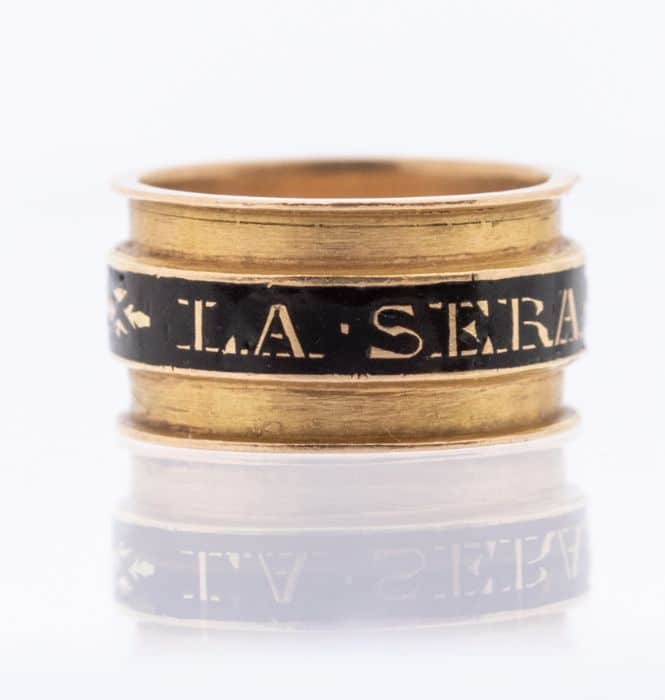
Another item to do well was lot 220, a rare George III gold and black enamel mourning ring made for a child. Helen had never seen an example so small. She believes it could have been given to a child, or even a baby, following the loss of a parent. It had black enamel to the centre inset with the inscription ‘There Will Be Your Heart’ plus a channel to either side, possibly for woven hair. It sold for £620 from a £300-£500 estimate.
Some may find it odd that antique mourning jewellery is so desirable but it deeply fascinates collectors. It dates back to the 1600s and gained enormous popularity in the 1800s when Queen Victorian mourned the death of her husband Prince Albert.
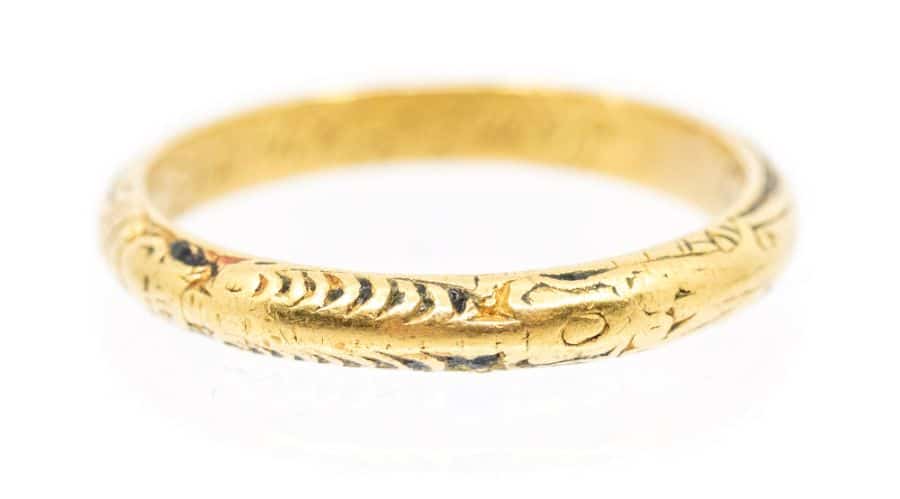
In the 1600s it displayed a darker theme featuring motifs such as skeletons, skulls and coffins. This is called memento mori, meaning ‘remember you must die’ and is seen in lot 125 where the ring is embossed with a skeleton.
Later Georgian mourning jewellery focused on remembrance and was worn as a keepsake to honour a loved one who had died. Rings would often have enamel decoration with floral motifs or Latin inscriptions to the outside of the band, as seen on lot 220.
Whether you seek a magnificent moonstone necklace, designer watch, fabulous Faberge, or mourning jewellery, auctions provide an excellent hunting ground. If you have items to sell, we would be glad to advise. Book a free jewellery, silver or watch valuation with Helen Smith: [email protected].