







A startling insight into London’s secret brothels, prostitutes and ‘the most beautiful women’ in the metropolis has come to light following the discovery of a 19th century book.
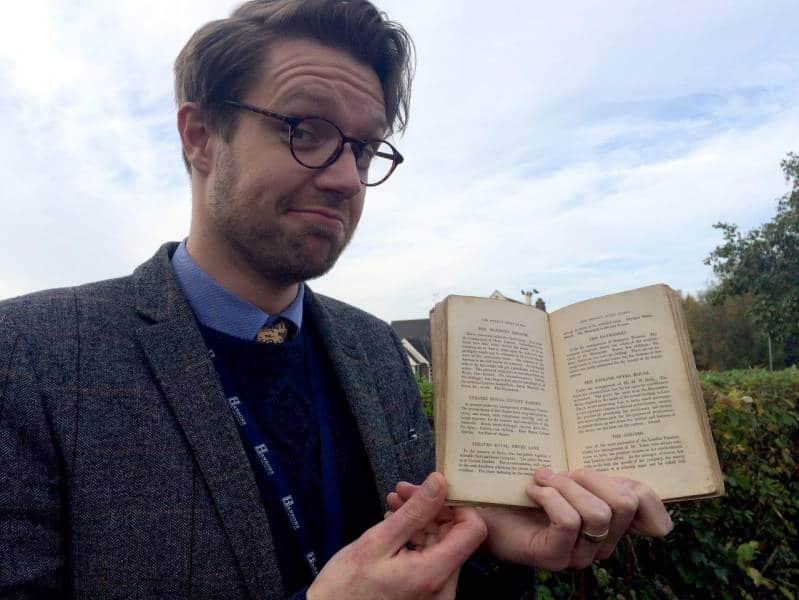
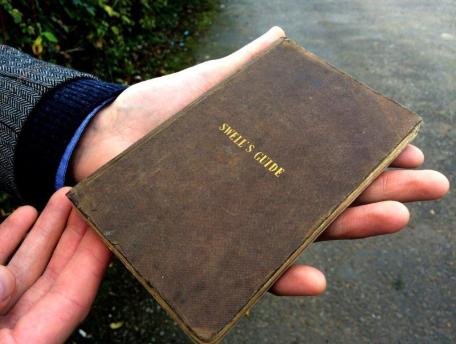
The first edition of Swell’s Night Guide Through the Metropolis by The Hon F L G, printed for private circulation by Roger Funnyman, Strand, in 1841, is so rare it will be sold by Derbyshire’s Hansons Auctioneers with an estimate of £800-£1,200 – but could fetch far more.
The book describes the clubs, pubs, bars and theatres where prostitutes are to be found such as ‘The Spotted Horse – Those who like to look upon real flesh and blood women will be here delighted…we hate a living skeleton and would walk a mile to see a pretty woman’.
Then there’s the Theatre Royal, Covent Garden, ‘At present under the management of Madame Vestris. The private boxes of this theatre have snug and secret retiring anti-rooms, with voluptuous couches and all things requisite for the comfort and convenience of the debauchee’.
The author continues: “To say that a gentleman had been to London and not visited the saloon of either Covent Garden or Drury Lane Theatres would be to betray an ignorance of which the veriest greenhorn would be ashamed’.
Individual prostitutes are described too: ‘Miss Allen…a perfect English beauty…she is in her nineteenth year; of symmetrical form…no one will regret passing an hour in her company, and drinking deep at that mystic fountain of human pleasure’.
‘Mrs Brougham…she is now verging fast into the sear and yellow leaf of time…she numbers amongst her admirers, a goodly train of sighing swains, who appear to enjoy the possession of a dame fair, fat, and fifty, amongst whom we might, if we wished, name a certain amorous member of the highest class of the nobility’.
‘Mrs Smith…a very agreeable woman…in addition to pouting lips, which would tempt an anchorite, has a knack of coaxing a customer into a purchase which is novel and delightful. We recommend a trial’.
But amid the reviews compiled by ‘a man of fashion who spent a fortune in pursuit of the meretricious pleasures which are alone to be found in London’, there is historical context which reveals the desperate circumstances of some of the women.
Take Helen Elizabeth Southey of whom the author wrote: “This unfortunate girl was the youngest daughter of respectable tradespeople, at Bristol, and received good education… In process of time she was deemed the beauty of Bristol and received many flattering offers of marriage.
“One Lieutenant P was, however, in her esteem… and finally she eloped with this person to London, who took lodgings for her at 64 Edgeware Road. Soon after their arrival, the Lieutenant was arrested and taken to the King’s Prison Bench.
“In this dilemma she had (to the shame of the British Army) no alternative but to walk the streets or return to her mother. The latter course she adopted and might have been honourably married had it not been for the interference of this dishonourable person’.
The book also describes the theatre ‘dress girls’, so called because they were fitted out to allure both young and old and were regarded by certain women as the worst of their class. ‘The clothes, gaudy and of the most flimsy and cheapest materials, are supplied to them on the most exorbitant terms, yielding to their degraded owners about 500 per cent profit and, towards payment of this debt, the poor girls are required to give up the whole, without reservation, of whatever compliment they receive from the gentleman’.
The author goes on to describe how the girls are ‘seldom out of the debt and powers of their owners who exercise absolute and brutal authority over them’.
Jim Spencer, books expert at Hansons, said: “Though the author described his book as a humorous ‘Young Man’s Best Companion’, he was obviously struck by the women’s plight.
“He also uncovers London’s secrets such as French Houses or businesses concealing ‘the hidden temple of voluptuousness’. For example, ‘Madame Dentiche in Bury Street, St James, conceals the nature of her calling by carrying on the business of a milliner and dressmaker’.
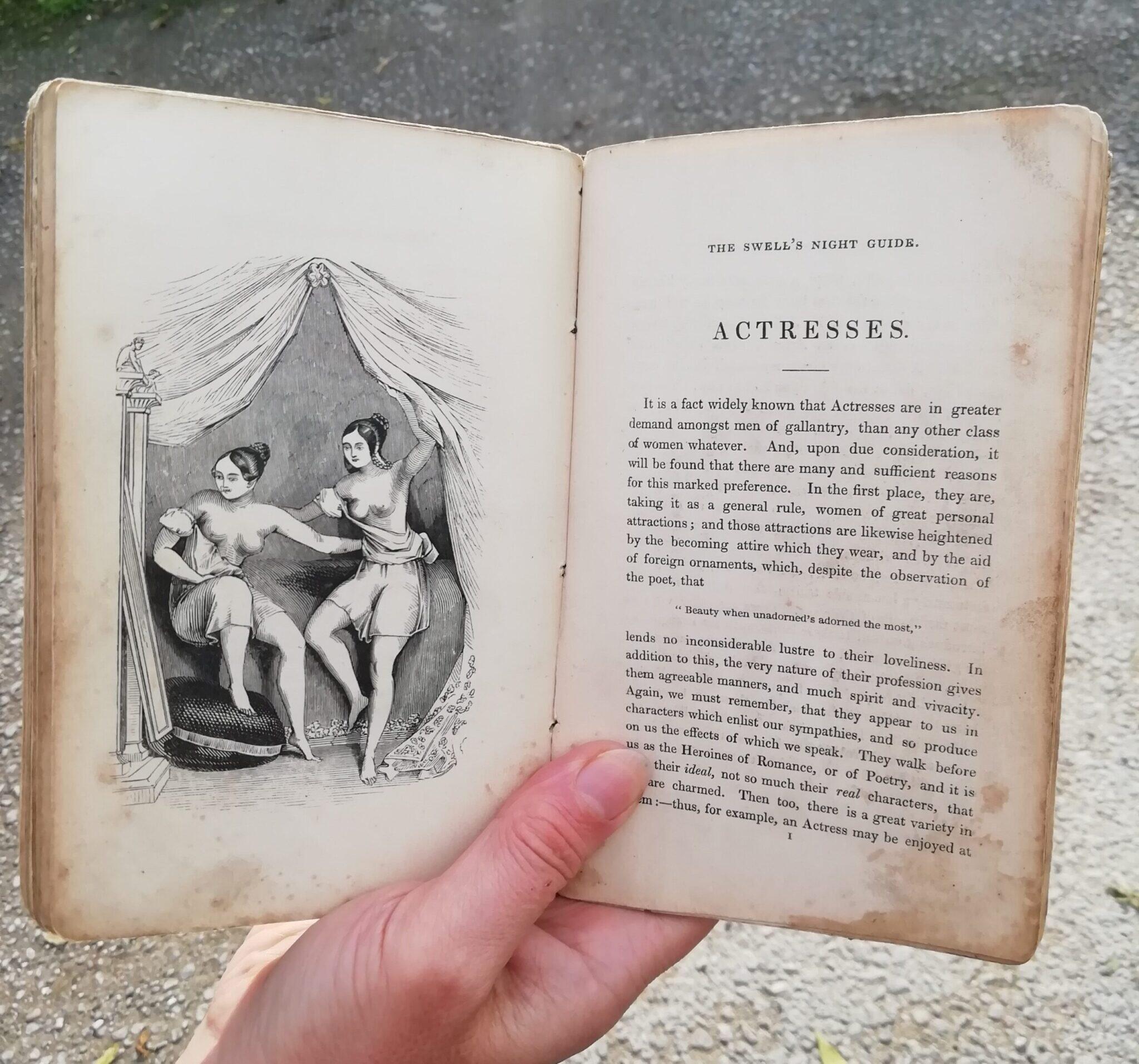
“One chapter is also devoted to actresses who are ‘widely known to be in greater demand amongst men of gallantry than any other class of women because of their beauty, agreeable manners, spirit and vivacity’.
“Particularly popular was Mrs Honey who had ‘turned the brains of half the young men about town’, occupied the columns of newspapers and been the subject of sonnets and songs.
“Perhaps we are not so different from our ancestors who lived in London 177 years ago. Beautiful actresses still have adoring followers and fill newspaper columns – and everyone loves to write reviews!
“People will be fascinated by this book because, as well as mentioning pubs and theatres that exist today, it captures a side of London that was secretive and hidden. And, of course, people will always be fascinated by the subject matter. In March, a sex manual from 1720, which I unearthed, sold for £3,100.”
Swell’s Night Guide Through the Metropolis will be sold on December 7 in the Library Auction at Hansons Auctioneers, Heage Lane, Etwall, Derbyshire. To find out more, email [email protected]. Entries invited until November 16.