









Hand-engraved historical handkerchiefs from the 1800s – saved from the skip – are worthy of wiping away the finest tear, according to auction experts.
Some 24 handkerchiefs dating from circa 1870 to 1901 were found wrapped in a brown paper parcel tied with string in the early 1980s. A textile worker tasked with clearing a store room discovered them among a pile of rubbish. He couldn’t bring himself to throw them away due to the workmanship involved and has kept them safe for more than 40 years.
The 75-year-old retired engraving department manager from Derbyshire said: “I was told not to leave anything in the store room and to throw any remaining stock into skips. Among items destined for the skips was the collection of printed hankies.
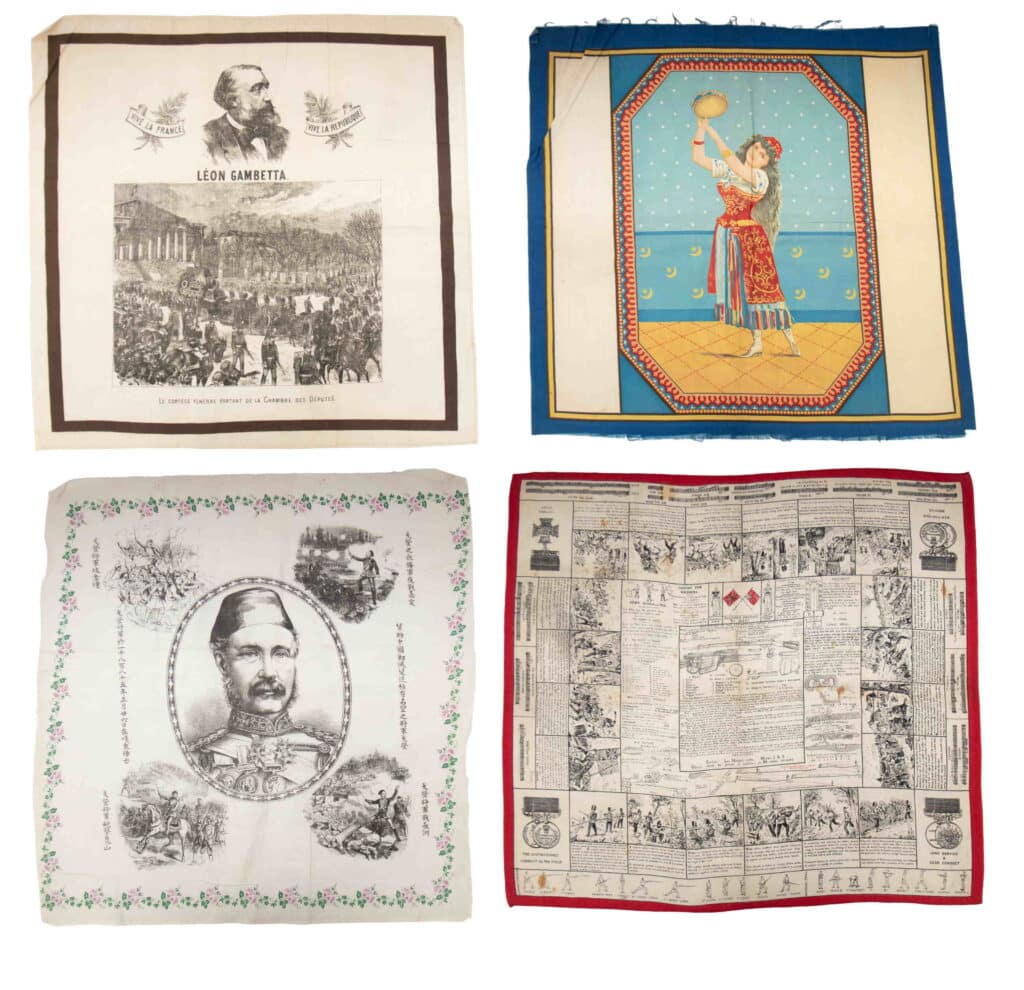
“The engraving and printing workmanship of the hankies cannot be bettered today. They were printed from hand-engraved rollers. The images are technically perfect.
“The process used to make them, known as ‘orthodox engraving’, was used from the early 1800s. The image is engraved on a zinc plate then passed to a pantographer who follows the engraved lines on the plate, transferring the image to a copper roller with an acid-resisting varnish. The roller then goes through several different processes to create the different tonal affects on the printed cloth. For each colour there would need to have been an engraved roller.
“For the last 43 years the hankies have been wrapped up in a wardrobe in a spare bedroom. They have never been displayed or used in any way other than to show friends. My favourites are ‘Our Empire’ and ‘Defence not Defiance’. I’m glad I saved them from the skip otherwise a part of Britain’s pictorial textile commemorative printing history would have been lost for ever.”
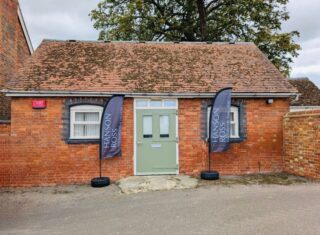
The handkerchiefs will be offered by Hansons Auctioneers. Together, they could achieve more than £700, according to the firm’s textiles expert Notty Hornblower, who was blown away by the find.
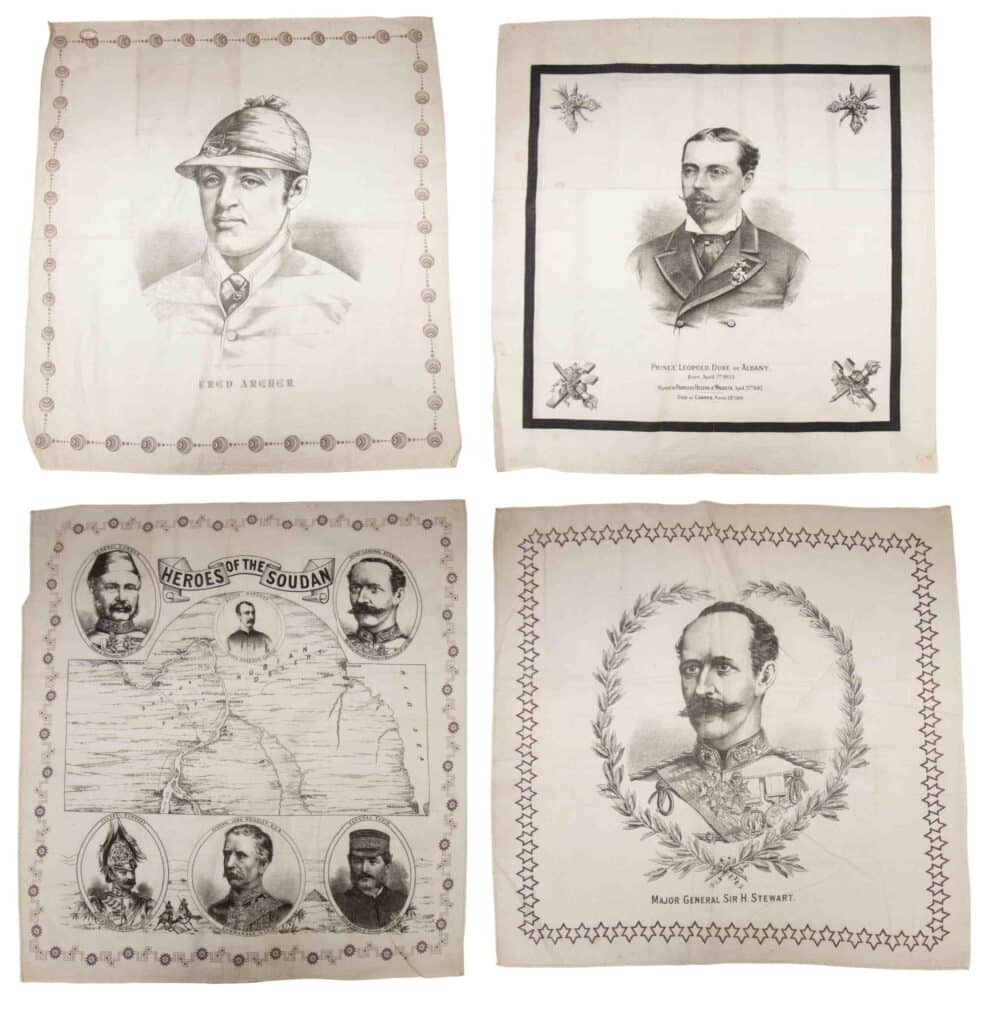
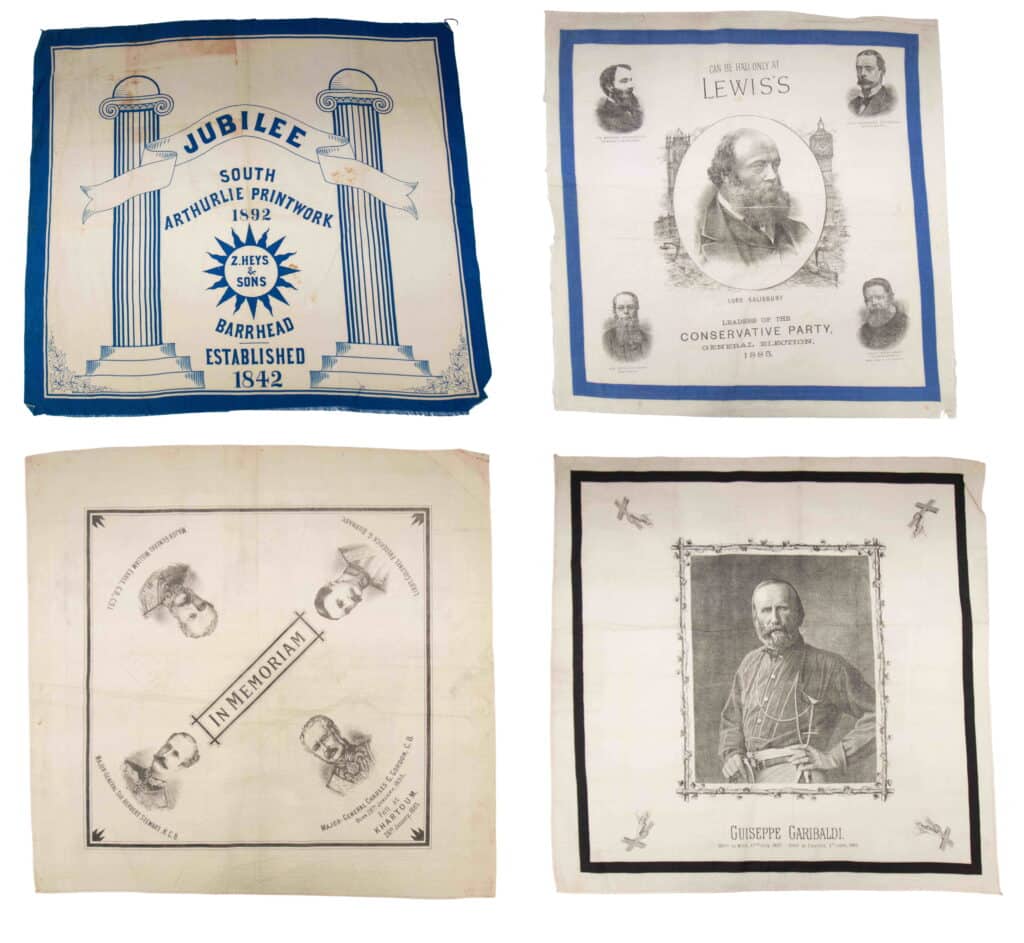
She said: “These hankies are amazing due to their workmanship and historical value. They are worthy of wiping away the finest tear. Most were made as souvenirs to mark important events such as Queen Victoria’s Diamond Jubilee in 1897 and Glasgow’s International Exhibition in 1888 and 1901.
“The designs display strong military and political influences. For example one features a map of the British Empire in 1886 and another depicts a ‘Bird’s eye view of Egypt showing the British fleet bombarding Alexandria and the city in flames, July 1882’.
“Politicians and military leaders also adorn the handkerchiefs, some of which were made ‘in memoriam’. Leaders of the Conservative Party in the General Election of 1885 feature but there are also examples of foreign leaders including Italian revolutionary Guiseppe Garibaldi (1807-1882) and French lawyer and politician Leon Gambetta (1838-1882).
“Our vendor worked in textiles for 45 years, starting out as a hand engraver. He appreciates the work and skill which went into making these handkerchiefs. That’s why he could not bear to throw them away. Interestingly, despite new technology bringing fresh ways to print textiles, his hand engraving skills were needed throughout his working life.”
The seller, who worked at CPA in Greater Manchester, one of the largest engraving works in the UK if not Europe from the mid-1960s to the early 80s, said: “The handkerchiefs were made in the 1800s apart from one which was produced in 1901. They are special to me but it’s time the hankies found a new home instead of being stuck in a wardrobe were no one can see or appreciate them.”
To find out more, email [email protected]