







By Eric Knowles
Derbyshire is a treasure trove when it comes to extraordinary auction finds which make it a global hotspot for collectors – and helps to make the glorious county famous.
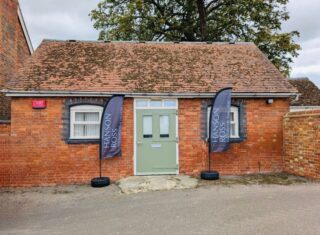
You can be sure the world will be tuning in on October 31 when the ship timber Napoleon stood on to surrender to the British in 1815 will go under the hammer at Hansons’ saleroom in Etwall, near Derby. Remarkably, its discovery came about at a routine valuation day in Nottinghamshire.
It’s just one example of many extraordinary finds, and several shone brightly in one of the firm’s best ever Autumn Fine Art sales. As an old-school antiques expert I couldn’t resist delving into the results to see what enamoured buyers. As always, historical importance and quality came to the fore in all categories, from Chinese ceramics to silver and much more.
A particularly fine collection of paintings caught the attention of the international art press.
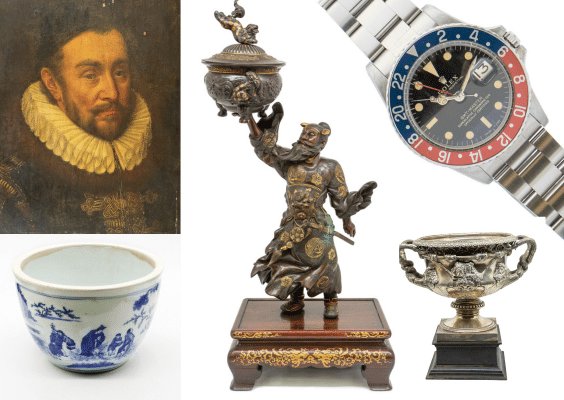
Top among them was lot 432, a 16th century Flemish oil painting of William ‘The Silent’, also known as William of Orange (1533-1584). William is resplendent in a gold embroidered black doublet with white lace ruffle. The painting is attributed to the circle of Adriaen Thomasz/Key (c.1545 – c.1589). To help you grasp its importance, similar examples exist in the Rijksmuseum, Amsterdam, the Thyssen-Bornemisza collection, Madrid, Spain, and in the Mauritshuis, The Hague, Brussels.
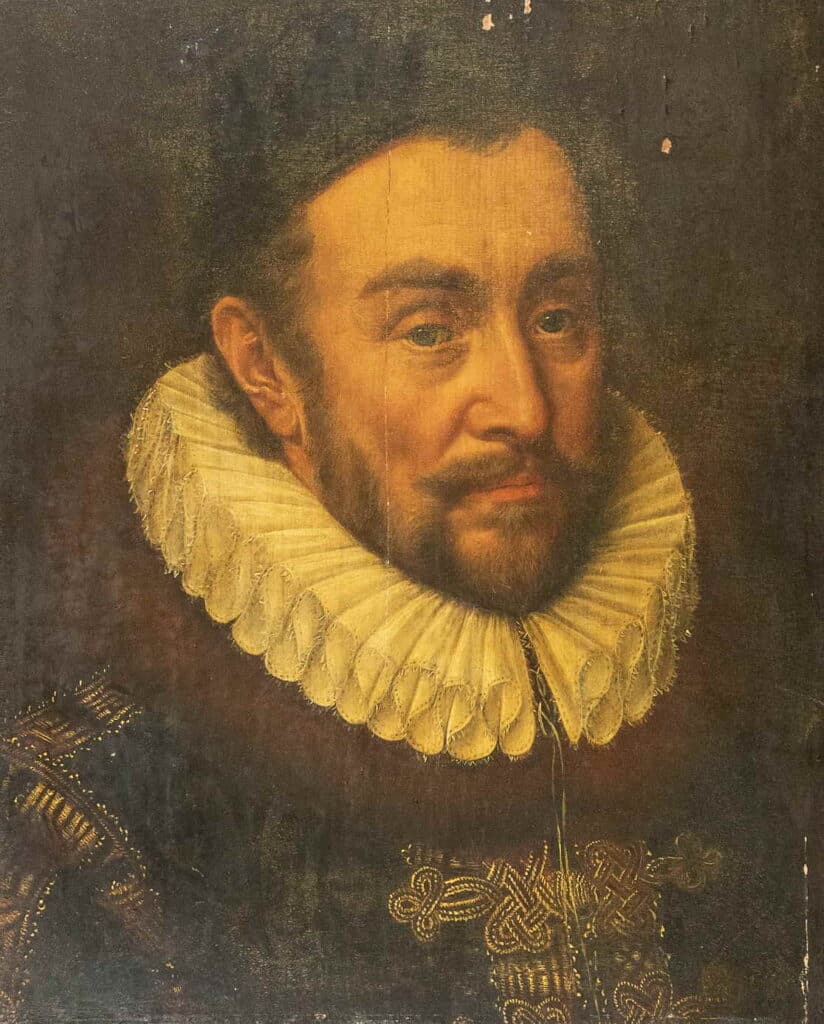
Adriaen Thomasz was a Flemish painter of portraits and religious paintings, a draughtsman and printmaker. He worked in the Antwerp workshop of prominent portrait painter Willem Key and later took over the workshop. William ‘the Silent’ was the leader of the Dutch revolt against the Spanish Habsburgs that set off the Eighty Years’ War (1568-1648). In the Netherlands, he is known as Father of the Fatherland. From an estimate of £3,000-£5,000, the portrait hammered at £20,000. The premium-inclusive total paid by a European antiques dealer was £26,360.
Another painting to impress was lot 417 by English artist, illustrator, musician, author and poet Edward Lear (1812-1888). The atmospheric watercolour landscape captured Mahabalipooram on the Coromandel Coast of Tamil, Nadu, India. Mamallapuram is a historically significant town, so it should come as no surprise to learn the painting is returning to India. It smashed its £2,000 -£4,000 guide to hammer at £10,500 (premium-inclusive £14,721).
Lear also produced lot 425, Hummingbird, pen and ink watercolour, which reached £3,600, double its £1,500-£2,500 guide (premium-inclusive £5,008). Lear is mostly known for his poetry and prose, especially limericks. However, he also excelled at art. He was employed to make illustrations of birds and animals and liked to travel. During trips to Greece and Egypt in 1848-49 and a tour of India from 1873-75, he produced many coloured wash drawings in a distinctive style. Later he converted them into oil and watercolour paintings.
One sector of the auction industry when never fails to impress – and surprise – is Japanese and Chinese works of art. Lot 308, a Japanese bronze and mixed metal inlaid figure of Benkei upholding a koro, signed Miyao zo (Miyao Eisuke), late Meiji Period, hammered at £19,000 from a £8,000-£12,000 guide. The premium-inclusive total paid was £27,146.
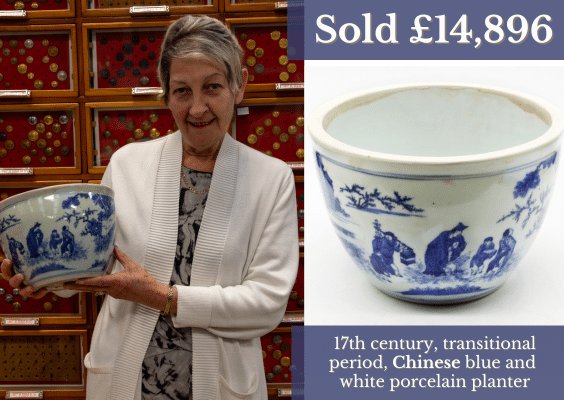
But perhaps the most jaw-dropping result came courtesy of a 17th century, transitional period Chinese blue and white porcelain planter, painted with seven figures in a rocky and misty landscape. The heavily restored object hammered at £10,500 – destroying its £150-£250 guide. The premium-inclusive total paid by a Chinese buyer was £14,896.
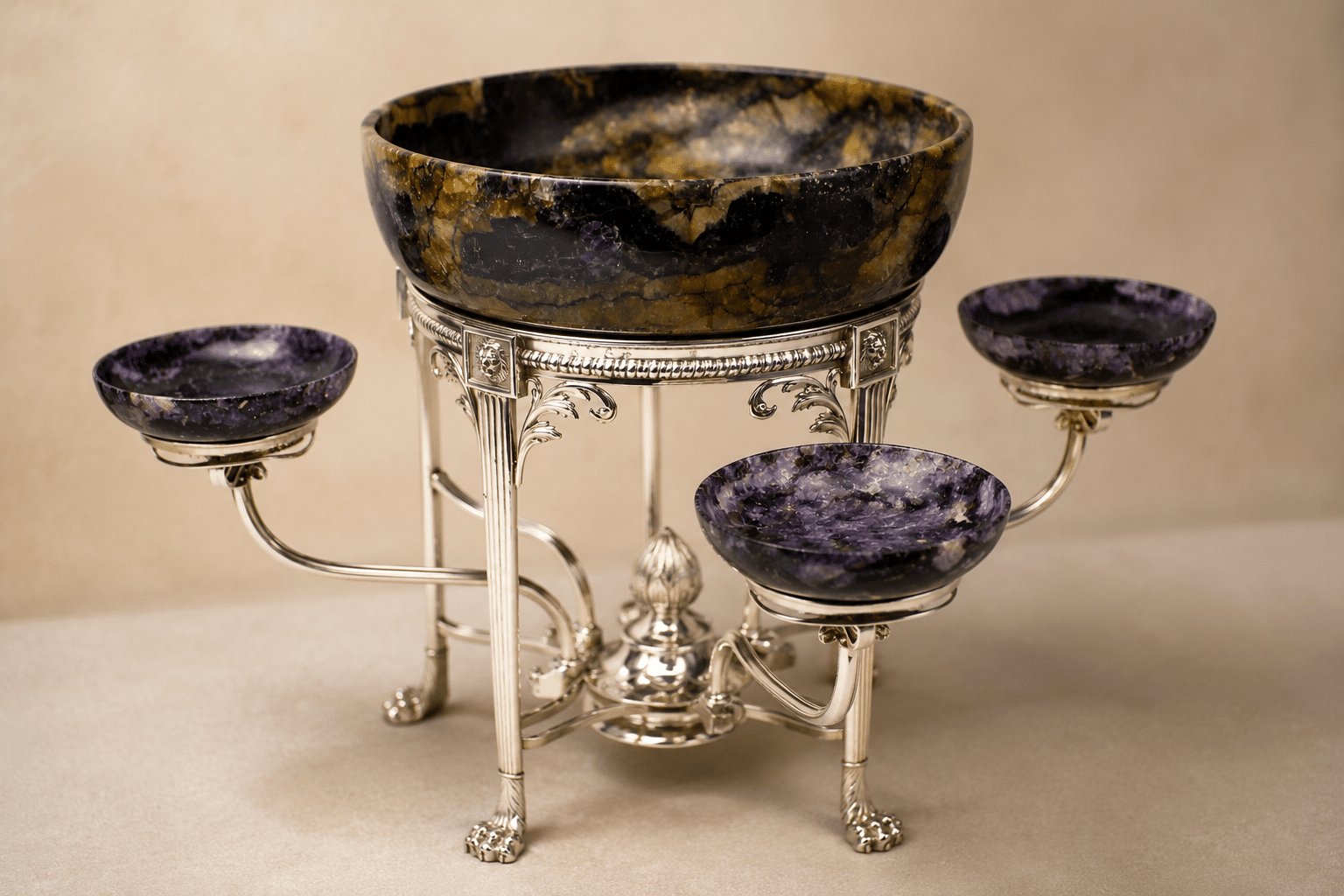
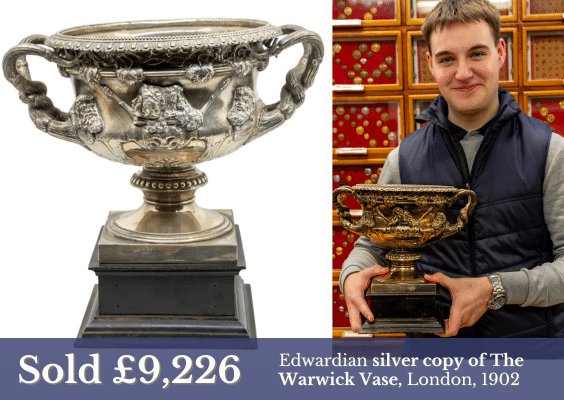
Silverware also figures prominently in Fine Art sales and lot 7, an Edwardian silver copy of The Warwick Vase, hallmarked Keen & Page, London, 1902, hammered at £7,000, double its £3,000-£4,000 estimate. The total paid by a UK buyer was £9,226. The Warwick Vase is an ancient Roman marble vase with Bacchic ornament discovered at Hadrian’s Villa, Tivoli, Italy, in about 1771 by Gavin Hamilton, a Scottish painter and art dealer. The original resides in the Burrell Collection in Glasgow, Scotland.
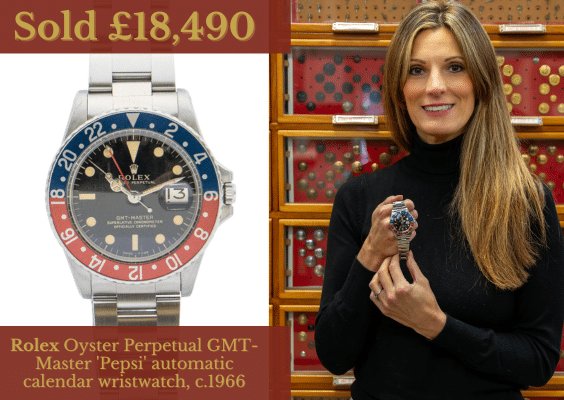
The demand for vintage designer watches also goes from strength to strength. If you have an example languishing in a drawer at home, I strongly advise you have it valued. To give you an example of their auction power, lot 149, a circa 1966 men’s Rolex Oyster Perpetual GMT-Master ‘Pepsi’ bezel steel cased automatic calendar wristwatch, number 6636/1330700, complete with original box and paperwork, soared to £14,000, above its £8,000-£10,000 guide. A London buyer paid a total of £18,490.
When surveying who bought what, it’s interesting to note that antique dealers around the world as well as keen collectors and people who simply appreciate beautiful objects compete to buy. And when two bidders lock horns over something they truly want, the sky’s the limit.
Items sold in Hansons Auctioneers’ September 27 Derbyshire Fine Art Auction. CLICK HERE to browse all results
Entries invited for the next Fine Art sale. To book a free valuation or gain advice, please email [email protected] or call 01283 733988.