











Ceramics is a dreamy world for collectors offering everything from Henry VIII and his six wives in fabulous figurine form to functional tableware which doubles up as a work of art.
A king known for his rather brutal take on love and marriage is depicted in a
complete set of limited edition Royal Doulton figures along with the women who temporarily stole his heart, Catherine of Aragon, Anne of Cleves, Jane Seymour, Catherine Howard, Catherine Parr and Anne Boleyn.
Designed to be displayed together, they create a magnificently colourful medieval pageant. Awash with detail, four dogs, a monkey and a bird of prey perched atop the king’s arm are part of this curious collage.
Sets like this have achieved around £500 at auction and remind us of the power of the ceramics market. People the world over become hooked on sourcing works from their favourite makers, and English auction houses have much to tempt them thanks to the country’s rich manufacturing heritage.
Take Royal Doulton. They were founded in 1815 – more than 200 years ago – in Vauxhall, London. In 1882 they opened a factory in Burslem, Stoke-on-Trent, the centre of English pottery. Originally the business concentrated on utilitarian wares such as storage jars, tankards, drain pipes, lavatories, water filters, electrical porcelain and other technical ceramics.
However, from the 1860s the firm made considerable efforts to gain a reputation for design, emerging as one of the first British makers of art pottery. The move to Stoke enabled bone china tablewares and decorative items to be made. Doulton was a latecomer in this market compared to the likes of Royal Crown Derby, Royal Worcester, Wedgwood, Spode and Minton but, nevertheless, carved its niche.
In fact, Royal Doulton became one of the first British makers of art pottery. Figurines became an important part of its output. Showcasing historical figures has long been popular in ceramics.
The king and his wives will be offered in Hansons Auctioneers’ June 14 ceramics sale but they are but a fraction of the gems on offer. Derby’s close proximity to the Stoke Potteries, together with the pedigree of its very own Royal Crown Derby, sparks rick pickings for collectors.
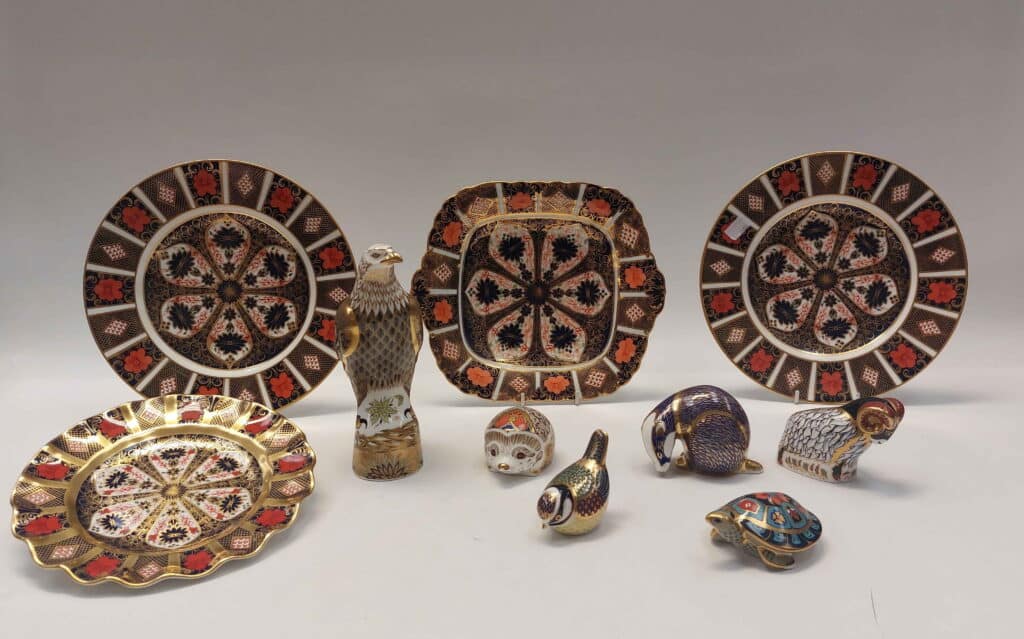
Speaking of Royal Crown Derby, a collection of Imari 1128 pattern plates and paperweights will likely hammer high. Bidders are utterly in love with Imari 1128, so if you have examples at home it’s a good time to sell.
Moorcroft pottery is also keenly sought and four splendid vases in varying shapes and sizes will appeal. Moorcroft wares always remind me that talent will conquer adversity. In 1897, Staffordshire pottery manufacturers James Macintyre & Co garnered a prodigious talent by employing 24-year-old William Moorcroft as a designer. Within a year he was in full charge of the company’s art pottery studio. Moorcroft’s first innovative range of Florian Ware was a great success and won him a gold medal at the 1904 world fair in St Louis, USA.
Sadly, jealousy ended the collaboration. His success overshadowed Macintyre’s other manufacturing activities to such a degree it led to resentment. His employer closed his studio in 1912. Moorcroft set up his own company and excelled even more. Queen Mary collected his works and granted him a royal warrant in 1928.

June’s sale also features a summery collection of Royal Worcester teacups, saucers, jug, bowl, side plates and urn. All display the sumptuous fruits the maker is renowned for, in this case peaches, grapes and berries looking good enough to eat.
Royal Worcester, established in the county of its name in 1751, is believed to be the oldest or second oldest remaining English porcelain brand still in existence. This is disputed by Royal Crown Derby, which claims 1750 as its year of establishment.
Royal Worcester fruit painters specialised in depicting fruits on porcelain tableware. The tradition originated with painter Octar H. Copson, who in 1880 painted a plaque commissioned by a farmer to commemorate the introduction of the Pershore plum.
Royal Worcester fruit pieces remain highly desirable and rare pieces in good condition fetch thousands of pounds. Just to confuse you, the same auction offers more hand-painted fruit- ceramics courtesy of Coalport. Shropshire’s Coalport was one of various makers to copy Royal Worcester’s fruit designs. Though copyright law dates back to 1710 it took centuries for it to become as fiercely contested as it is today.
Consequently numerous ceramics artists had freedom to air their flair, and they did. The result is a colourful and vibrant collectors’ market with global bidders hungry to buy historical examples of fine ceramics.
Ceramics will be offered on day two of Hansons’ June 13-18 Antiques and Collectors sale.
Ceramics Auction Entries Invited
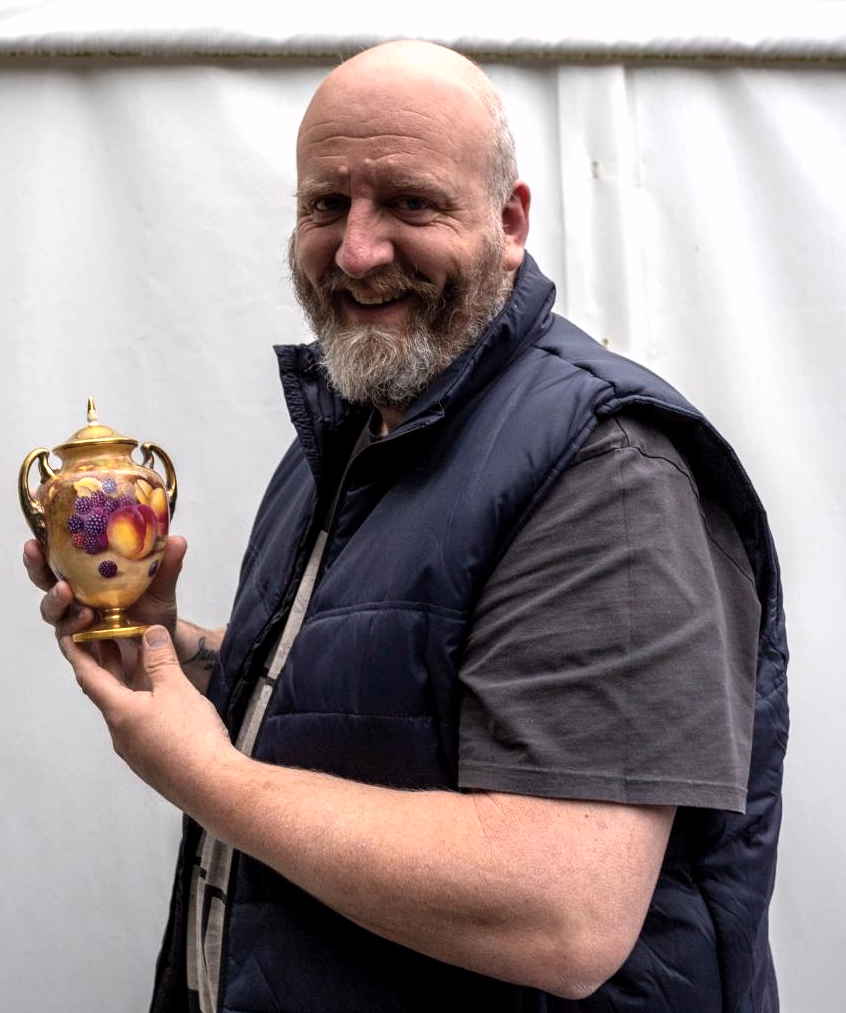
Ceramics valuer Robert Churchill, above, on ceramics sale trends and upcoming lots:
The market for ceramics is buoyant. The Royal Worcester and Coalport fruit pieces coming up in June will likely excel. They are good quality hand-painted examples and the market for these pieces remains strong. The items are decorated to the highest standard, all signed by their artists.
Recent results have shown that Royal Worcester along with Royal Crown Derby and Coalport hold good resale value, often featuring among top lots.
Royal Crown Derby often surpasses expectations, particularly 1128 Imari pattern items and Derby paperweights which remain a favourite with collectors.
Having previously worked in the pottery industry production process, I have an appreciation of just how difficult it is to produce items of such quality and, consequently, why these objects retain value.
Entries invited for monthly sales. For no-obligation advice or valuations, please email: [email protected]
To book a free valuation of antiques, collectibles or jewellery at Hansons’ Etwall saleroom, near Derby, email [email protected] or call 01283 733988. Free home visits are also available to assess large collections.