








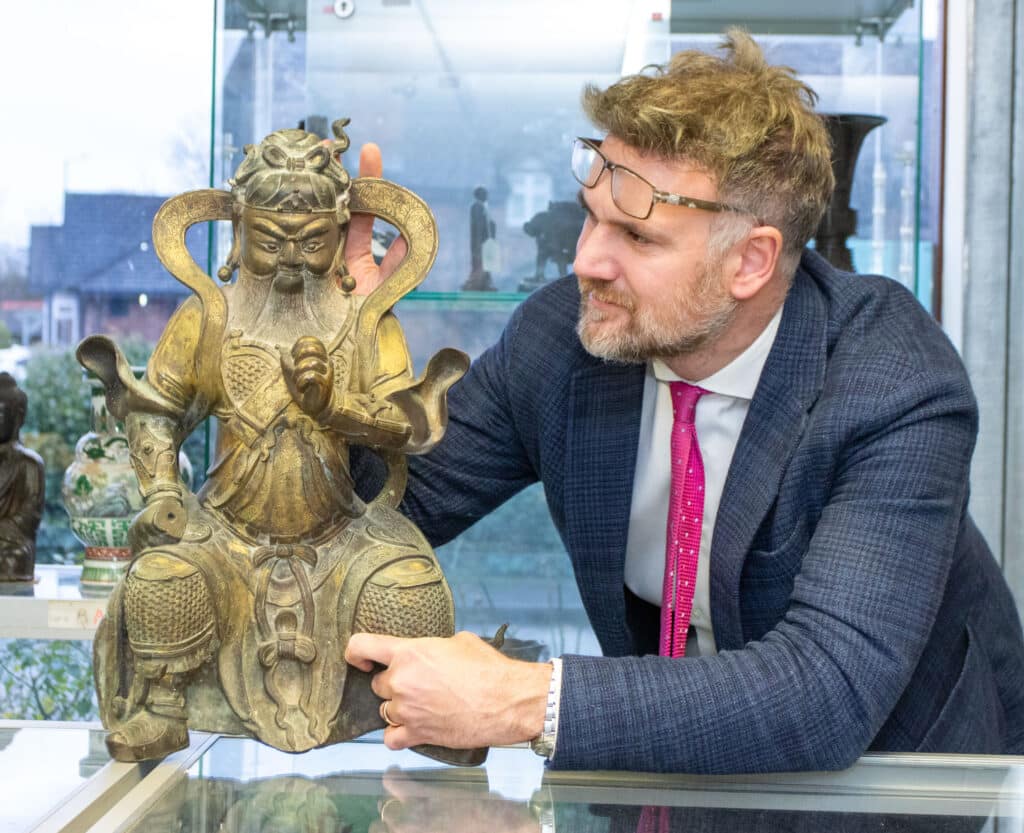
A centuries-old figure of a renowned Chinese emperor sparked a worldwide auction bidding battle – and jaw-dropping result.
Some 11 phone bidders and online competitors battled to own a large, Ming Dynasty gilt bronze seated depiction of Wudi, an important historical figure in Chinese culture. Wudi was emperor of China from 141-87 BC, the longest reign of the Han dynasty.
The bronze was offered by Hansons Auctioneers, one of 30 Chinese objects in a collection amassed by a British railway engineer a century ago. Humble hopes of surpassing £1,000 were initially pinned on the item but interest soared ahead of the January 9 sale – culminating in a hammer price of £68,000. The battle to own it was won by an online private Chinese buyer. The total paid with buyer’s premium was £88,400.

Charles Hanson, owner of Hansons and auctioneer on the day, was overwhelmed by the result: “The interest in this 17th century item was phenomenal. To have 11 phone bidders is rare in itself. We knew this bronze was going to excel but to reach £68,000 was truly exceptional.
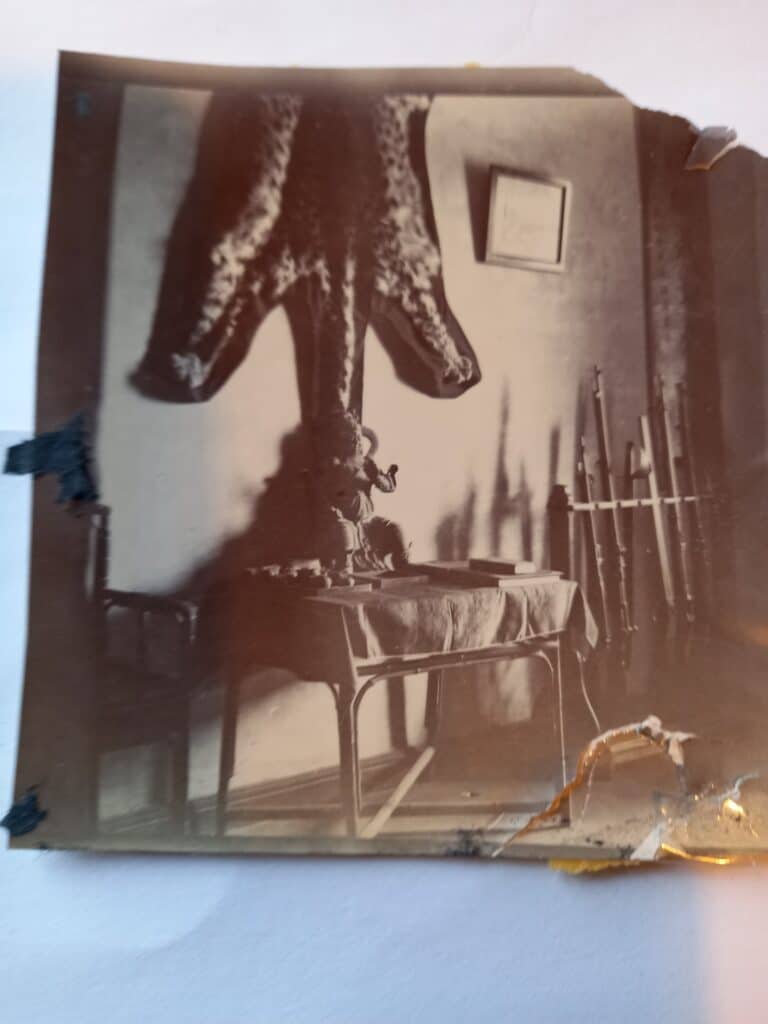
“Strong provenance helped it achieve that hammer price. The seller discovered a grainy black and white photo of the object pictured in the collector’s home in China in 1908 – 115 years ago. We also had detailed information about how the collection was amassed, underlining its authenticity. This sparked intense demand from the Far East.
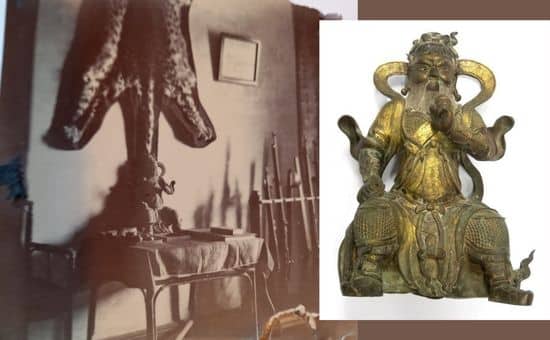
“The bonze was missing a sword and scroll ribbon but this did nothing to deter bidders. Wudi is remembered for his military conquests, hence the figure was depicted with fearsome expression and armour. The opportunity to own this important artwork proved irresistible to many.”
The bronze was part of what Hansons described as ‘an extraordinary 30-strong collection’ of Chinese ceramics, bronzes and works of art. All were amassed from 1895 to 1920 by Thomas Johnstone Bourne CBE, MICE (Member of the Institute of Civil Engineers). At the time, he was employed as a civil and mechanical engineer on the construction of early railways in China.
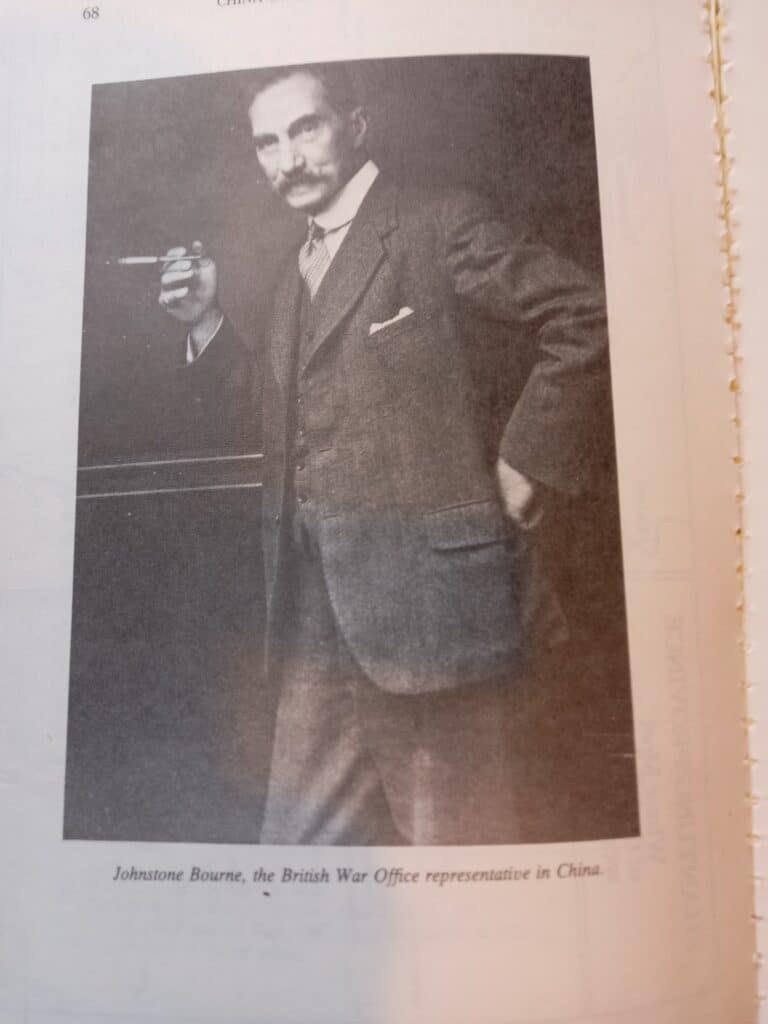
Charles said: “Whilst there, he immersed himself in the culture and acquired items to decorate his family home. Consequently, a rich array of ceramics, bronzes, wood inlaid statuary, embroidered silks, dolls and ceremonial costumes of the late Ming and Qing periods were purchased.
“His principal residence during this time was at Wei-Hai-Wei near the Gulf of Chihli, on the Korean Sea, and most of his work was in Shandong province. Some items were bought locally while others were presented as gifts for services rendered by war-lords and officials across whose lands the railways were built.
“After Mr Bourne’s retirement in 1925 he returned to live in Dorset, bringing his Chinese collections with him to decorate his home. He died in 1950 but his widow lived for a further 20 years. On her death the collection was inherited by family members. They are no longer in a position to display it and preserve it as it deserves, hence its arrival at auction.”
Bourne first went to China in 1895 as assistant engineer for the new Formosan Government Railways. Initially, he moved to the Chinese mainland and worked for the Imperial Chinese railways under the Dowager Empress, and later for consulting engineers Cowdray Pearsons, main contractors for the Imperial government.
Empress Dowager Cixi (1835 -1908) was a Chinese noblewoman, and later regent, who effectively controlled the Chinese government in the late Qing dynasty for 47 years, from 1861 until her death.
She awarded Bourne the Chia Ho medal for his work on bringing a private branch line from the Pekin Syndicate Railway to the Forbidden City. He constructed the Syndicate line northwards passing the Shan-Hai-Kwan, the gate of peace, through a gap in the Great Wall created by floods.
His other engineering projects included Pekin to Tientsin 80 miles; Pekin to Hankow several hundred miles; Wi Ho to Su Nan Chan 150 miles; harbour tenders in Hong Kong and Bombay; the viaduct at Peng Pu and Pekin-Hankow main lines 200 miles.
In 1915, during the First World War, confidential overtures were made to Bourne by the British War Office with the possibility of recruiting a workforce from China to relieve administrative pressures behind the trenches in the French theatre of war.
Bourne was able to do this because large numbers of Chinese men had worked for him on his railway projects. They knew he could be trusted to pay them properly and not inflict punishments when work was not up to standard, which happened under the war-lords. In a few short months he recruited an army of 92,000 men, an extraordinary feat.
Sadly, some lost their lives. Some 2,000 casualties were buried in special Chinese cemeteries on the French coast and at Noyelles, still cared for by the War Graves Commission. However, the remaining 90,000 returned to China in 1919 and 1920. For this work Bourne was made CBE by King George V.
The Chinese figure sold in Hansons’ January 9 Fine Art Auction held at Heage Lane, Etwall, Derbyshire. To enquire, or consign items for forthcoming Fine Arts sales, email [email protected].