







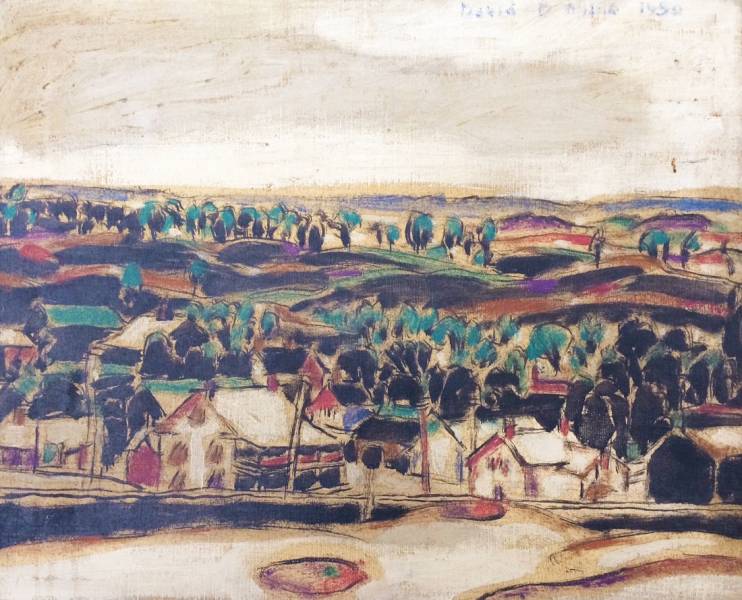
The atmosphere was electric when this landscape painting went under the hammer – because Hansons had unearthed a true treasure.
Every now and then we come across an object that sets the auction room alight – this was one of those moments.

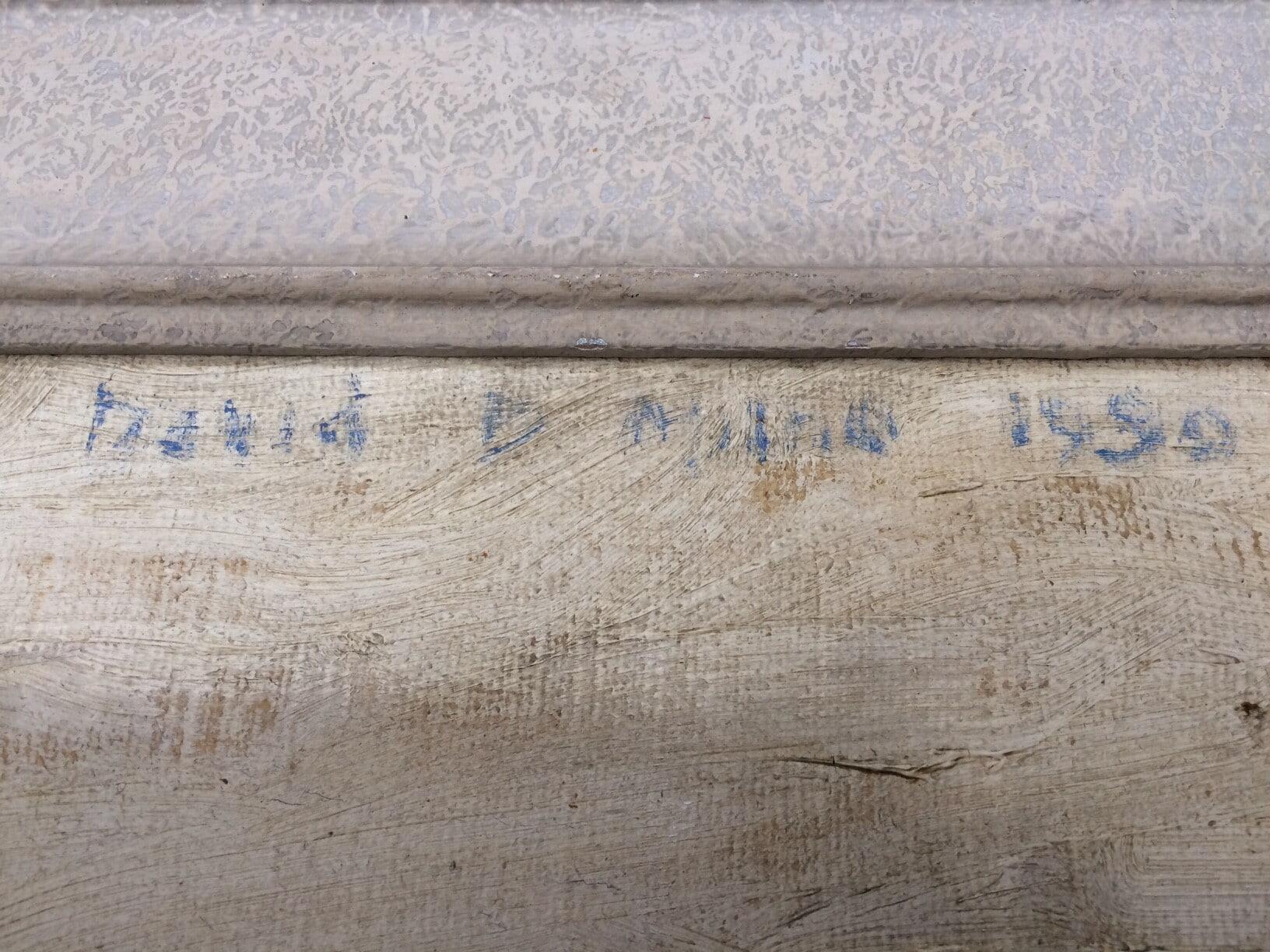
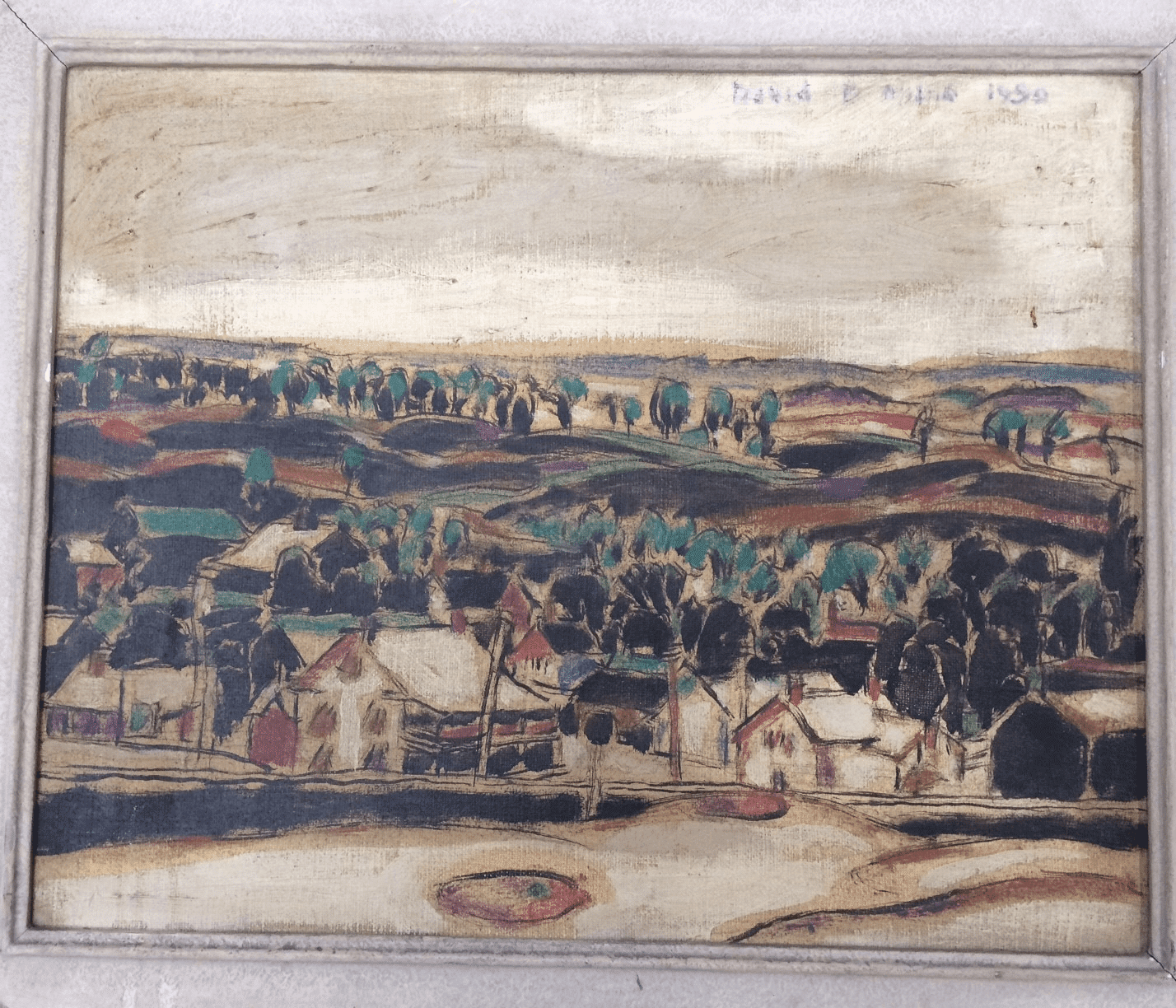
This painting is by David Milne and is one of his later works, dated 1950. If you have Canadian connections, you may be aware of his pedigree. Milne is one of Canada’s most famous artists.
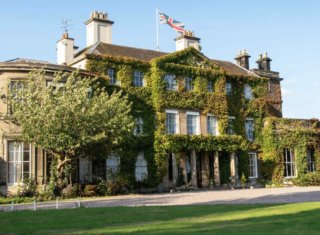
The painting was discovered among an eclectic mix of hundreds of treasures at Eaton Cottage in Thames Ditton, Surrey. Over a period of 80 years a father and son with admirable taste and artistic knowledge accumulated an eclectic mix of artworks. This was one of them.
Pre-auction, the excitement began to build. Three phone bidders booked lines, internet interest mounted and requests for more information flooded in. The hammer fell at £38,000. The painting was purchased by a private international phone bidder who dealt with strong competition from a bidder in the room.
So, who is David Milne? He was born in the Ontario village of Burgoyne, near Paisley, in 1882. The last of 10 children born to Scottish immigrant parents, he did well at school and, after graduation, became a teacher.
However, an artistic career beckoned. In 1902-1903 he studied art through correspondence and, at the age of 21 in 1903, he moved to New York. He studied at the Art Students League in the Big Apple and had five paintings exhibited in the Armory Show of 1913.
In 1912, he married and moved to Boston Corners, a small hamlet where he painted with oils and watercolours. But the First Word War was closing in. In 1917 Milne returned to Canada for basic training. He was stationed in Quebec and then quarantined in England for a month, by which time the conflict had ended. However, because of his background as an artist, he was asked to complete paintings and drawings as a war artist. Milne produced artworks of battlefields in France and Belgium as well as of soldiers in Kinmel Park Camp in England.
From 1919-1929 Milne returned to Boston Corners and focused his artistic work on the landscape around him. In 1929, he returned to Canada to paint in Temagami, Weston and Palgrave.
He separated from his wife in 1933, moved to Port Severn, Ontario, and sold many of his paintings to prominent art patrons Vincent Massey and Alice Massey. In the late 1930s, Milne settled in Uxbridge, Ontario, with Kathleen Pavey and they had a son, also David, in 1941. During the later years of his life, Milne worked in watercolours and changed his subject matter to more whimsical, fantasy and childlike inspirations. He continued to travel to Algonquin Park and Baptiste Lake to paint the Canadian landscape. It was during this time that the oil on canvas landscape study we uncovered was created.
Sadly, on November 14, 1952, Milne had a stroke. He died in Ontario, in 1953. But his work lives on and, nearly 70 years after his death, is sought after.
Milne worked predominantly in oil paint, watercolour and drypoint printmaking. He primarily chose landscape as his subject matter and developed a modernist feel. He developed a distinctive style that was stark but beautiful.
He chose simple, ordinary subjects which he imbued with dignity and significance. His landscapes and still life work reveal a decorative sense and fluidity of touch.
His frequent use of black in his paintings is a characteristic trait and this was strongly visible in the example we sold – a rural view of hills and trees with houses in the foreground. Often one type of object, trees for example, would be depicted in black in one part of the image and white in another. Black trees were evident in the painting we sold.
For Milne, white was an extension of the palette – a way to express the stillness of the landscape. In both his watercolour and oil painting techniques, he was experimental in his approach.
His work gained huge admiration. American art critic Clement Greenberg described Milne as one of the three greatest North American artists of his generation. Milne is now recognised as one of Canada’s foremost artists.
After his death, the National Gallery of Canada organised a retrospective of his work (1955–56). In 2005, an exhibit of Milne’s watercolours travelled from the British Museum to the Metropolitan Museum of Art in New York and then to the Art Gallery of Ontario.
His work even featured on a Canadian stamp. In June 1992 Canada Post issued ‘Red Nasturtiums, David B. Milne, 1937’ in the Masterpieces of Canadian art series.
We were proud to sell this painting and welcome more artworks for future sales. We are currently gathering entries for our April 25 London sale and our summer Fine Art Auction. For a free valuation of paintings, please email [email protected]. Altentaively, email [email protected]