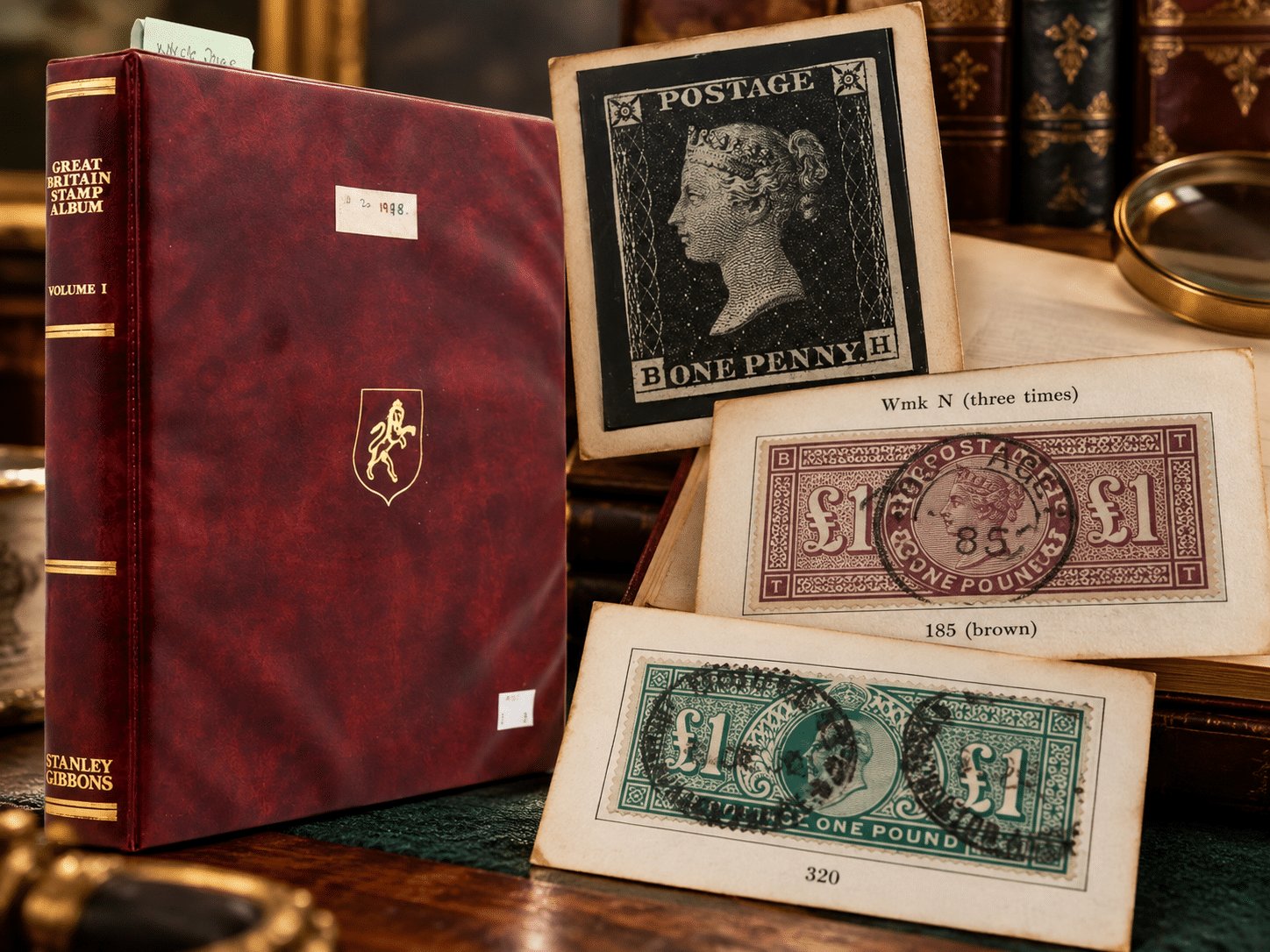








If you’ve ever wondered just how much work goes into creating artwork for a postage stamp, an astonishing collection coming up for auction in May provides startling insight.
We are selling the Leonard Fryer Archive of Stamp Designs – one of the most impressive postal history-related finds Hansons has ever uncovered. It’s worth an estimated £100,000-£150,000.

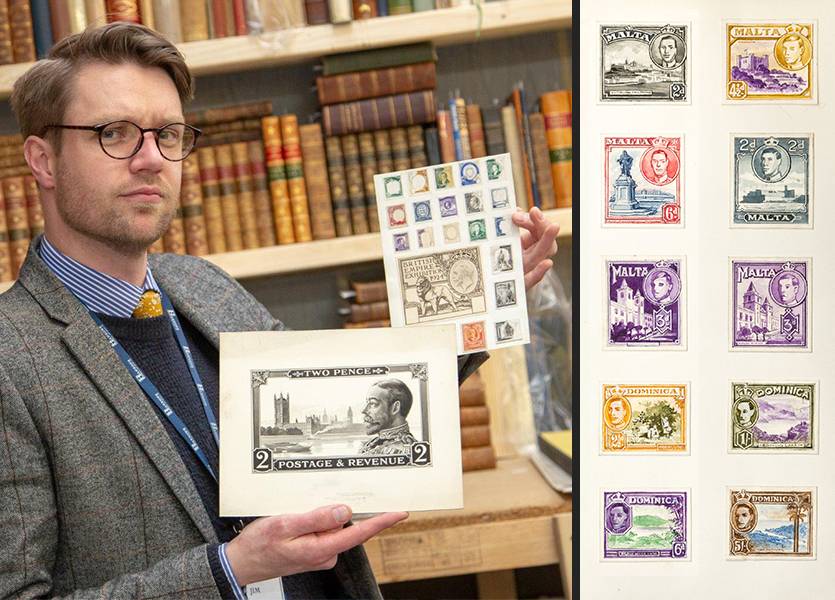
Mr Fryer was a stamp designer and hundreds of examples of his original miniature works of art, dating from the 1920s to the 1950s, have been uncovered by Hansons’ associate directors Adrian Rathbone and Jim Spencer in Staffordshire.
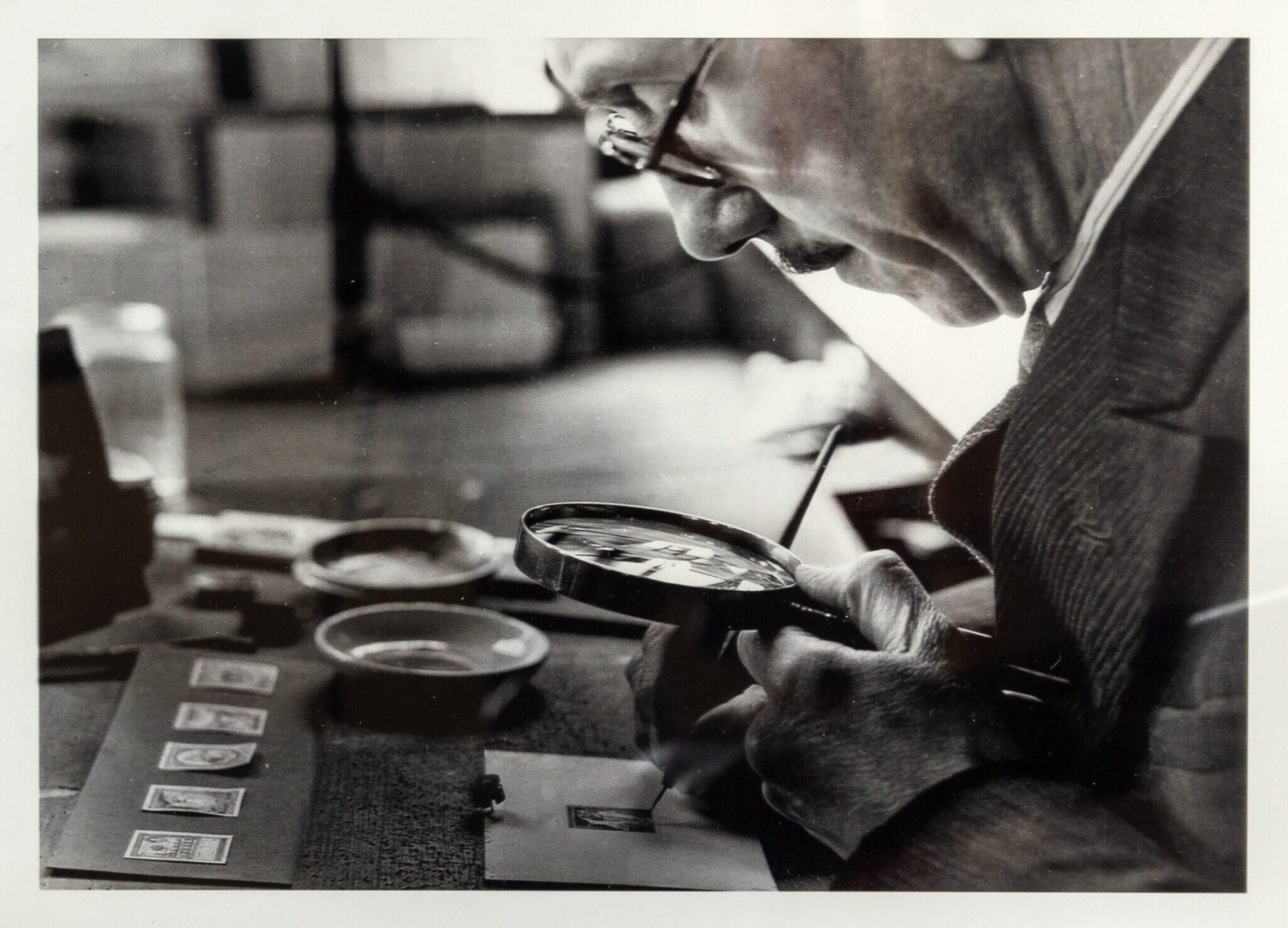
The designs are so small – stamp-size – Mr Fryer had to work with a magnifying glass in one hand and his paintbrush in the other. His archive is of such great importance, The Royal Philatelic Society London, the oldest philatelic society in the world, has been alerted.
As a child, I remember licking stamps to moisten the glue wash on the back and often dwelt on the design and colours. The Queen’s head was the predominant customary feature then, as now, a demand enshrined in UK law.
But back then, I never for one moment considered that an artist had painstakingly created that tiny design – to scale – using their brush and an ability to work within a tiny space. As a man who struggles to thread the eye of a needle, I am full of admiration.
In addition, I had not fully grasped the complexity of getting a single stamp design through to the final production process. Several artists are involved, many designs submitted, assessment panels negotiated and numerous amends made before a stamp reaches production.
And bear in mind, the tiny piece of paper we stick on our envelopes needs to include a portrait, usually of a monarch or head of state, a national symbol, numerical value and pictorial content. Mr Fryer excelled at the challenge.
His tiny masterpieces display dazzling colour, ingenuity, flair and artistic talent that became known the world over – because everyone needs postage stamps. Mr Fryer’s work paved the way to designs adopted far and wide.
His archive consists of original watercolour sketches of stamp designs created for numerous countries. These paintings show exquisite workmanship. When you soak up the fine detail of a piece of artwork created with precise accuracy on a minute piece of paper to symbolise a nation, you can’t help admire the skill involved.
There are stamp designs for Malta, Peru, Antigua, Southern Rhodesia, St Lucia, Brazil, Cyprus Jamaica, Nigeria and Ceylon, to name a few.
Stamps have been part of British culture for 179 years and, despite the passage of time and digital communications, we still send letters – and buy stamps.
They were first introduced in the UK on May 1, 1840 as a part of postal reforms promoted by Sir Rowland Hill, who invented the adhesive postage stamp. Thanks to him, the first issued stamp, Britain’s Penny Post, was released on May 6, 1840.
He also created the first uniform postage rates based on weight rather than size. His ideas were adopted throughout the world.
Mr Fryer was employed as a stamp designer by Waterlow and Sons Limited, a major worldwide engraver of currency, postage stamps, stocks and bond certificates based in London, Watford and Dunstable. The company was founded as a family business in 1810 and acquired in 1961 by De La Rue.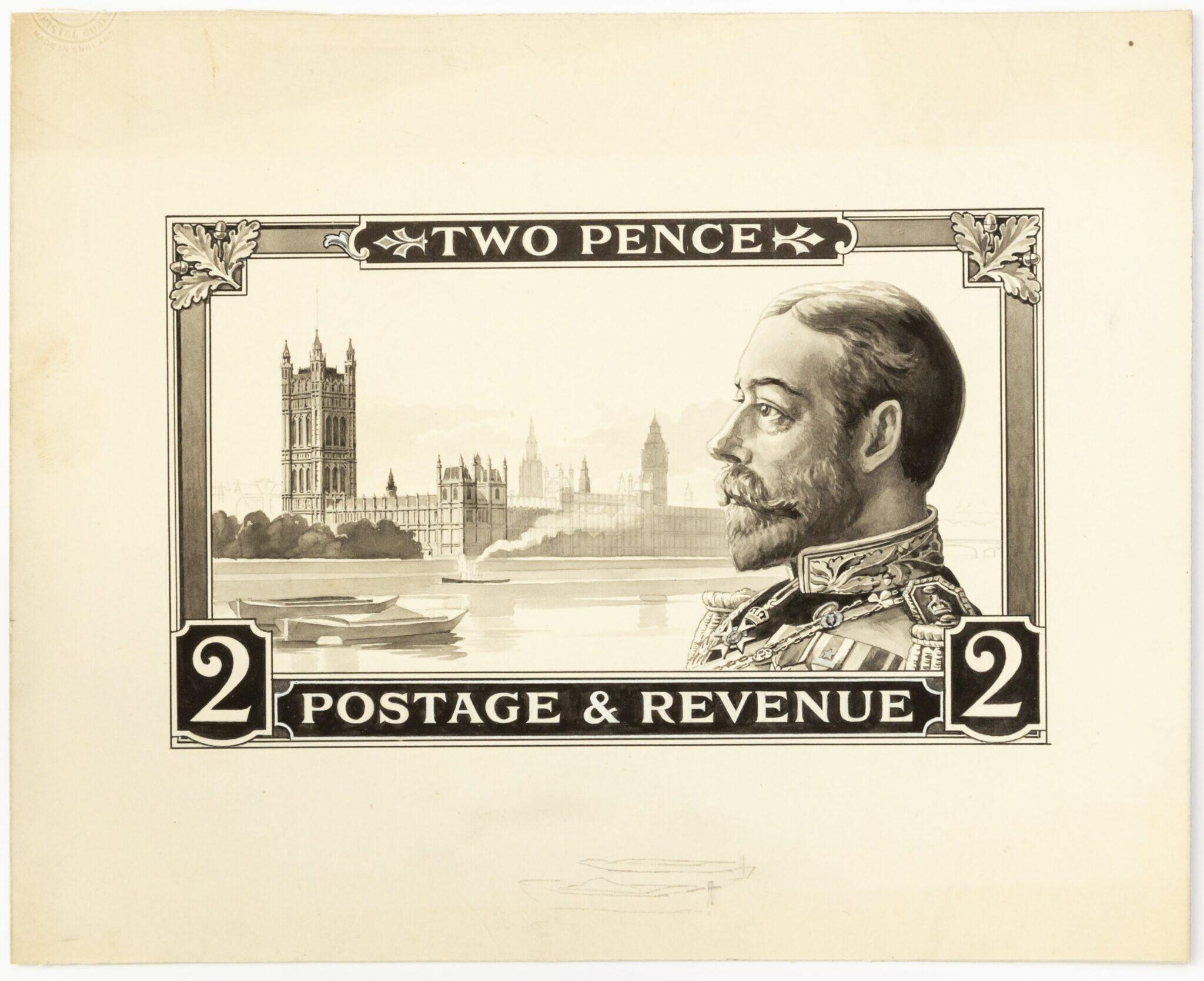
Waterlow and Sons originated from the business of James Waterlow, who began producing lithographic copies of legal documents at Birchin Lane, London, in 1810. The company gradually grew. It began printing stamps in 1852.
Mr Fryer was one of several artists employed by Waterlow and standards were unerringly high. He was responsible for numerous designs submitted to postal administrations in a wide variety of countries.
Many of his designs were adopted or formed the basis of the final design for the stamp. For example, he created several stamps for the Cayman Islands including King George VI 1938 1 ½ d and 2d value stamps and a 1 ½d black and blue beach view design together with a violet stamp showing the king’s face and a map of the country.
In the same year, a stamp design by Mr Fryer was used in a bold red and orange illustration for Jamaica’s 3d and 1s stamps. Many designs were not chosen for use but illustrate how much work went into creating a design that captured the essence of a country. For example, as well as including a portrait of King George VI, his stamp designs for Jamaica refernecedpalm trees, bananas and the sugar industry.
News of the collection’s discovery is exciting stamp experts. It’s a unique piece of postal history honouring the part Britain played in stamp creation across the world – and Mr Fryer’s artistic talent.
The Leonard Fryer Stamp Design Collection will be sold by Hansons Auctioneers on May 9. To find out more, email [email protected]. Entries are invited for Hansons’ Summer Fine Art Auction, Jewellery and Library Auction until June 7.