










I love it when we are consigned a slice of Derby’s history to our Etwall saleroom.
These pieces might not always make the big bucks, but for the insight they give us into our regional past, they are priceless.
Picture the scene.
Derby in 1812 – seven years after the Battle of Trafalgar and three years shy of Waterloo. With George III sinking into madness, the country’s ruling monarch is George IV, then known as the Prince Regent.
Smoke from cotton mills hangs over the river, canals bustles with laden barges and newspapers are full of the latest Luddite attacks.
The Napoleonic Wars are driving prices up and hard coins are in chronically short supply.
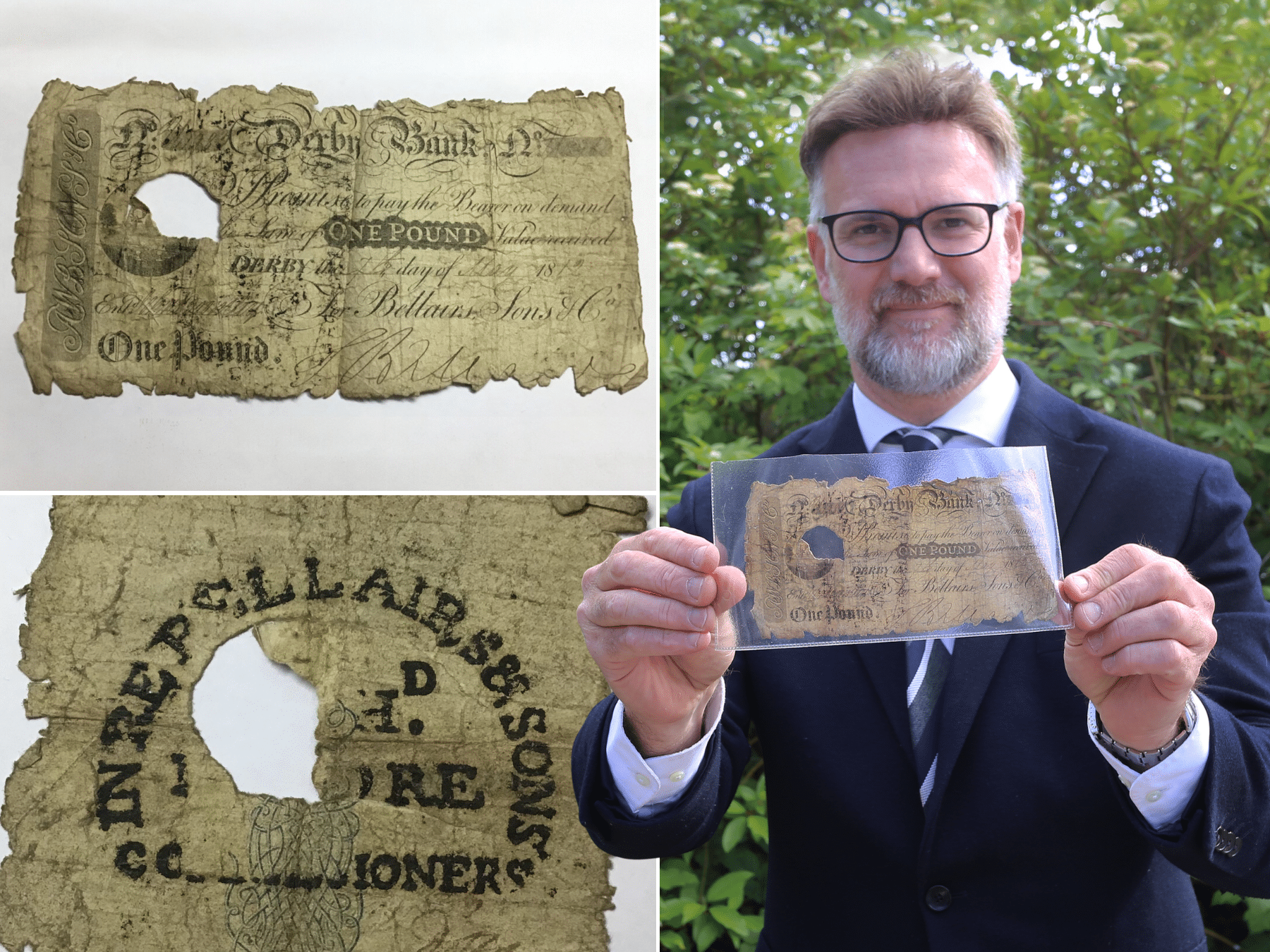
Swapping hands may well have been this one pound note set to appear in our coin sale this Thursday <May 21>.
More than two centuries old, it is a rare surviving example of an early 19th-century Derby banknote, issued by the private banking firm A. W. Bellairs, Sons & Co.
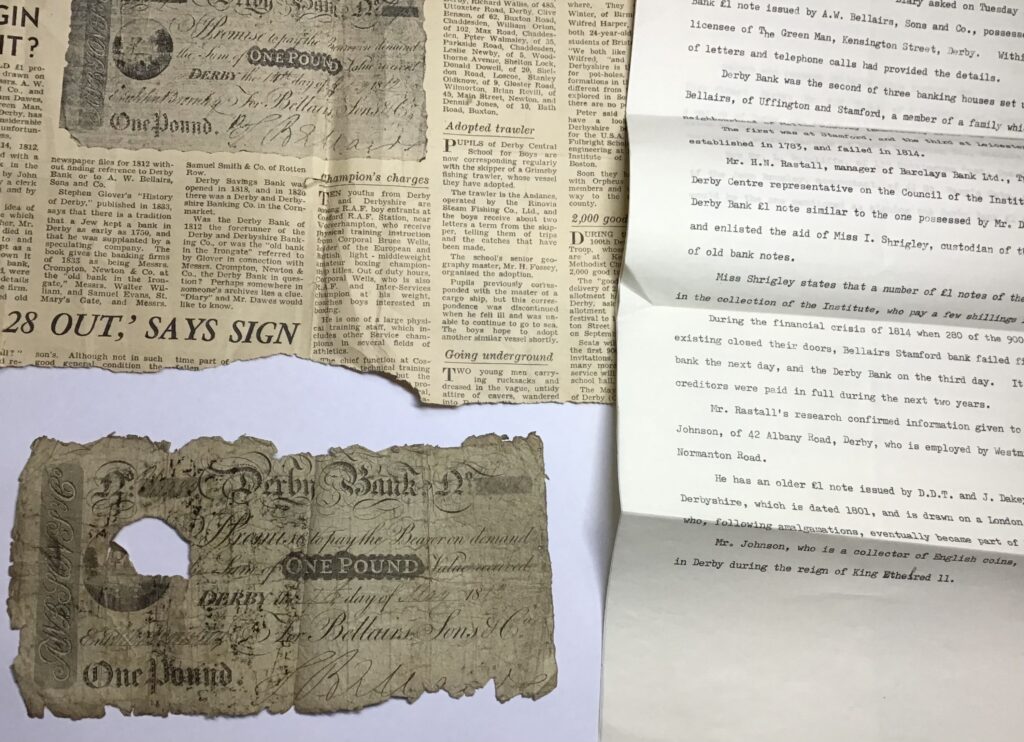
Its history is so fascinating it even made the pages of this newspaper in the 1950s with letters of research sent to the editor.
Odd as it might seem today, before a law of 1844 local private banks – rather than a national central bank – were allowed to issue their own notes.
This surviving note, dated 24 May 1812, was issued directly by Bellairs at a crucial point in the UK’s banking system.
A pound was a meaningful sum then, roughly a skilled worker’s weekly wage.
Before the Napoleonic Wars, banking remained fundamentally rooted in gold and silver coinage, much as it had been for centuries.
Paper notes existed, but they were expected to be backed by reserves of gold.
But, with the ongoing conflict with the French emperor, gold coins were needed to fund the costly war which reached a peak between 1810-1812.
Gold coin increasingly disappeared from everyday circulation.
As a result provincial banks were forced to circulate large numbers of small-denomination paper notes to keep trade ticking over.
Unlike today’s money, this currency depended almost entirely on reputation and trust.
Hence they carried the important legal pledge: “Promise to pay the Bearer on demand the Sum of ONE POUND” – just as they still do today.
Abel Walford Bellairs (1755–1839) was a Derby banker and businessman who operated during the great expansion of provincial banking in Regency England.
His firm acted as a local financial authority for Derby and the surrounding Midlands helping to finance the region’s booming trade and industry.
He belonged to a well-off generation of local bankers and, according to records, even lived in the former home of Erasmus Darwin one of the great Midlands intellectuals of the Industrial Revolution and grandfather of Charles Darwin.
At its peak the Bellairs’ banking network spread into Derby, Leicester and Stamford, reflecting the growing – and interconnected economy – of the industrial Midlands.
But sadly for the firm, in 1815 – three years after the note’s issue – AW Bellairs and Sons was bankrupt.
When peace arrived in that year, trade wise the country was in a pickle.
Military spending had fallen sharply, contracts were cancelled, businesses failed and confidence in paper money slumped.
If you dig a little deeper into the banknote itself, it reveals more secrets of the day.
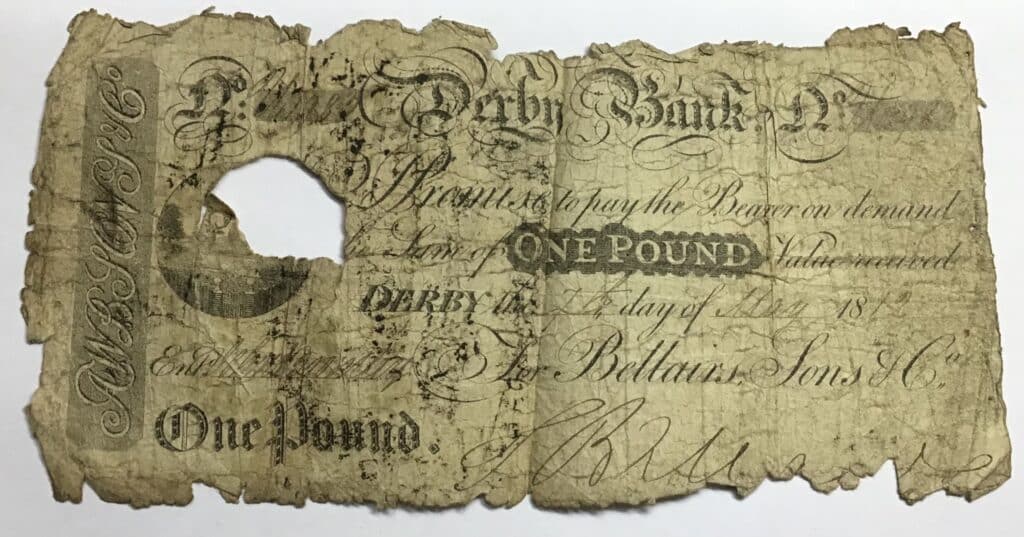
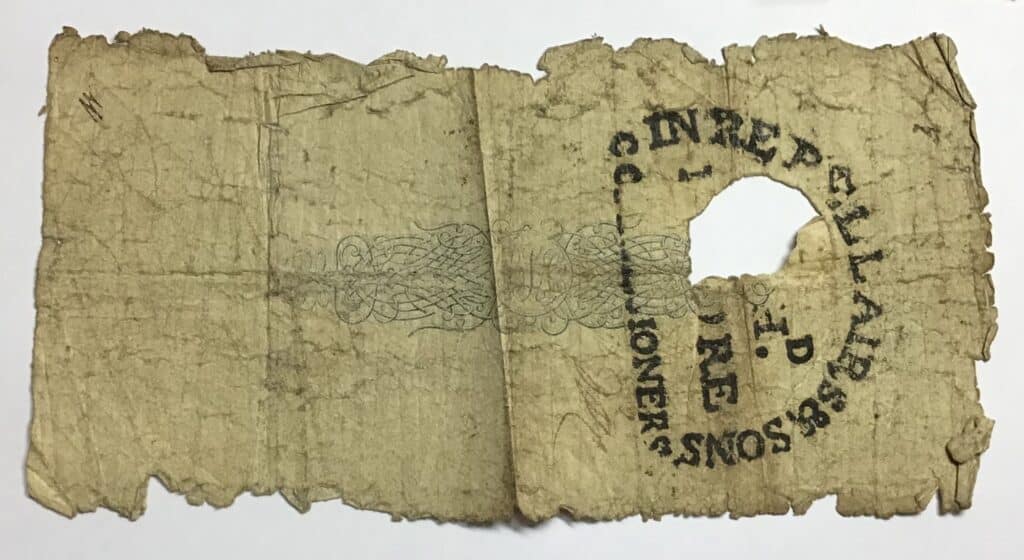
Provincial banknotes like this one were wonderfully elaborate because they had to do several jobs at once.
First and foremost – with nothing tangible to back them up – they had to inspire trust.
I love the confidence of its flourishing script – oozing the industrial bullishness of the day.
The note had to look fancy because a crude-looking version might make people nervous about accepting it.
Forgery was a huge problem in the Georgian period, especially during the Napoleonic Wars when paper money expanded rapidly, so banks had to make it look as complicated as possible.
The punch hole in the centre is an official cancellation mark making the currency invalid after it had been redeemed by the bank.
What an exceptional insight this rare note gives us into our industrial past.
I can almost picture it changing hands between one stovepipe hat-wearing factory owner and another businessman in a counting house beside a textile mill or one of the newer cotton works.
I can see the clerks sitting on high stools with ledgers open, copying figures by candlelight even in daytime because of the soot-darkened windows.
The mill owner unlocks a small mahogany cash box producing a crisp provincial note.
Who knows, it might very well have been the one in this week’s sale.

Auction Details
Auction: The Hansons Historica, Coins, Banknotes & Tokens Auction
Auction date: 21st May 2026 | 10am
Location: Hansons’ Derbyshire Saleroom
Auction contact: [email protected]
Catalogue/bidding: www.hansonslive.co.uk | www.the-saleroom.com