





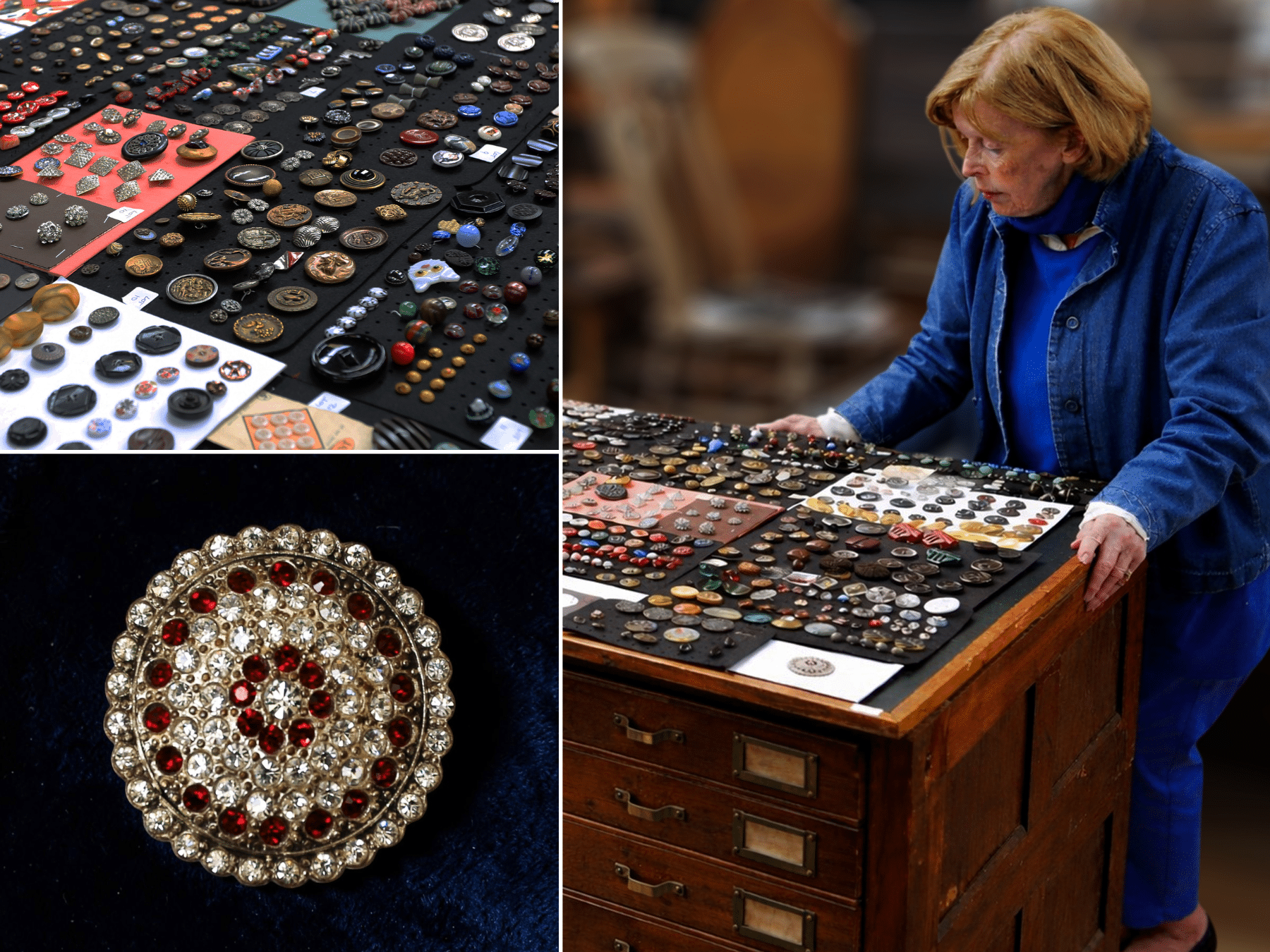
Hundreds of rare buttons amassed over almost 20 years could make a total of £7,500 at Hansons Auctioneers on May 14.
Described as “miniature works of art” they were lovingly sourced from all over the globe by West Yorkshire button dealer Julie Baldock.
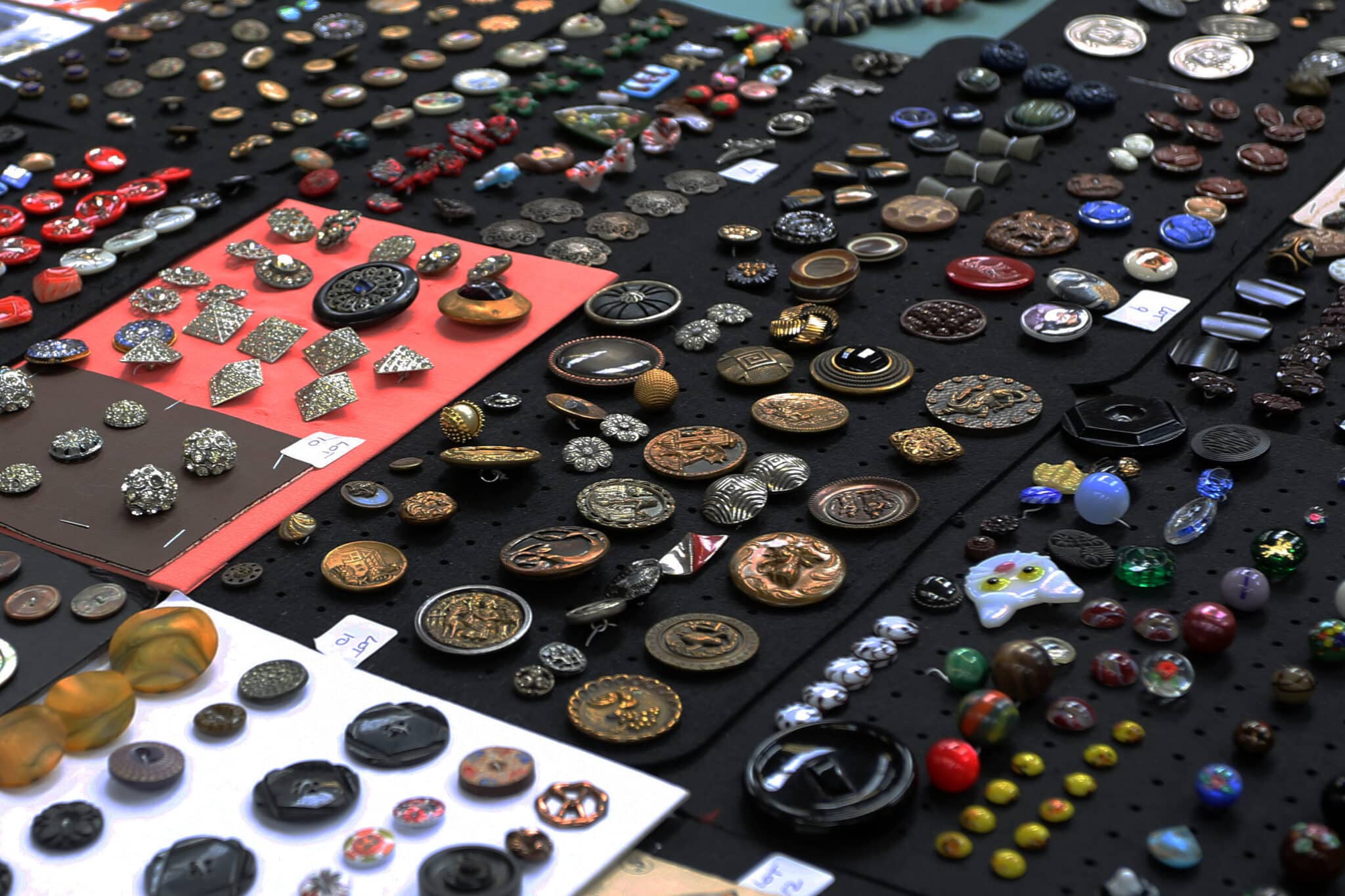
Dating from 1700 to the 1940s, the buttons are made from a range of materials ranging from Bakelite to tagua nut, with themes including Japanese geisha girls, golfers and even Mexican hummingbirds.
From a weekly stall on Huddersfield Open Market in 2007, the Liversedge mother built up a thriving business selling and buying buttons all over the world.
Every holiday would include a trip to a local market on her hunt for ever-more unusual designs.
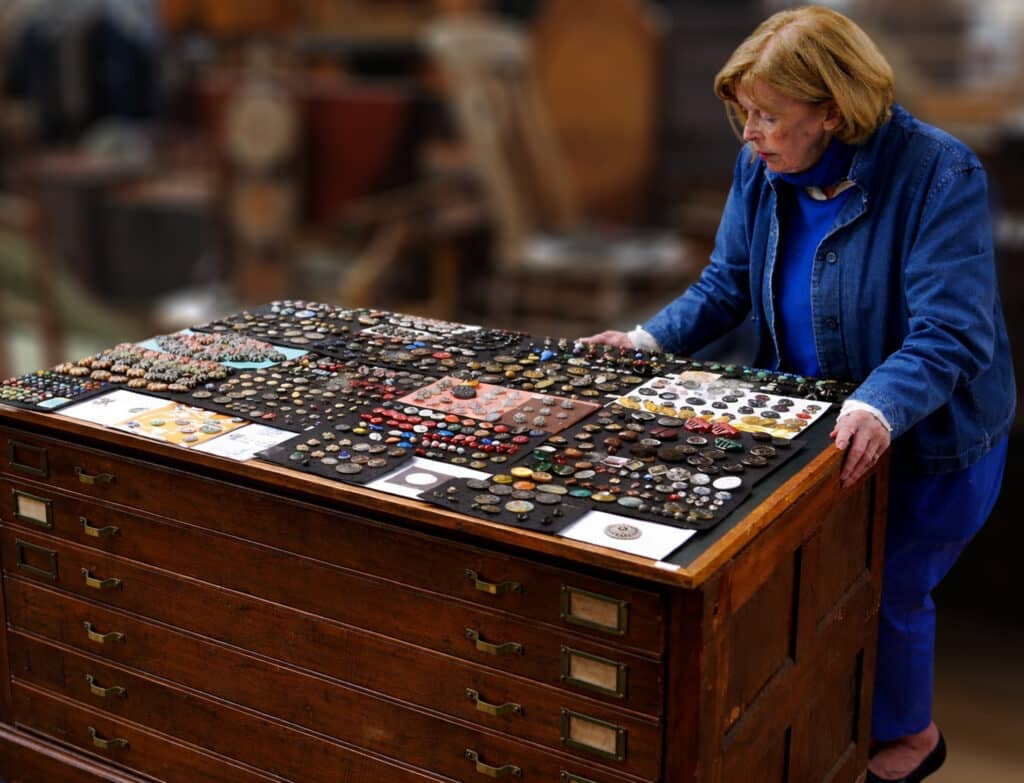
She said: “Every time we went away, whether it was as far away as Malaysia or New Zealand I would come home with bags of textiles or buttons.”
Her collection includes a pair of rare and unusual German buttons, dating from 1700, depicting a doctor carrying out an enema.
Debate rages as to the origins of the cheeky designs.
Some say they were “theatre buttons”, sold as souvenirs at plays, with these two showing scenes from by Molière’s The Imaginary Invalid.
Other theories suggest they were designed to lampoon the 18th– century upper class love of enemas.
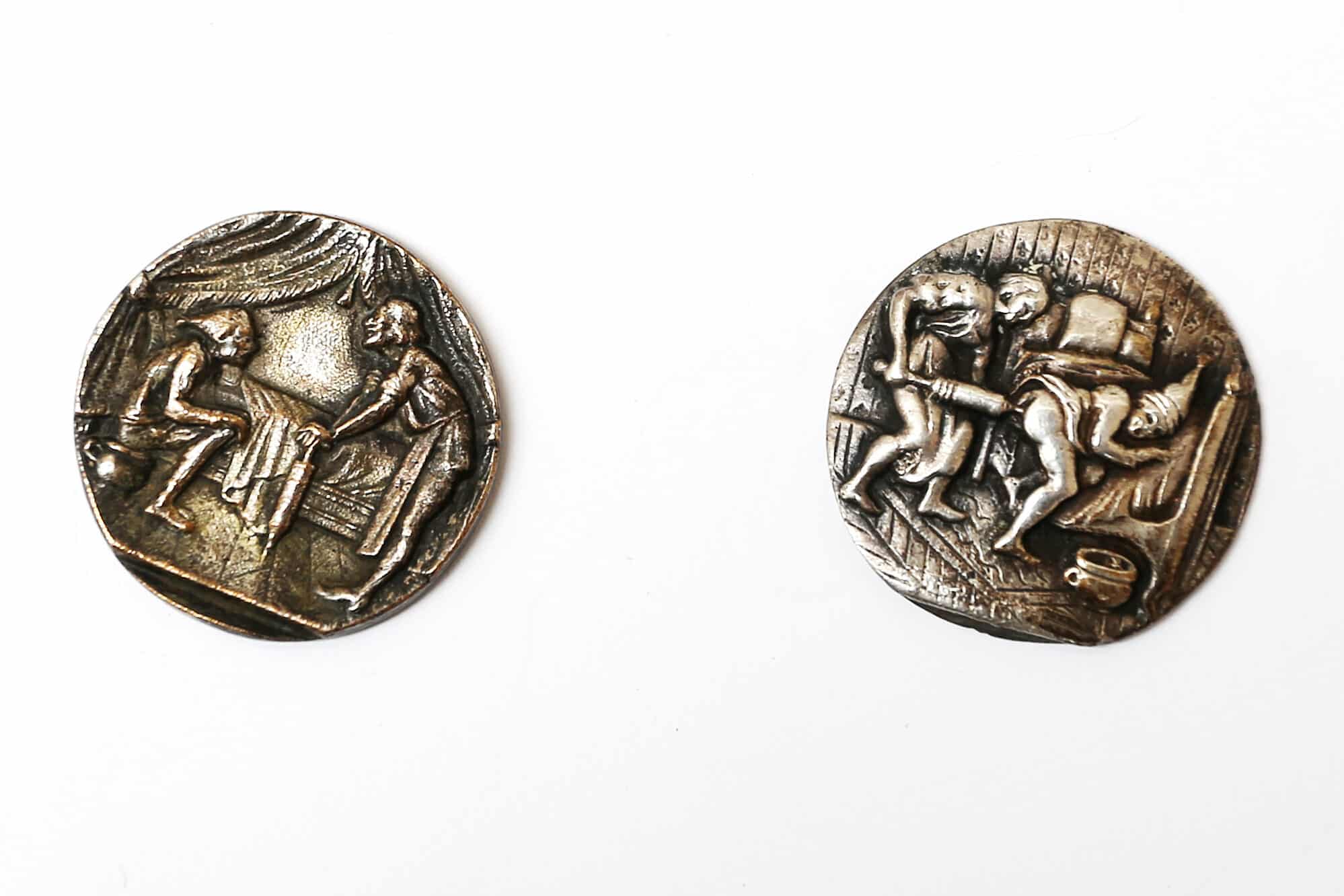
Julie said: “As revolting as they may be, the buttons would have been worn as a status symbol by the well off, because only they could afford the procedure.”
The German buttons are expected to make £200-£300 at the sale at Hansons Auctioneers’ Etwall saleroom.
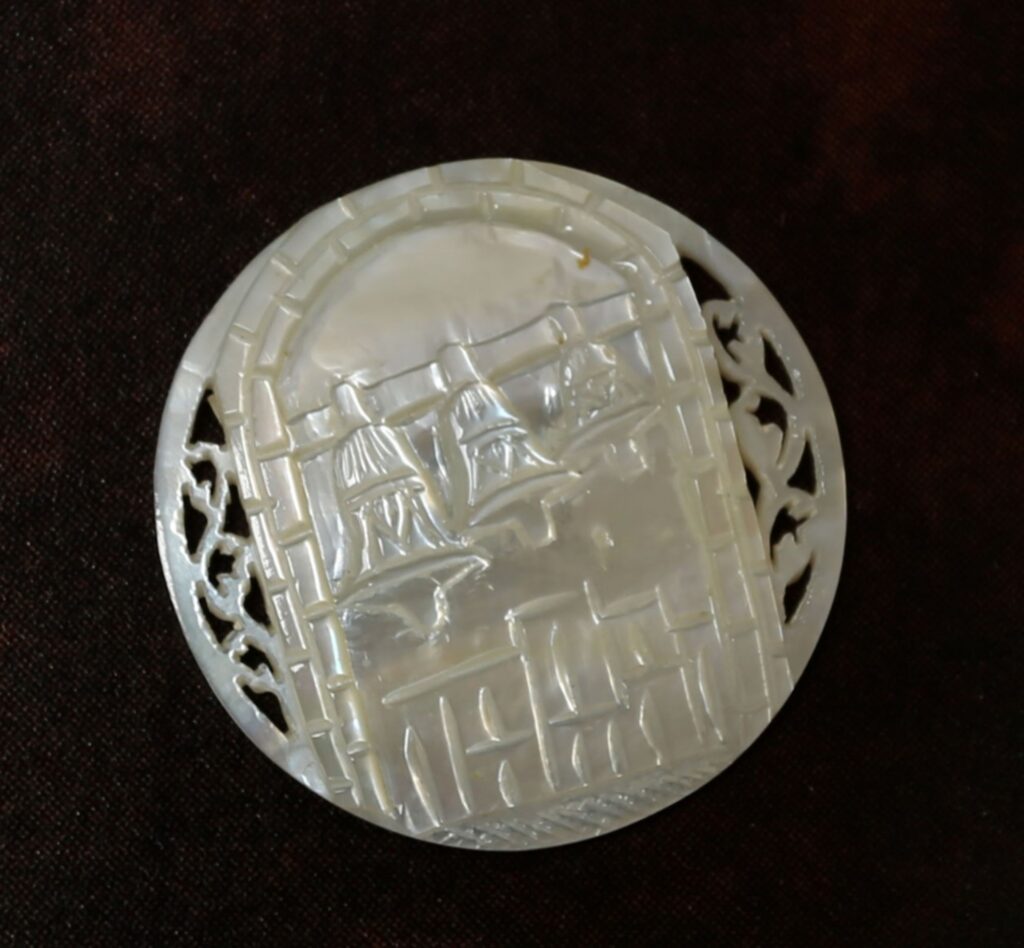
More to Julie’s taste is an intricately carved Bethlehem pearl button featuring bells and townscape, dating to the early 1900s, which is expected to make £40-£50.
She said: “The craftsmanship is exquisite, these buttons really are miniature works of art.
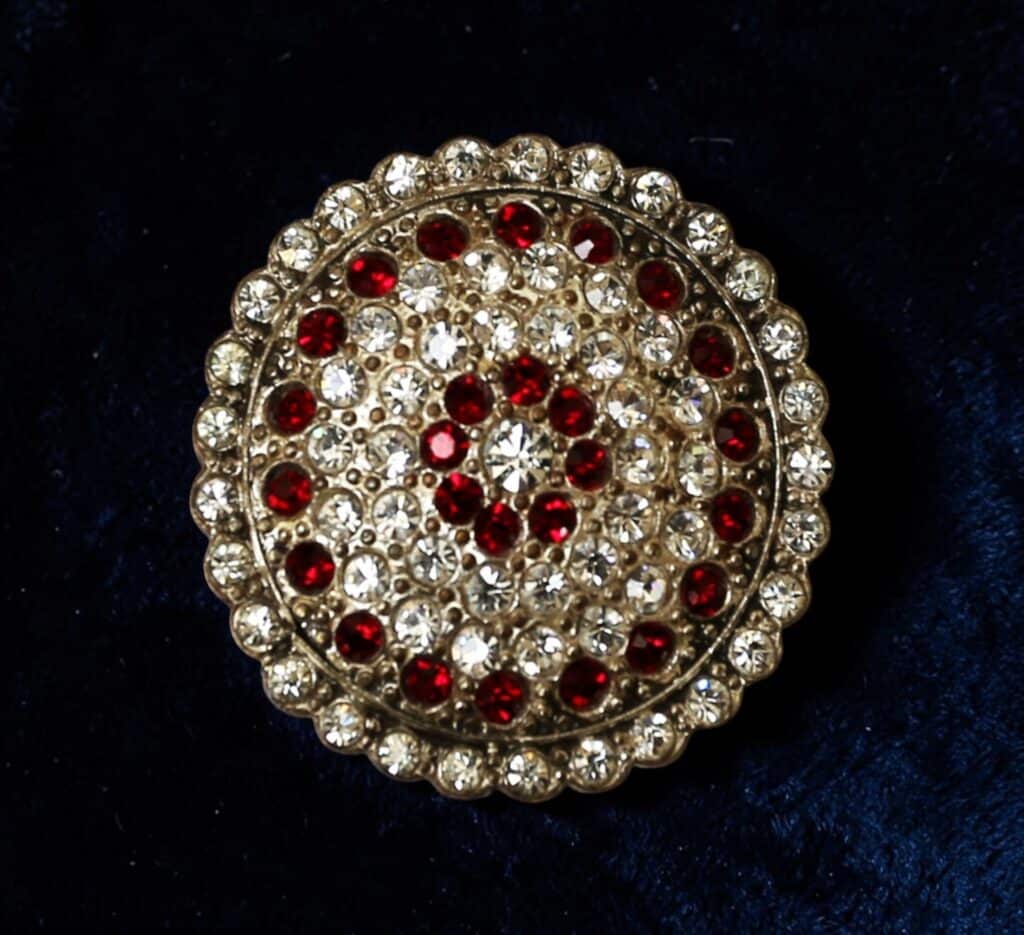
“There are also stunning red and white paste buttons some 2½ in in diameter, as well as a beautiful hand-painted button of a rooster – there are even small paperweight buttons.”
She said: “I knew from the minute I started selling buttons I was onto something big. Most of my customers were collectors with some of them covering every wall of their home with thousands of buttons.
“As soon as I started researching buttons, I realised what a huge area it is, I spent hours and hours reading up on them.”
Julie, a member of the Button Society, soon identified America as a huge potential market, regularly buying at an online auction house based in Florida.

Hansons Auctioneers’ textiles expert, Notty Hornblower, said: “It is a stunning collection, lovingly curated over many years and including some of the most unusual and beautiful buttons I have ever seen.”
Buttons date back to the Indus Valley Civilisation (c. 2000 BCE), where they were decorative rather than functional. Practical buttons emerged in 13th-century Europe, especially in Germany, as fitted clothing became popular.
By the 17th and 18th centuries, they were status symbols made from precious materials. Mass production during the Industrial Revolution made them widely accessible.
Button collecting began as an organised hobby in the early 20th century, particularly in the United States, when people started saving and trading buttons from old clothing. The founding of the National Button Society in 1938 formalised the practice with classifications, shows, and competitions.
Money from the sale of Julie’s collection will go towards a trip to Vietnam, with retirement plans shelved in favour of another vintage business.
Auction Details
Auction: Derby May Three-Day Antiques & Collectors Auction: including Silver, Jewellery & Watches
Auction date: 14th – 18th May 2026 | 10am
Location: Hansons’ Derbyshire Saleroom
Auction contact: [email protected]
Catalogue/bidding: www.hansonslive.co.uk | www.the-saleroom.com