








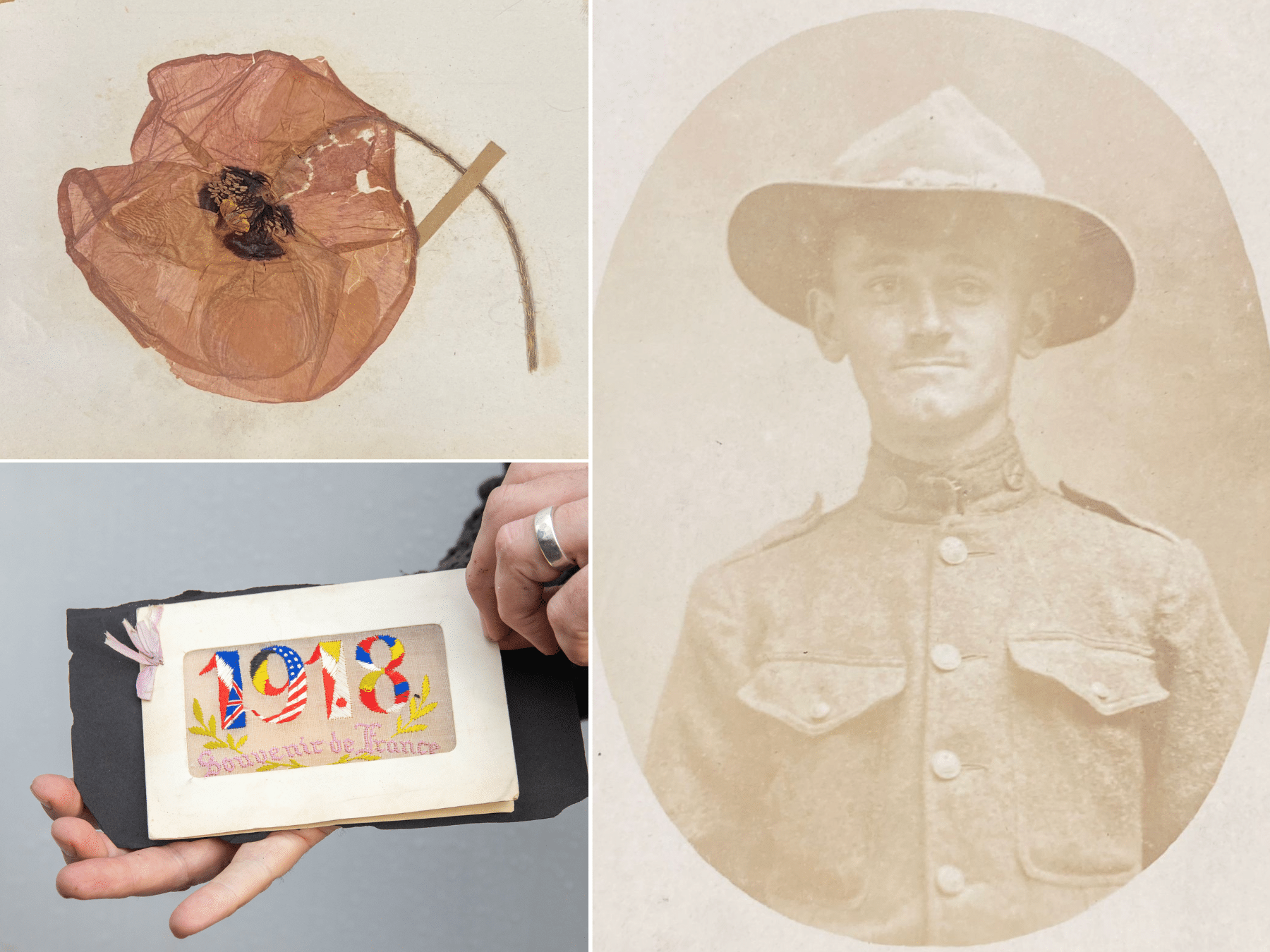
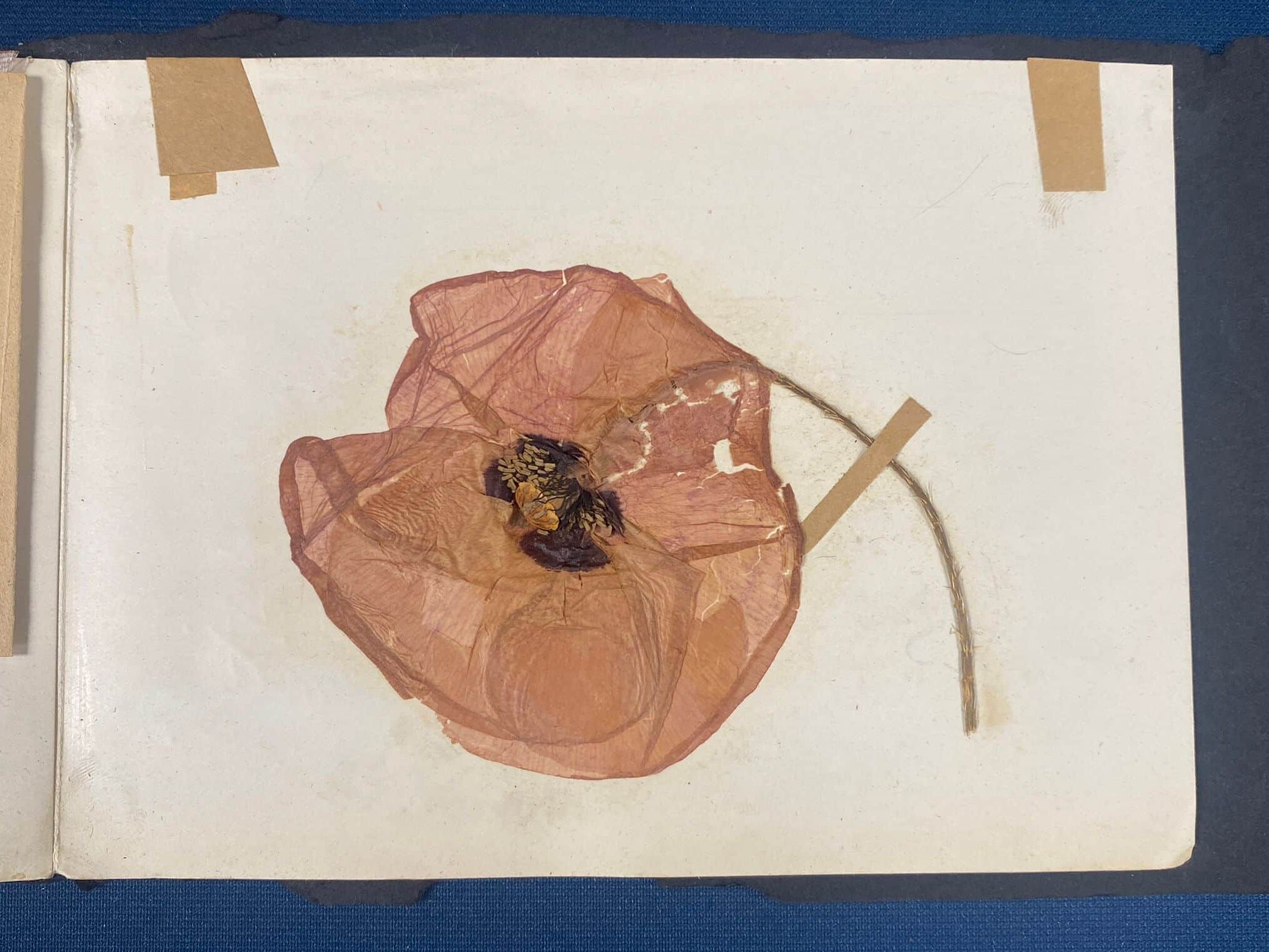
A poppy from the Flanders battlefield of WWI, sent to the fiancée of an American serviceman, is expected to make up to £700 at auction next week <feb 25>.
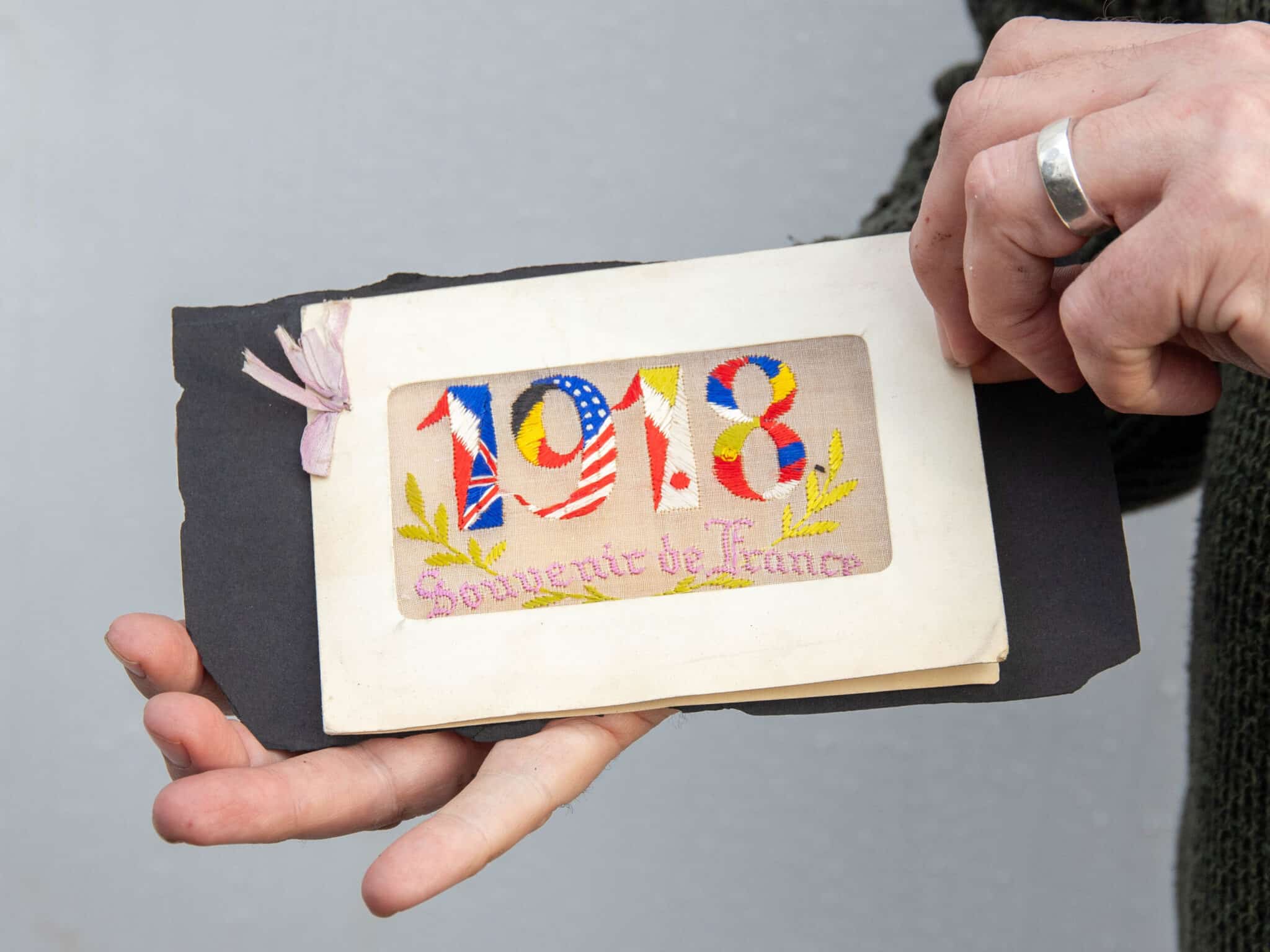
Pressed in a silk postcard and dated June 18, 1918, it was a gift from New Jersey infantryman Harold Alfred Stivers to his future wife, Marie.
The poppy, along with Harold’s larger wartime collection, is one of the star lots at Hansons Auctioneers’ military sale at its Derby saleroom on February 25.
Hansons’ militaria expert, Matt Crowson, said: “Nothing is more evocative of the brutal and bloody fighting of WWI Trenches as a poppy. To think this flower grew in the soil of that infamous battlefield is nothing short of miraculous.”
It had been owned by a military specialist from Vermont who acquired it from a fellow collector after he bought it at auction in America.
Matt Crowson continued: “This is a very personal collection and with it we can piece together Harold’s savage reality of war thousands of miles from home and how he kept thoughts of his fiancée alive.
“He was operating in or near Flanders, one of the bleakest landscapes of the war – flat, waterlogged, and churned into mud by years of shellfire. And yet also the landscape which produced this everlasting symbol of Remembrance.”
The vendor, who preferred not to be known, said: “I believe the collection likely passed out of the family’s hands at some point.
“I hope it goes to a European museum or collection that will highlight the (currently fragile) camaraderie between the US and France during, and after, the war.”
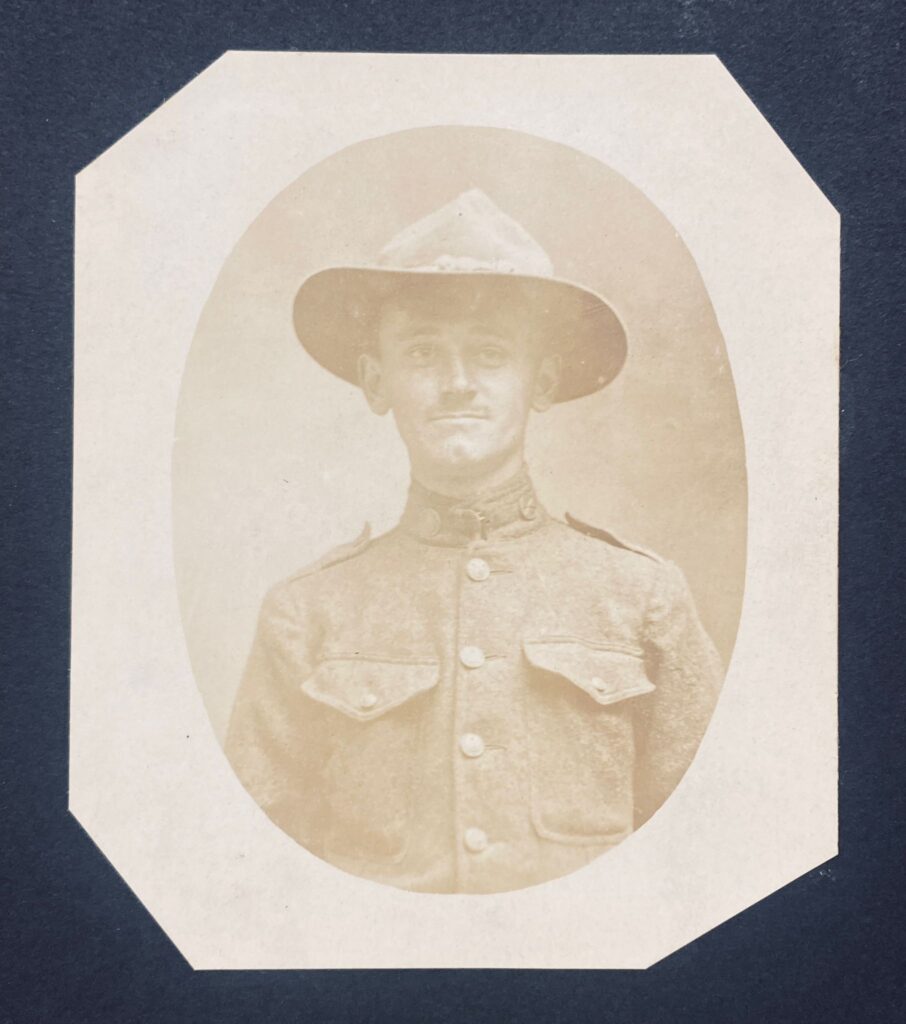
Harold was born in New Jersey on April 1, 1889. Having trained as a bookkeeper he was drafted into the army, setting sail for France on May 19, 1918, aged 29.
Records confirm he joined Company A of the 311th Infantry, part of the 78th Division, as a cook infantryman.
Known as the ‘Lightning Division’, its soldiers experienced intense fighting in France, including the St.Mihel and Meuse-Argonne offensives, pushing back German forces.
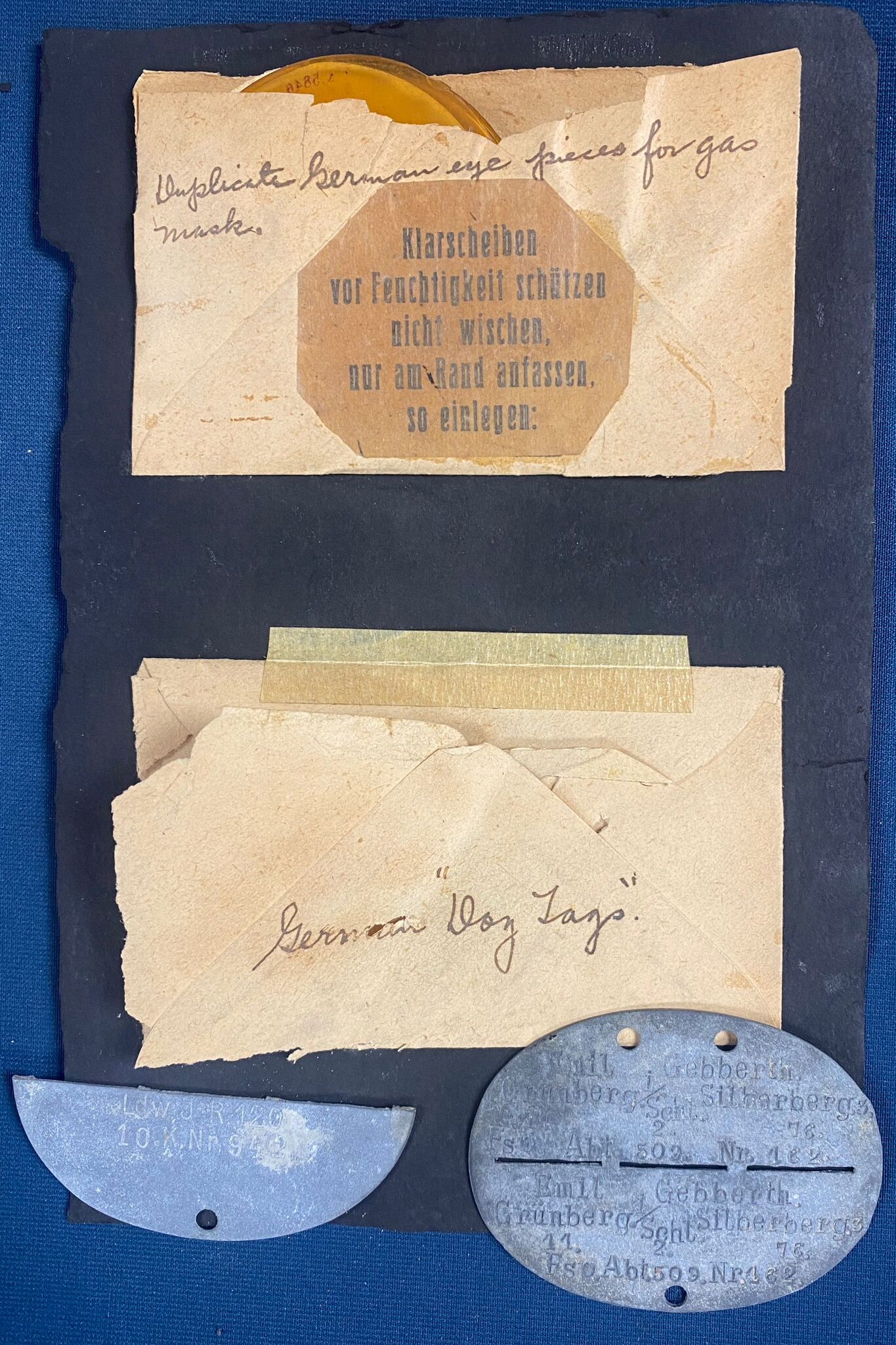
As well as the poppy, the archive includes battlefield souvenirs including German gas mask lenses, dog tags, and even a piece of French army insignia taken from a coat found on a corpse in Meuse-Argonne.
Matt Cowson continued: “While Harold joined the war relatively late, his experience would have been horrific. In major offensives, burial details could not always keep up. Soldiers advancing through the battlefield sometimes encountered bodies – French, German, or American– lying where they had fallen.
“This was one of the most psychologically difficult parts of the war. Many soldiers wrote that the sight of the dead affected them more than gunfire.”
After the cessation of hostilities in November 1918 Harold and his unit, were billeted in the small French town called Flavigny where relations with locals were cordial and several US arm men even taking French brides.
The vendor continued: “Some of the letters and correspondence point towards a close relationship with the residents in the town. I suspect he sent home the pressed poppy to his fiancée, Marie Madeline Fries who he later married in 1920.”
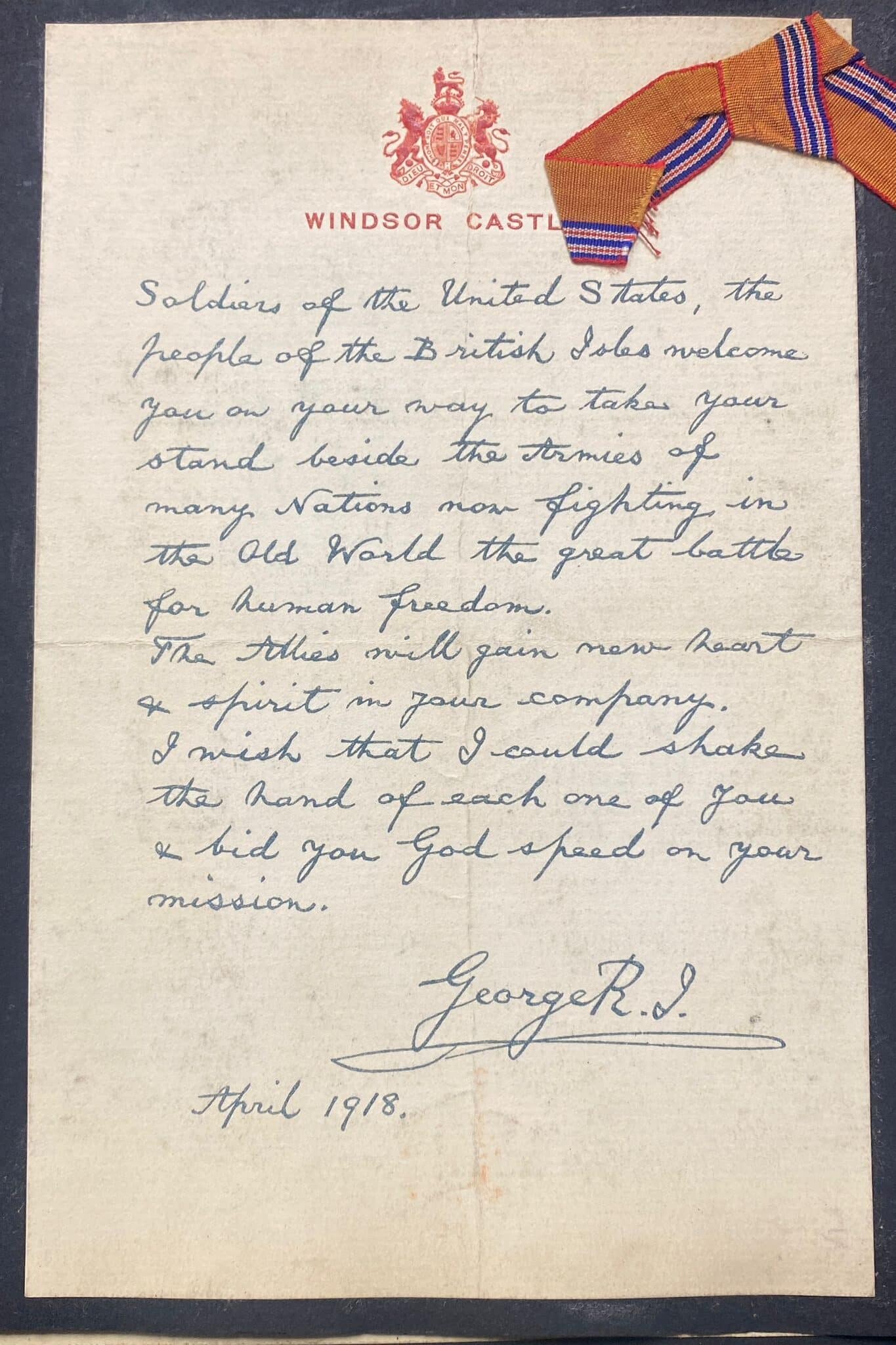
The loose-leaf album also contains warm letters from the French family with whom Harold was billeted, a head-and-shoulders photograph of Harold in military uniform, along with an autopen-signed letter from George V at Windsor Castle, welcoming US soldiers enroute to the front in France.
Also included are other items related to Harold’s service, including original service documentation, train tickets, aerial photographs of trench systems, an Army Corps Districts 1918 printed map and a small silk 48-star United States bunting style flag.
Published records also state that Harold received a WWII draft registration card in 1942 at the age of 53, though no further records of any service can be located.
He died in March 1959 at Loch Arbour, Monmouth County, New Jersey at the age of 69.
The poppy was adopted as the official symbol of Remembrance by the Royal British Legion in 1921. It was chosen because the bright red flowers flourished in the devastated, churned-up soil of the western Front battlefields, famously inspired by Lt. Col. John McCrae’s poem, In Flanders Fields.
The archive, souvenirs of his service, such as maps, postcards and aerial trench photos, havea guide price of £500-£700 at Hansons Auctioneers’ militaria sale on February 25.
Auction Details
Auction: The Hansons Medals, Militaria & Firearms Auction
Auction date: 25th February 2026 | 10am
Location: Hansons’ Derbyshire Saleroom
Auction contact: [email protected]
Catalogue/bidding: www.hansonslive.co.uk | www.the-saleroom.com