


Ingenious walking sticks stride past their estimate in Oxford - Hansons Auctioneers
Etwall, Derbyshire

Located in the heart of Derbyshire, Hansons Derbyshire Saleroom in Etwall is not only the headquarters of our operations but also the vibrant auction house for a wide range of specialist auctions. This is where we host an exciting array of sales, from collectibles and antiques to Toys, Militaria, Coins, and much much more.

Find out more
Bishton Hall

Situated within beautiful landscaped gardens in Staffordshire, Bishton Hall, a grade II listed Georgian mansion, creates the period setting to assess and showcase antiques.

Find out more
London

Hansons Richmond builds on the success of monthly London Fine Art & Antiques sales led by a dedicated team since 2018. Situated in a highly regarded area of the capital, it offers a complete range of auction services.

Find out more
Hansons Newark

Welcome to Hanson's Newark, where we honour the timeless tradition of the classic auction experience. Formerly known as Northgate Auction Rooms, we continue to uphold the old-school values of live, in-person bidding, bringing the excitement and authenticity of traditional auctions to the heart of Newark.

Find out more
Hansons Cornwall

Nestled in West Cornwall, Hansons Auctioneers in Penzance offers a warm and welcoming environment for buyers, sellers, and collectors alike. As part of the renowned Hansons Auctioneers network, our Penzance saleroom provides a unique and personalised auction experience.

Find out more
The Old Post Office Leicester Square

Hansons’ Kent is located close to the market town of Tonbridge in the picturesque village of Penshurst on the Kent/Sussex border. Situated in the beautiful grounds of the Penshurst Estate, we are ideally located to welcome you for valuations and sale days.

Find out more
Banbury, Oxfordshire

Hanson Holloway’s operates from the longest-established saleroom in the historic market town of Banbury. As well as Oxfordshire, it serves the neighbouring counties of Buckinghamshire, Warwickshire and Northamptonshire.

Find out more
Royston, Hertforshire

Hanson's Hertfordshire is based in Royston and operates jewellery, fine art & collectables auctions and valuations throughout Hertfordshire and surrounding areas, including Cambridgeshire, Essex, Suffolk and North London.

Find out more
Beds/Bucks

Based in Woburn and Aspley Guise we hold jewellery, silver, fine collectable auctions from the Woburn Hotel. Valuations throughout Bedfordshire, Buckinghamshire and Northamptonshire.

Find out more
Hansons Auctioneers | Norfolk

Hansons Norfolk is based in Roughton, North Norfolk. Just 5 miles from the seaside town of Cromer, Hansons Norfolk holds jewellery, silver, fine art and collectables auctions and valuation days as well as free home visits for larger collections.

Find out more
Lichfield, Staffordshire

Hansons Auctioneers is pleased to work with Rare Book Auctions in Lichfield, managed by Jim Spencer. Rare Book Auctions hold dedicated monthly sales of antiquarian books, modern firsts, manuscripts, autograph letters, photographs, ephemera, prints & caricatures, and maps & globes.

Find out more

News

Ingenious walking sticks stride past their estimate in Oxford

 |  By Kirsty Myatt

A collection of 21 walking sticks and gadget canes more than tripled its low guide price of £950 to sell for a £3,270 at Hansons Auctioneers’ Oxford saleroom in Banbury.

The top seller was a group of four canes, which variously incorporated a sword, a measuring stick for horses and a vicious spiked pommel intended to fend off assailants. Expected to sell for £150-£300, the quartet hammered at £1,500.

Other gadgets on offer included sticks combining a watch, compass, telescope, a stick for cleaning gun barrels and even a harmonica.

The single lot top seller was an ebonised walking stick with a 9ct gold collar which concealed a gold propelling pencil. Dated 1909, and expected to make £400-£600, it sold for £620.

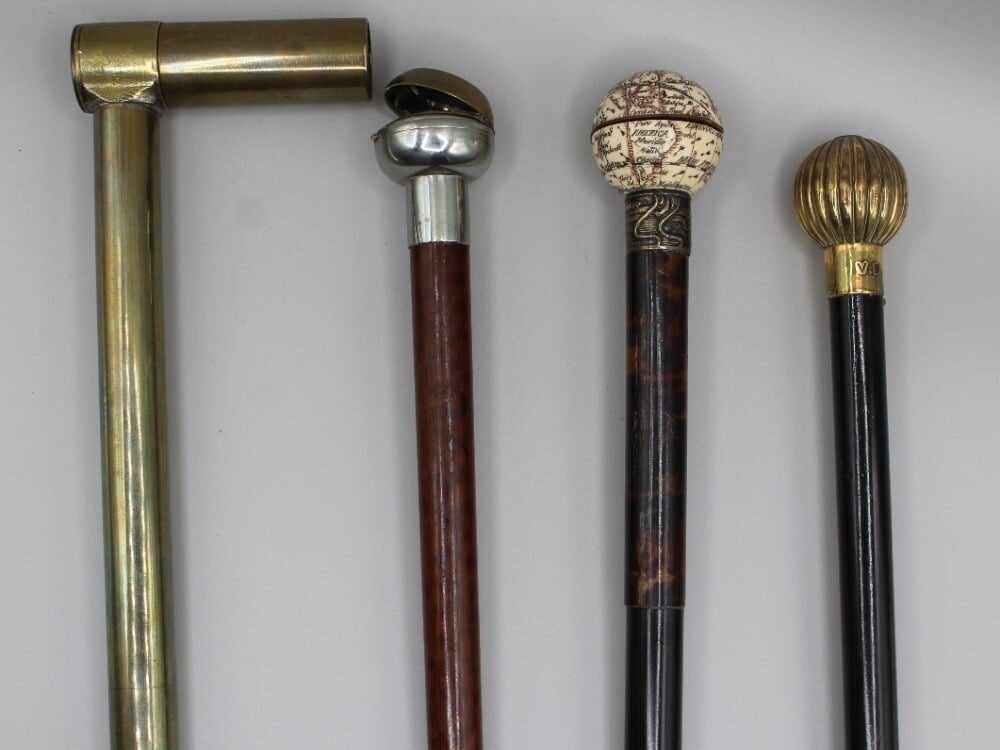
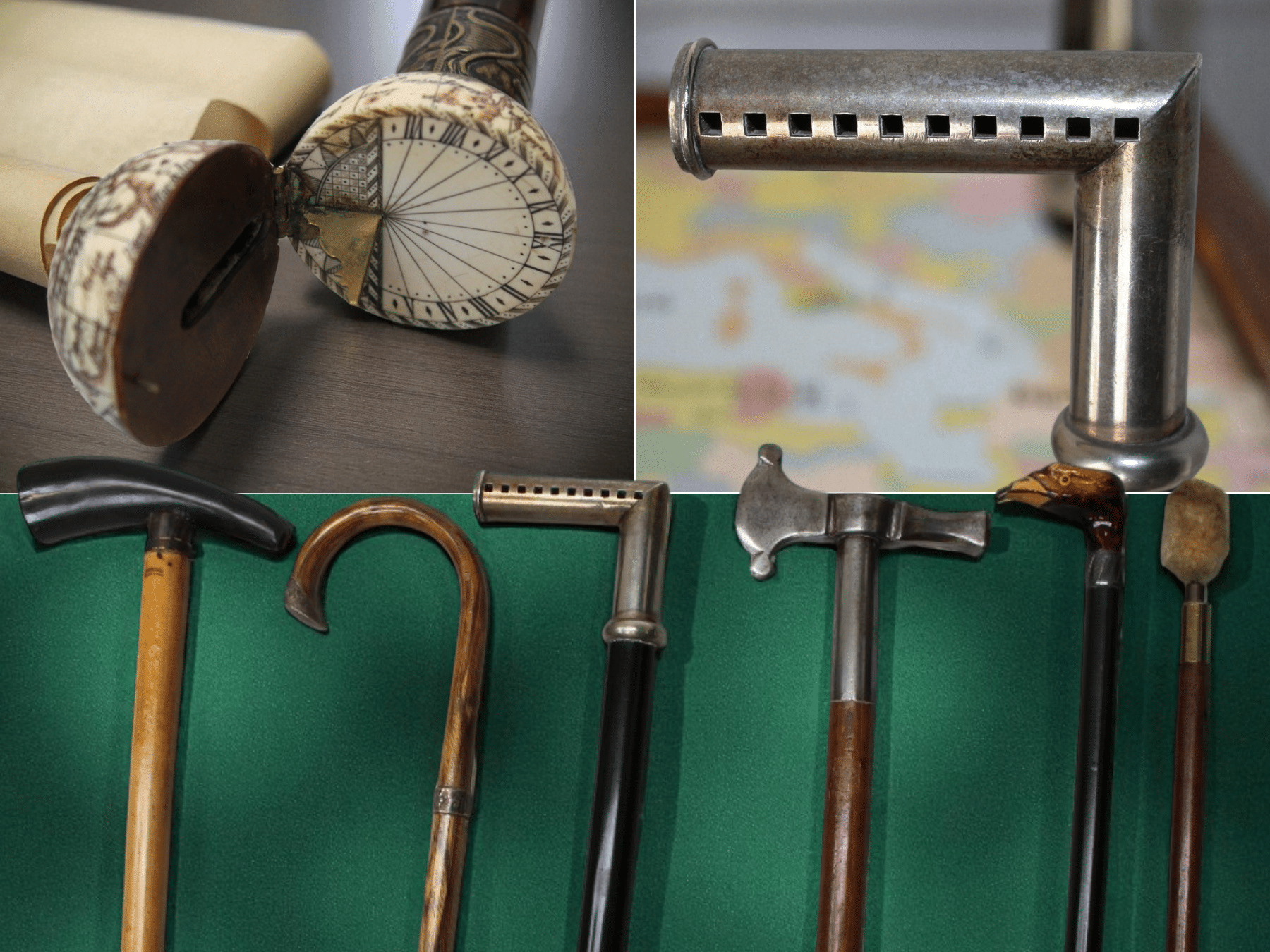
Another group of four canes, including a brass-handled Malacca stick, dated 1913, whichtransforms into a telescope, one with a watch on the pommel and another where the globe opens to reveal a sundial, sold for £420 more than doubling its low estimate of £200.
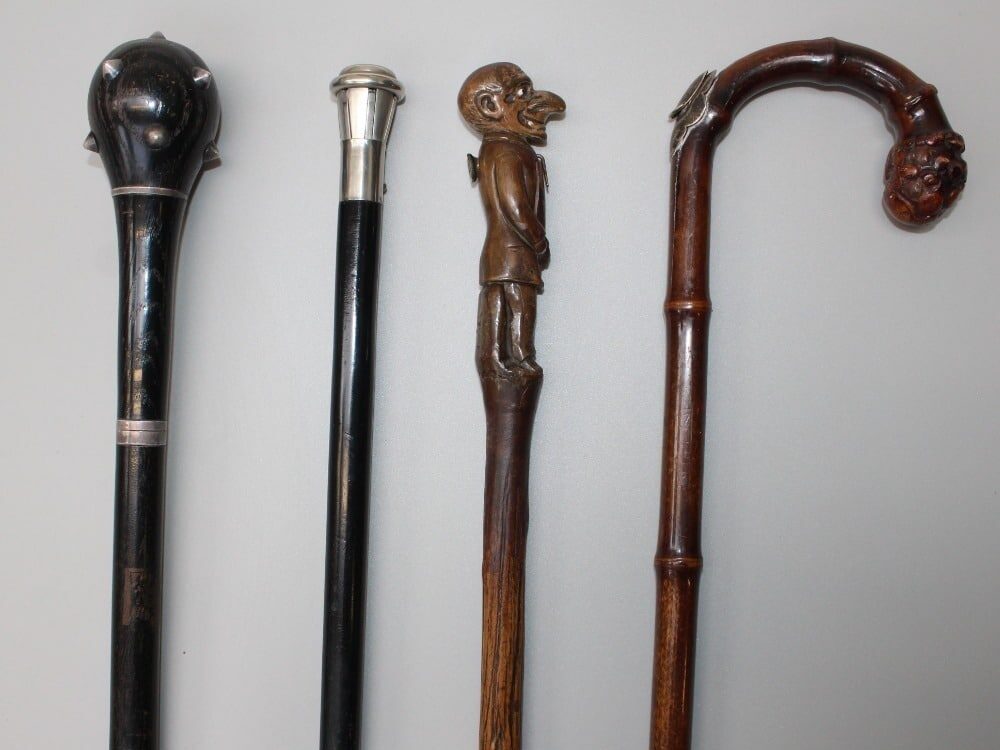
Four walking sticks including one with one incorporating a measuring stick for horses, a folk art stick and one with a metamorphic spiked mace pommel. Expected to sell for £150-300 they hammered at £1,500
Four canes, including a brass-handled Malacca stick, dated 1913, which transforms into a telescope, one with a watch on the pommel and another where the globe opens to reveal a sundial, sold for £420

Hansons Auctioneers’, Jasper Marsh, said: “In Victorian London streets were booming with all sorts of delights from gaming houses to pleasure gardens. It gave rise to a new style of walking – the promenades and, with it, the rise of the cane.” 

With the poor state of roads and pavements a strong support was essential, most with a long ferrule for support or, in more lawless times, as a weapon of self-defence.

Jasper continued: “Towards the end of the 19th century, the gadget cane with additional functions became popular — a bit like the Swiss Army knife of today.” 

An unusual metamorphic walking stick which could transform itself into a telescope tripled its low estimate of £80 to hammer at £240.

While two silver-topped walking sticks, with their handles moulded as a semi-naked women, strode past their pre-sale guide price of £40-£60 to sell for £130.
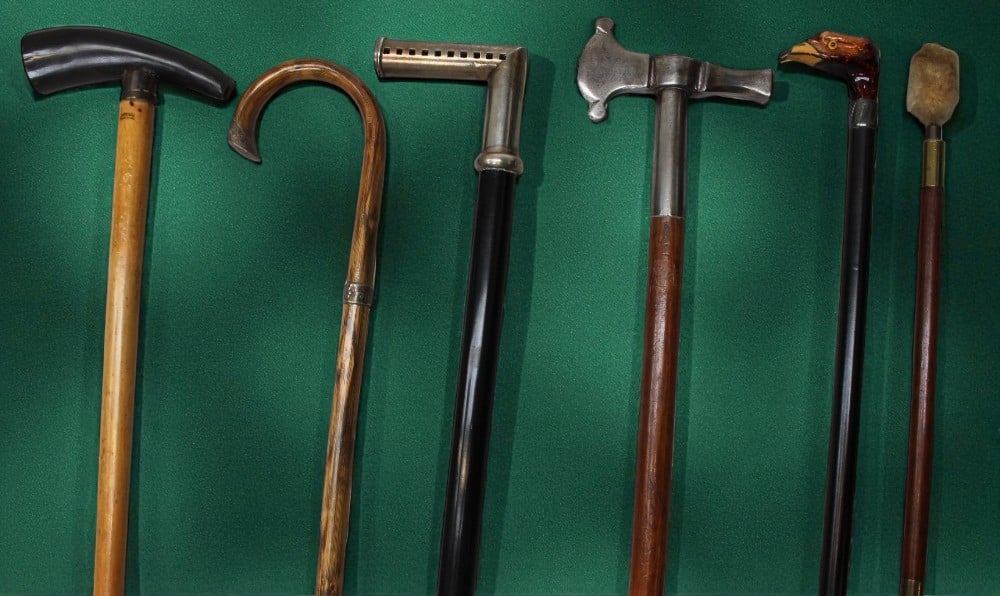
Six various walking sticks comprising a white metal axe head stick, a white metal stick with a harmonica, a horn-headed Malacca stick, a stick with enamel Duck handle, a silver-mounted stick and a stick usable for cleaning gun barrels. Expected to sell for £30-£50, it hammed at £200

A group of six walking sticks, three topped with an axe head, harmonica and device for cleaning gun barrels sold for £200, beating its estimate of £30-£50.

In the 1800s sharp-dressed gentlemen would wear a specific cane in the morning, a day or city cane for business, before changing canes for the evening. Theatre canes, made of precious wood, with a thin and straightforward ivory knob, became popular.

Jasper continued: “The sale also included examples of the crutch or crook, which could have been hung from the arm when lighting a cigarette. The same style became popular after WWI when war veterans required support when walking.”

Auction Results

Auction: Banbury September Fine Art & Antiques Auction
Auction date: 24th September 2025 | 9:30am
Location: Hansons Oxfordshire Saleroom
Auction contact: [email protected]
Catalogue/bidding: www.hansonslive.co.uk | www.the-saleroom.com