









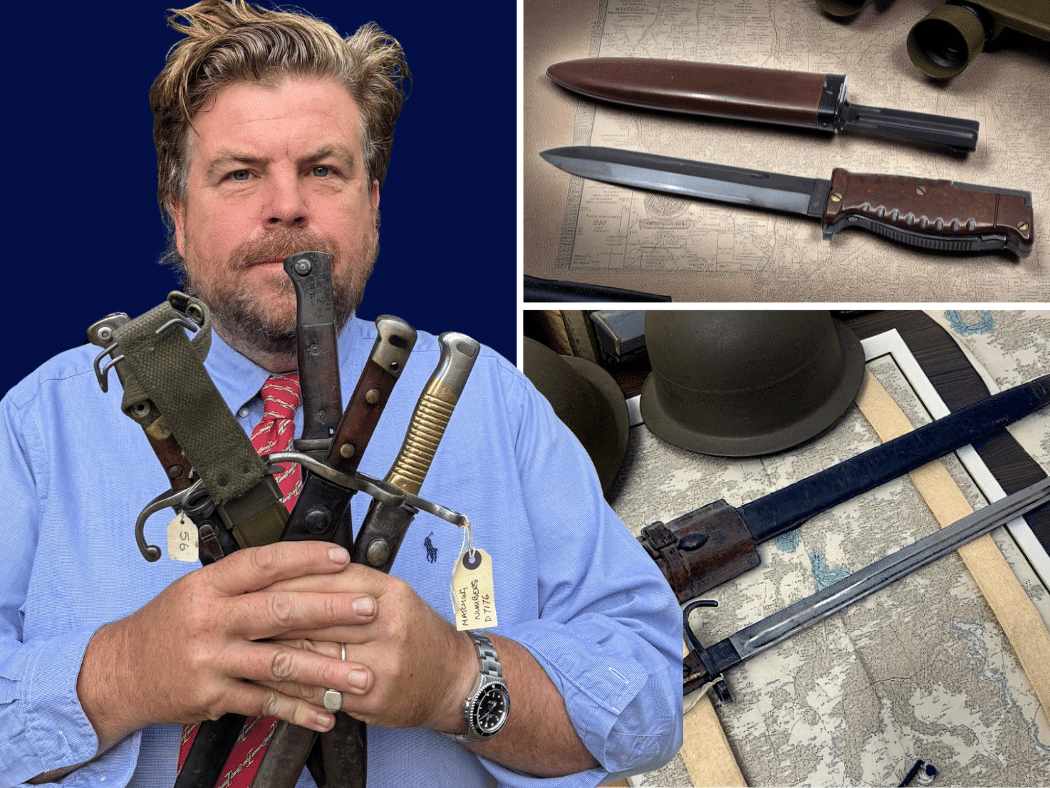
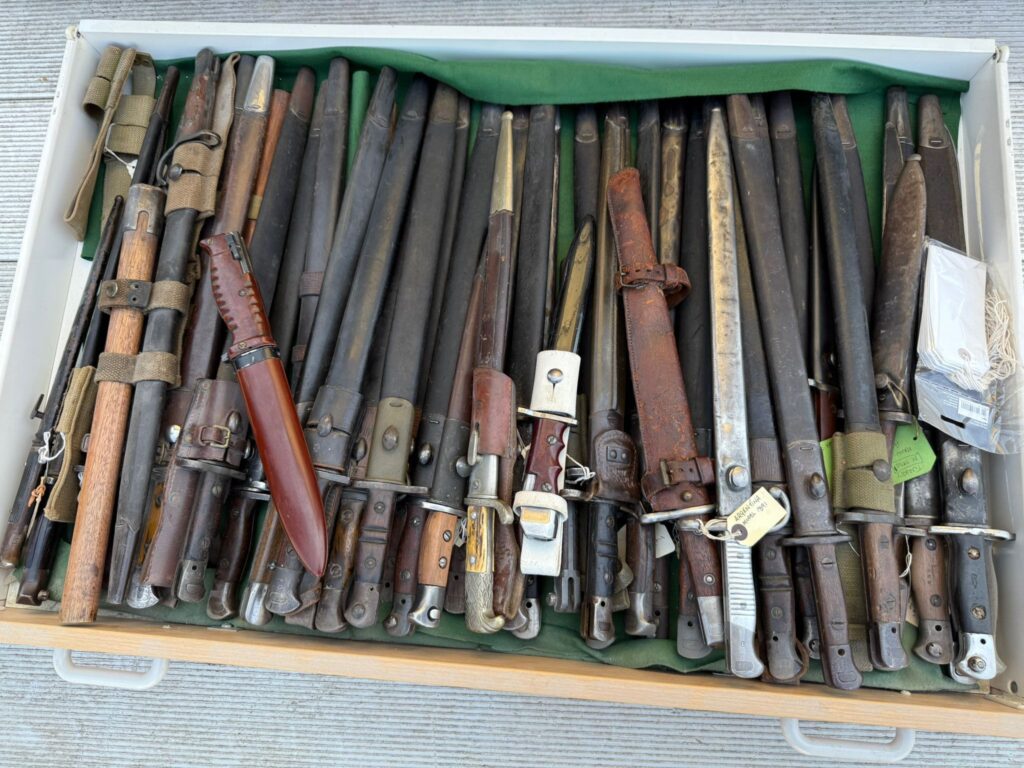
A collection of fearsome bayonets used in conflicts around the world is expected to make £15,000 when it goes under the hammer in Richmond. The 250 blades, used to fight the enemy in the Trenches, Boer War and WWII, were collected over a lifetime.
The impressive armoury was put together by retired 78-year-old school caretaker Paul Hayes and son Peter from Eltham in south London. Peter Hayes said: “I am really proud of dad and his bayonets which we collected together. I remember throughout my childhood going to militaria fairs and antique shops seeking out rare designs. All the dealers knew him.
“Every Christmas and birthday he’d want another book on them. His knowledge is encyclopaedic. But now dad is getting older, it is time to sell. Bayonets were his thing, and I have mine, which is collecting American cars.”
Now the bayonets, from countries as far afield as Sudan and Argentina, are up for sale at Hansons Auctioneers’ London saleroom in Richmond on September 30. Auctioneer Chris Kirkham said: “The collection is remarkable. It’s amazing to think about the action they would have seen and the terrible wounds they may have inflicted on the enemy. For any soldier just the sight of a gleaming blade was enough to produce terror, there was no weapon more visceral than the bayonet.”
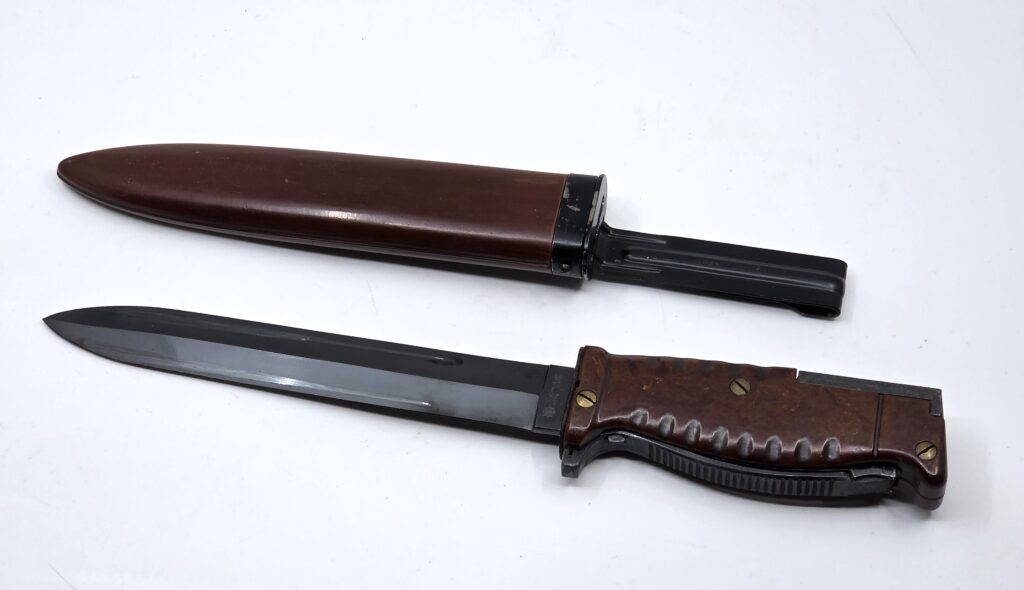
One of the rarest blades on sale is a German-made Sudanese AR-10 utility bayonet, which is expected to make £300-£500, of which only 2,500 were ever produced. Chris continued: “Extreme wear and tear in harsh desert and tropical environments and the bayonet’s long period of service from 1958–1985, means this is a rare example indeed.”
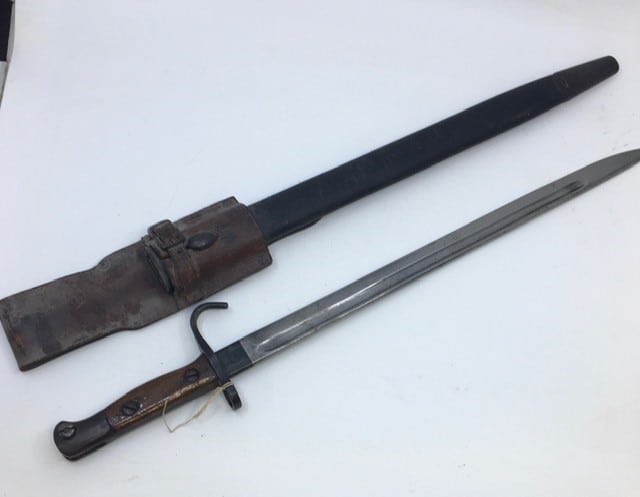
The sale also includes several examples of the pike-like, British Pattern 1907 designed for close combat in the Trenches. When fixed to the standard-issue Short Magazine Lee-Enfield (SMLE) rifle, the Pattern 1907 extended the soldier’s reach by a further 17in (43cm).
Chris continued: “The silhouette of a British soldier in WWI armed with a rifle and long bayonet is iconic and used to represent the determination and grit of the British infantry.” Another rarity is a ferocious WWI German sawback bayonet which was modelled on Prussian hunting bayonets designed to cut through bone.
While its serrated blade was intended to cut through wood or barbed wire, after Allied propaganda portrayed it as an example of German barbarity, production ceased. Few weapons in history sparked the fear among soldiers of the bayonet and its chilling “cold steel”. The sight of a bayonet charge – a line of soldiers rushing with blades fixed – provoked a primal terror, often causing defending troops to break ranks and flee.
Even well-trained soldiers were known to abandon positions when facing massed bayonets, and an imminent painful death. The name bayonet comes from the French town of Bayonne after hunters inserted knives into the barrels of muskets when they ran out of ammunition. They developed into plug bayonets the downside being the blade rendered the gun useless for firing. To solve the problem, armies began using socket bayonets that fit around the barrel.
Chris said: “We are hoping this important collection will appeal to militaria experts from around the world.”
The collection of bayonets goes under the hammer at Hansons Auctioneers Derbyshire Saleroom, on September 30.
Auction Details
Auction: Hansons London September Silvery, Jewellery & Fine Art Auction
Auction date: 30th September 2025 | 9:30am
Location: Hansons Derbyshire Saleroom
Auction contact: [email protected]
Catalogue/bidding: www.hansonslive.co.uk | www.the-saleroom.com