










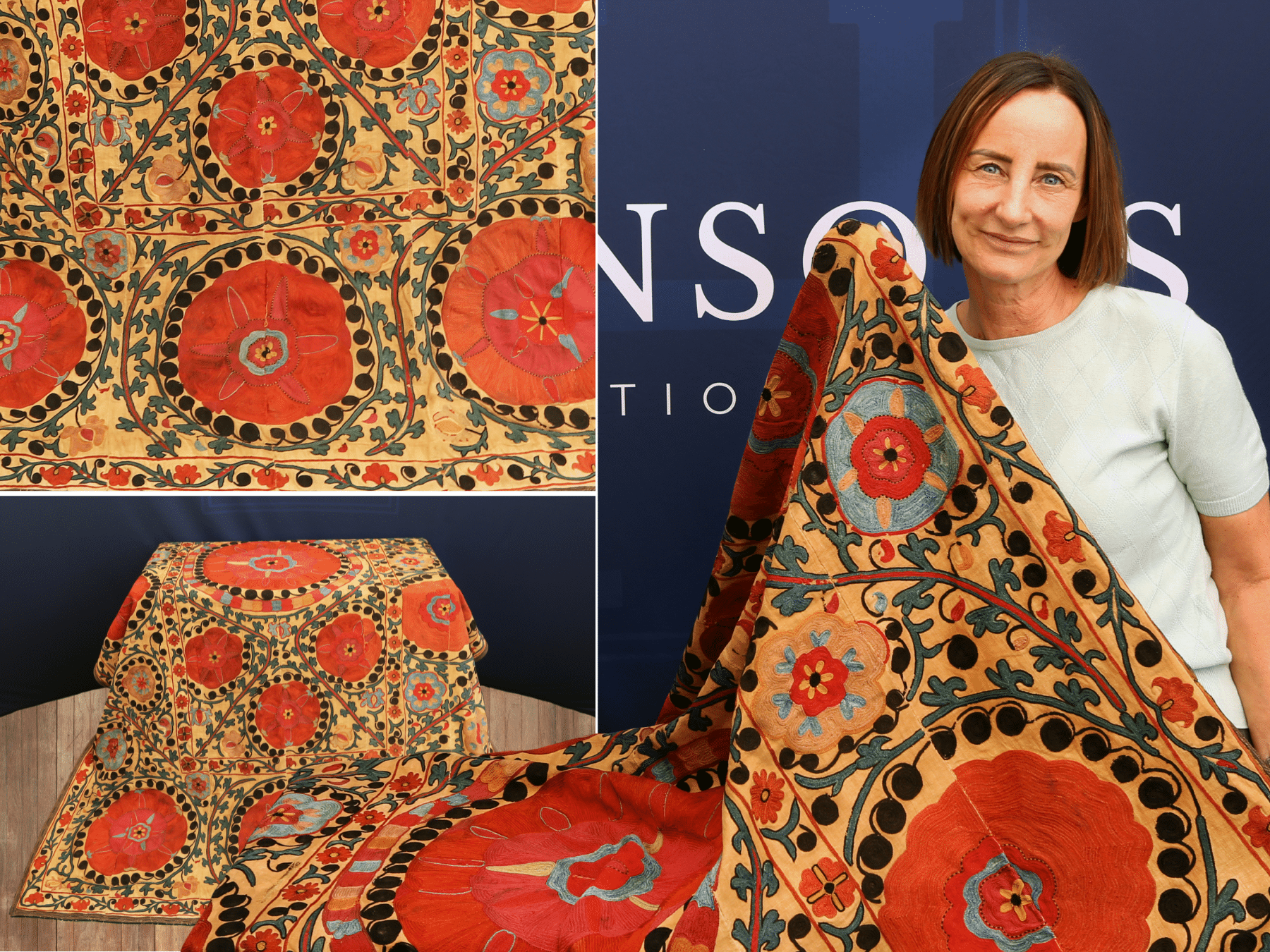
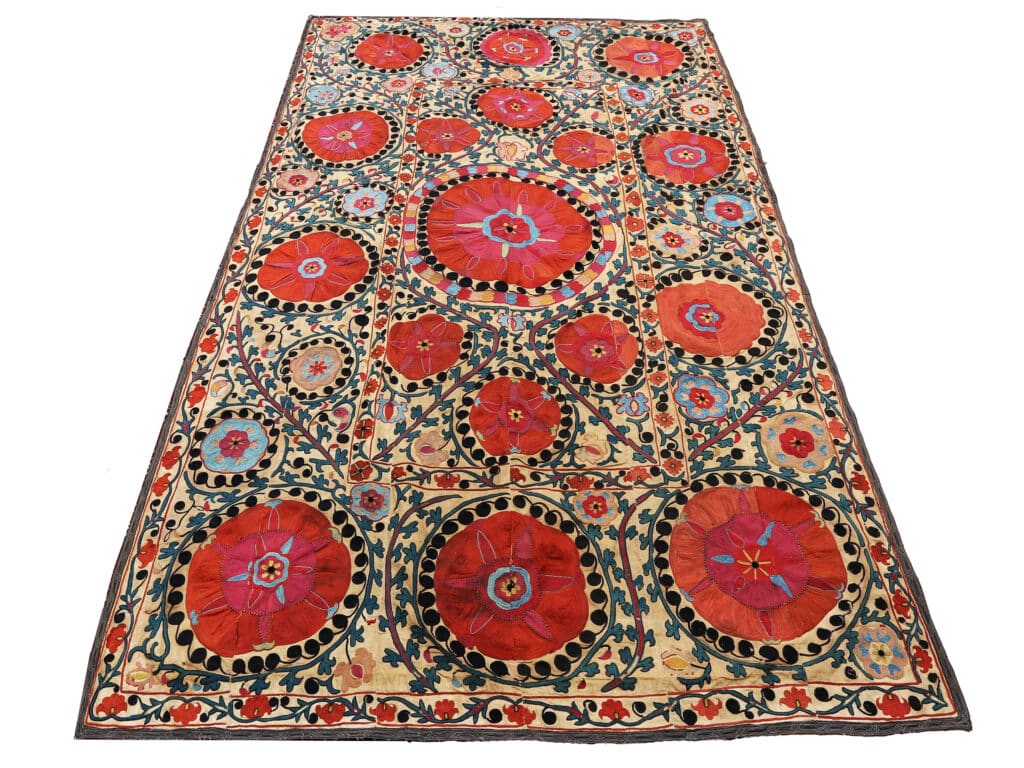
A hand-embroidered cover from Uzbekistan, dating from the late 19th century, is making its way to Turkey after selling for £3,800 – more than five times its low pre-sale estimate of £700.
Hansons Auctioneers’ Etwall saleroom saw interest from around the world in the brightly-coloured textile, known as a suzani, including a museum in Istanbul.
The fabric, which measured 5ft 4in x 9ft 4in and would have been part of a bride’s dowry, eventually sold to a Turkish rug specialist after a fierce bidding war.
Hansons Auctioneers’ textiles expert, Notty Hornblower, said: “The cover was discovered at a routine valuation day in Retford, Nottinghamshire, and had belonged to the owner for the last 70 years.
“He obtained it from the nephew of its original owner – a woman who had been part of the Raj and married to an Indian civil servant. It was a wonderfully colourful and joyous textile which still retained its brightness after all these years.”
The floral design, with symbols redolent of fruitfulness, evoked health and happiness, essential to a happy marriage, and most of all fertility.
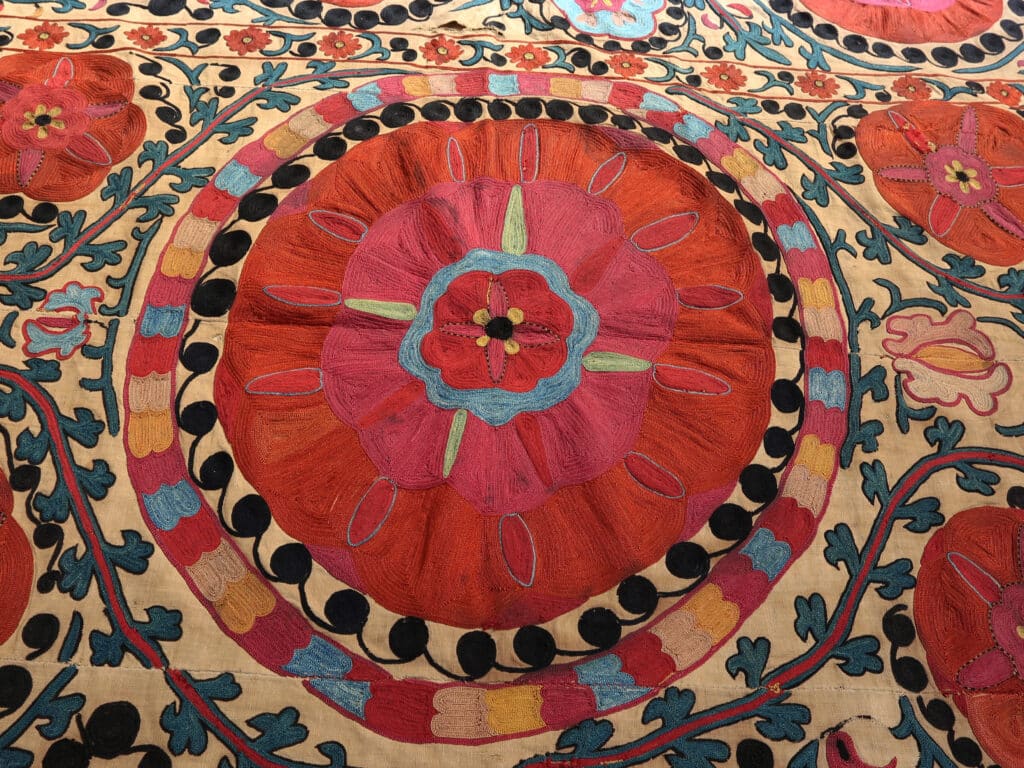
Notty continued: “Such intricately woven gifts were not only a demonstration of the bride’s wealth and skill, they were also a way of passing down tribal symbols of the area in which they were made.”
Traditionally the grandmother, who was the guardian of the pattern, would draw the design. After it had been etched onto the background cloth, the panels were separated with different female members of the family, including aunts, sisters and the bride’s mother, responsible for each.
The lion’s share of the work however fell to the bride-to-be, whose embroidery skills were on show to her future husband.
In addition to the suzani, the family would create a larger set of textiles which could take years to complete.
The set would include a small cover known as a nim suzani; a large panel, known as a rhidjo and a small square tablecloth, known as a sandalipusch, a sandali being a table around which male members of the tribe sat.
While the oldest surviving suzani date from the late 18th and early 19th centuries, they were in use long before, often with royal associations.
A decree issued in 1540 by the Safavid Shah Tahmasb, stipulated the floor coverings of the Mughal emperor Humayun should include suzani rugs.
Auction Results
Auction: Derby August Four-Day Antiques & Collectors Auction
Auction date: 14th – 19th August 2025 | 9:30am
Location: Hansons Derbyshire Saleroom
Auction contact: [email protected]
Catalogue/bidding: www.hansonslive.co.uk | www.the-saleroom.com