





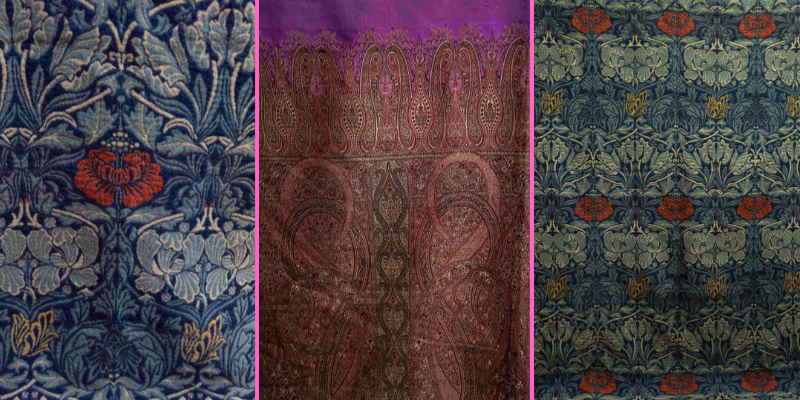
Shawls were a must-have item for the fashionable elite centuries ago and a recent find has revealed a story of British ingenuity 200 years ago.
Hansons’ textiles expert Notty Hornblower was thrilled to uncover a vibrant Norwich shawl which, as the name suggests, originates from the city of Norwich.
Shawls were very much in vogue in the 19th century and the height of desirability were magnificent cashmere shawls from Kashmir. Worn by princes and nobles, they indicated wealth. Naturally, elegant Victorian ladies wanted the best.
European manufacturers competed to make shawls that were warm and draped well at reasonable prices. In Norwich silk and worsted cloth, which made the city prosperous from the 16th century, were ideal for shawl making. Not only that, the city’s highly skilled weavers developed techniques to emulate India’s colourful shawls.
Today Norwich shawls are highly collectable. The one set for auction, thought to be pre-1920s, has a vibrant silk border in cerise, pink and purple and a fine wool paisley pattern. It will be offered in Hansons’ November 23-28 Antiques and Collectors Auction, estimate £200-£250.
The same sale will include iconic, pre-1950s William Morris woollen panels/curtains, £150-£200, in typical Morris shades of green and turquoise.
William Morris (1834-1898), a founder of the British Arts and Crafts movement, sought to restore the methods of hand-made crafts, including textiles, in opposition to the 19th century tendency toward factory-produced textiles. He created his own workshop and designed dozens of patterns for hand-produced woven and printed cloth, upholstery, and other textiles.
Notty Hornblower will offer free fashion and textiles valuations at Hansons’ Derbyshire saleroom on November 16, 10m-4pm. To book, email [email protected] or call 01283 733988.