








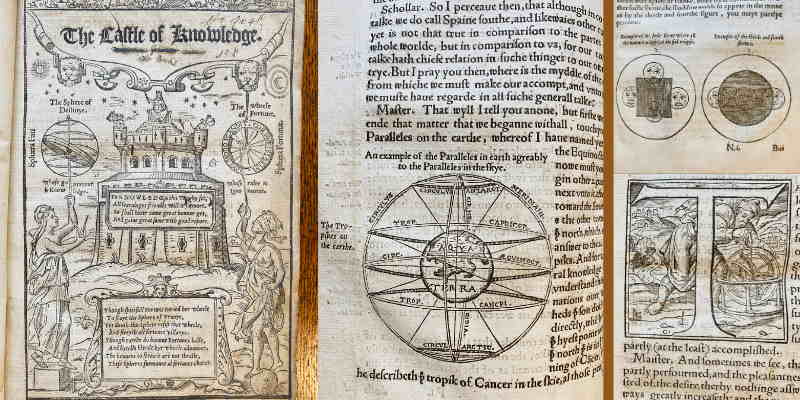
An incredibly scarce astronomy book, written by a Welshman before Italy’s Galileo was even born, sparked sky-high bids at auction.
A first edition of The Castle of Knowledge by Robert Recorde, published in 1556, was discovered among a box of antiquarian books by Hansons Auctioneers. An intense bidding battle saw the hammer fall at £10,000 in the firm’s November 1 Library Auction. The winning bidder was a private international buyer.
Jim Spencer, Head of Books at Hansons, said: “I was thrilled to see the book achieve the price it deserved. It was an amazing discovery, the most important scientific text I’ve ever handled. It’s the first astronomical treatise to be published in English.
“The book was printed 467 years ago, before many of the major astronomers had even been born, including Galileo (1564-1642), who’s described as the father of observational astronomy, Kepler, Huygens, Newton and Herschel.
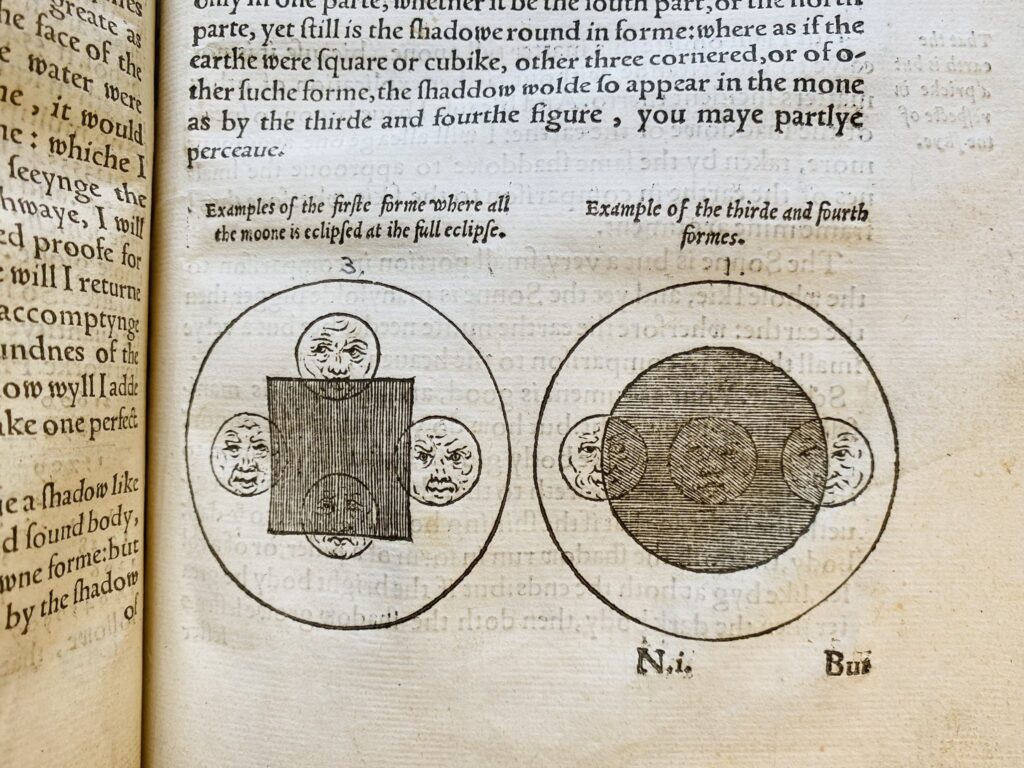
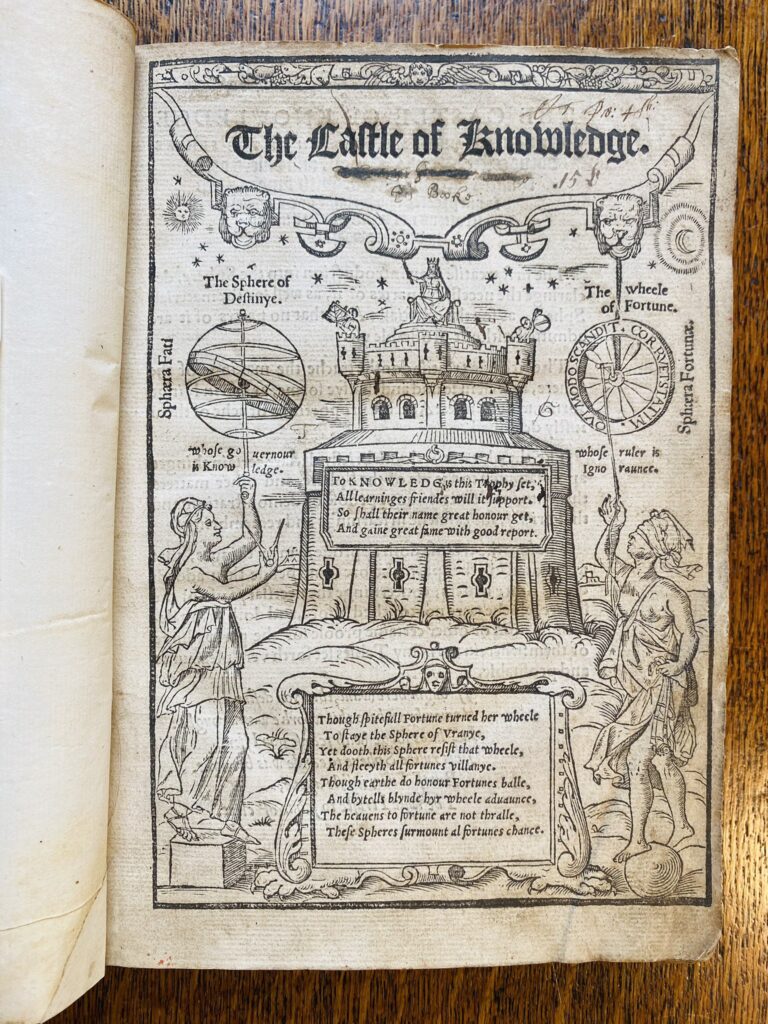
“The vendor consigned a large box full of antiquarian books, and this one jumped out at me with its allegorical woodcut title page and charming illustrations. It felt special. A little research quickly revealed its significance and scarcity. The author, Robert Recorde, invented the equals sign, so the equation I proffer for this auction is: important book = big price.
“I could only find one other copy sold at auction. It fetched $90,000 (£74,200) at Bonhams in 2007. The same book previously sold at Sotheby’s in 1971. Admittedly our copy was not so well-preserved, but it was just incredibly rare.
The book is important for three key reasons. As well as being the oldest surviving original English astronomy book, not merely a translation or abstract of Latin medieval or classical works, it is one of the first English astronomy books to mention Polish astronomer Copernicus’ De revolutionibus orbium coelestium (On the Revolutions of the Celestial Spheres), and the heliocentric system. Copernicus (1473-1543) formulated a model of the universe that placed the Sun rather than Earth at its centre. In addition, Recorde not only refers to ancient Greek philosopher Plato (424/428 AD-348 AD) but also to fellow Greek philosopher Proclus (412 AD-485 AD), so had access to Neoplatonic source material.
Jim said: “Recorde was a brilliant Welsh academic, physician and mathematician whose name should be more widely known. As well as inventing the equals sign (=) he introduced the pre-existing plus (+) and minus (−) signs to English speakers in 1557. And yet many people have not heard of him, partly perhaps because of his tragic end. He died in jail.”
Recorde was born around 1512 in Tenby, Pembrokeshire. He studied at the University of Oxford in about 1525 and was elected a Fellow of All Souls College in 1531. After choosing medicine as a profession, his studies continued at the University of Cambridge in 1545.
Afterwards he returned to Oxford and taught mathematics. Later he worked in London as physician to King Edward VI and Queen Mary, to whom some of his books are dedicated. He was also controller of the Royal Mint. After being sued for defamation by a political enemy, he was arrested for debt and died in the King’s Bench Prison, Southwark, in 1558.
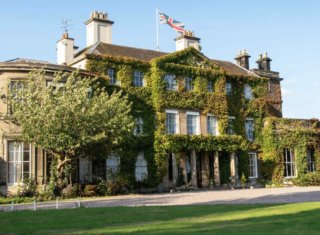
Auction: The Castle of Knowledge, by Robert Recorde, first edition, London: Reginalde Wolfe, 1556, sold in Hansons Auctioneers’ November 1 Library Auction at Bishton Hall, Staffordshire.