







Chinese ceramics and works of art are so hugely desirable the prices achieved can be life-changing.
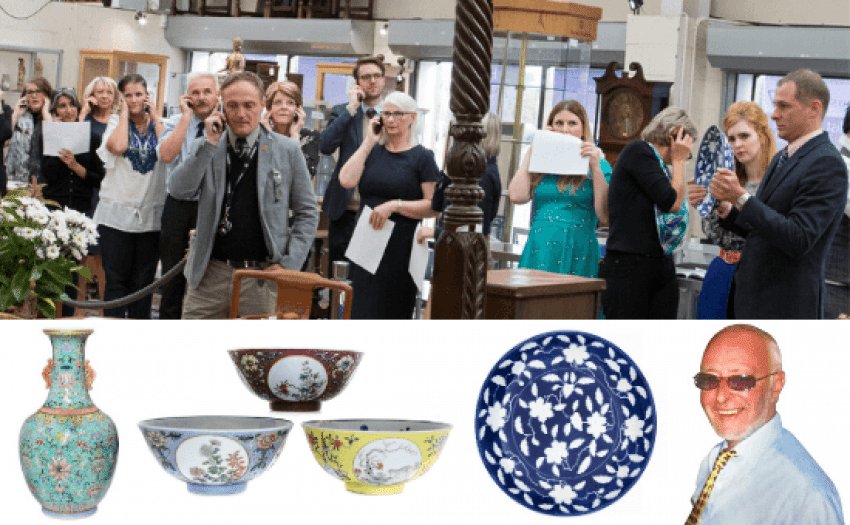
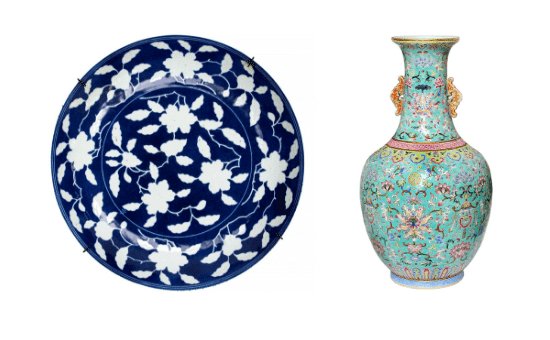
That’s why I get so excited when a new find emerges. For example, in 2017 an Emperor Yongzheng Chinese plate, circa 1723-1735, sold for £230,000. It was found in a South Derbyshire kitchen cupboard.
It was an exciting and emotional day for the lovely family concerned when the item went under the hammer. We had a record number of 19 phone bidders that memorable day, not to mention the internet bidders. Potential buyers jetted in from China to examine the object ahead of the sale.
The original estimate was £40,000-£60,000 but that began to look conservative after it emerged that replicas of the plate existed at the National Museum of China and the Guangdong Museum in China.
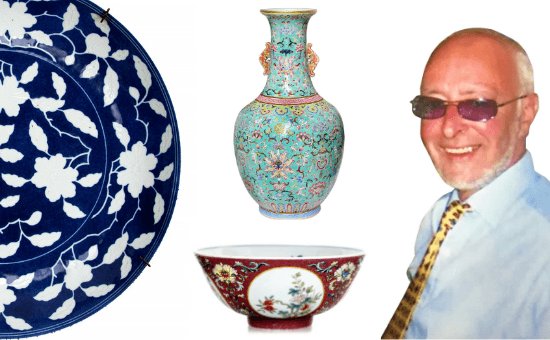
Dr Eldon Worrall is an expert in Oriental art.
The plate was sold by three siblings from South Derbyshire who inherited it from their gran. One said afterwards: “We’re stunned, totally stunned, and ecstatic. We never expected this at all. We just thought it was an ordinary plate given to our granny and passed down to us. This has really come out of the blue. We might have a large fish and chips tonight!”
Then there was the large Emperor Qianlong (1735-99) Chinese vase, used as a doorstop. It was contested to £650,000.
Could you have a lifechanging piece languishing in the sideboard – or kitchen cupboard? A man who’s discovered an ancient Chinese treasure worth £2 million thanks to his ingenuity, expertise and a handy pocket torch can tell you if you’re sitting on a fortune.
Dr Eldon Worrall is our Chinese and Oriental Art consultant and his first free valuation event will be held at our Etwall Auction Centre on February 27, 10am-4pm.
He knows exactly what it feels like to make an amazing find. In 2018 he discovered an Imperial porcelain incense burner from the Jiajing period in a basement worth £2 million.
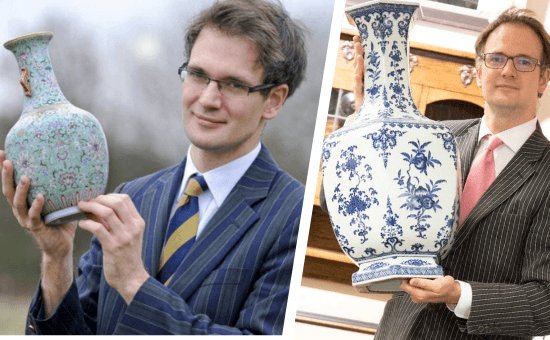
But it took his torch and expertise to unearth it. He was aware some important objects had been given to a Merseyside art gallery many years before as an act of philanthropy by the Lairds, a wealthy engineering family.
He volunteered his services to take a look. As he made his way into the basement, the light was poor but he had a torch to hand and recalled his amazement when he shone it on what proved to be a piece of Imperial porcelain.
Some 20 years previously, he identified a pair of Imperial Chinese bronzes, made as a gift for General Gordon of Khartoum which made £280,000 at auction.
General Gordon of Khartoum was a British Army officer in command of a force of Chinese soldiers led by European officers. In the early 1860s, Gordon and his men were instrumental in putting down the Taiping Rebellion. Consequently, he was honoured by both the Emperor of China and the British, hence the gift.
This brings me to a key reason why Chinese Imperial treasures are occasionally discovered in the UK today. British troops raided Chinese palaces in the 1800s.
In 1860, during the Second Opium War, British and French forces arrived in Beijing to negotiate with Prince Yi and representatives of the Qing Empire. Unfortunately, after a day of talks, 20 British, French and Indian men in the party were taken prisoner and later tortured and killed.
Lord Elgin, British High Commissioner to China, retaliated by ordering the destruction of the Old Summer Palace. It took 3,500 British troops to set the place ablaze.
Gordon of Khartoum wrote at the time: “We went out, and, after pillaging it, burned the whole place, destroying in a vandal-like manner most the valuable property … You can scarcely imagine the beauty and magnificence of the places we burnt … It was wretchedly demoralising work for an army.”
Before it was torched, British and French looters took many pieces of porcelain, some of which found their way to Europe. If they go to auction, Chinese millionaires and billionaires are keen to repatriate these treasures.
Free valuations of Oriental treasures
If you have an Oriental object, Dr Worrall, who completed his doctorate in 1993 on Chinese metallurgy, can assess it. He became a research fellow in the Chinese department of the National Museums and Galleries on Merseyside and published a book on Chinese porcelains at 24.
He would love to see anything believed to be of Chinese origin be it jade, lacquer, porcelain, silver, bronze buddhas or snuff bottles.
Dr Eldon Worrall will be at Hansons, Heage Lane, Etwall, DE65 6LS, on Thursday February 27, 10am-4pm, no appointment necessary. In addition, on Friday February 28, 10am-1pm, Dr Richard Halliday, a specialist in early English pottery and porcelain and Continental porcelain including Meissen and Sevres, will be offering free valuations. Plus we offer free valuations from Monday to Friday, 10am-4pm; 5-7pm on Wednesdays and 9am-noon on Saturdays.