






By Adrian Kinton
Present day Derby has many claims to fame and is a city of which we are rightly proud. It boasts a rich railway history, has the pedigree of Rolls-Royce, is heralded as the world’s ale capital while my beloved Derby County have experienced halcyon days in the (fairly) recent past.
And yet it is sometimes overlooked that Derby is the home of England’s oldest manufacturer of porcelain – if we exclude Royal Worcester’s possibly spurious claims!
Back then it was known simply as ‘Derby Porcelain’ and produced wares for the table and other ornamental items from approximately 1750 before becoming ‘Crown Derby’ in 1773, the ‘Royal’ being added in 1890 by George III in recognition of its achievements, with the attendant addition of the Royal Crown to the now familiar backstamp.
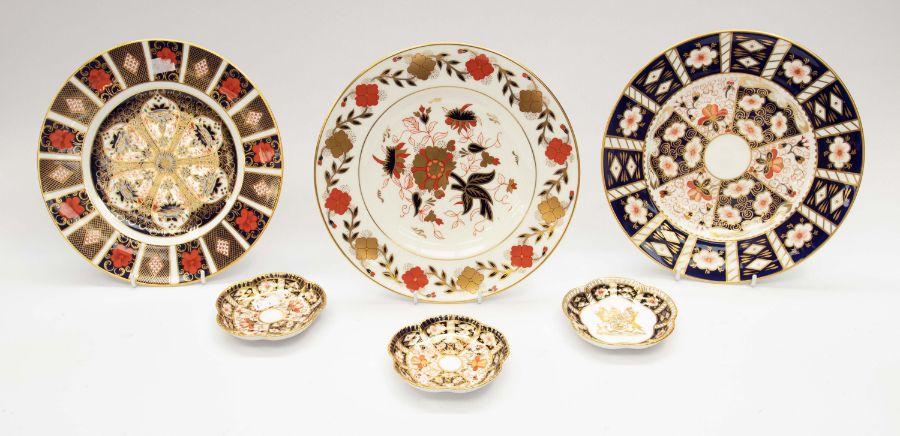
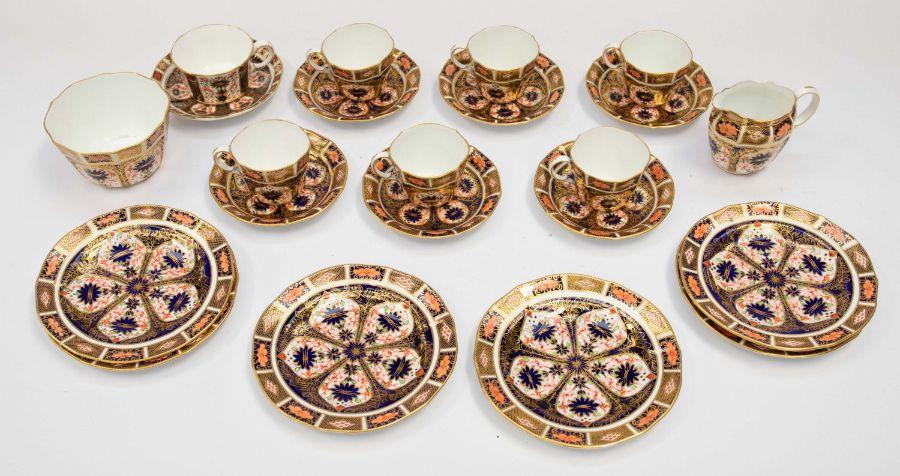
I can recall many individual pieces over my many years in the antiques business that have piqued my interest but, in recent years, one particular style has taken centre stage, that of Imari. And yet the origins of Imari – or to be more precise, Royal Crown Derby 1128 Imari pattern – could not be further removed from today’s Osmaston Road factory.
Although Imari, a port on Kyushu Island in Japan from whence it was exported to Europe, lends its name to the pattern, it was in fact the nearby town of Arita that produced in vast quantities the now familiar, brightly coloured design in the late 17th and Early 18th Centuries. Kaolin was an important ingredient of the clay used in this product, rendering it great strength and durability, and the local area of Izumiyana was rich in this mineral.
And so, back to Derby.
My long-time colleague and senior valuer at our Etwall Headquarters, Karl Martin, speaks with knowledge and genuine pride about both the Imari pattern itself and the importance to Derby of the pottery.
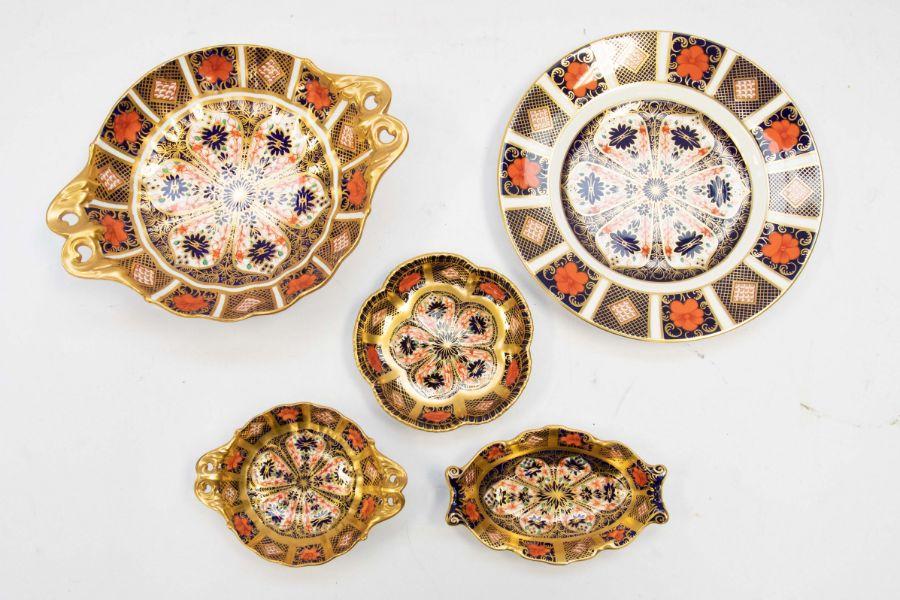
‘Originally called the Dewsbury pattern of 1775,’ Karl told me recently, ‘Old Imari started life after the move to Osmaston Road. It was in 1882 when the name first appeared in Royal Crown Derby’s Pattern Book number 2. This particular heavily gold-painted design which quickly became popular for tea and dinner services, representing the top end of the Derby factory. The well-to-do folk of late Georgian and Victorian England would fill their China cabinets in order to demonstrate their wealth and position’.
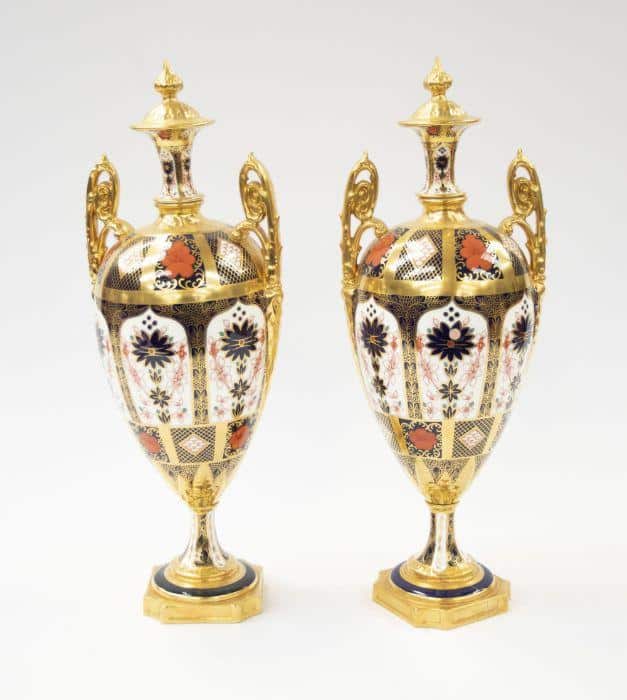
He picked up a few new arrivals, ready for our March sale, to show me and went on to enthuse, ‘It is absolute top-quality porcelain and the design, which originated in Japan, has become iconic. The decoration, invariably in blue and red, consists of these intricate patterns enhanced with floral designs and overpainted with pure gold.’
He went on to emphasise the importance of sharp eyes to potential collectors. A simple scratch through the backstamp was used to denote pieces that were deemed to be inferior in quality, to any small degree, and this separated ‘first’ and ‘second’ quality. Likewise, colour can clearly define the age of a piece. For example, the blue paint used in the early 20th Century was much paler than that used more recently.
At every monthly Antiques and Collectors’ auction, you can be sure to find numerous pieces of Imari ware and the underlying trend for their prices is never less than buoyant.
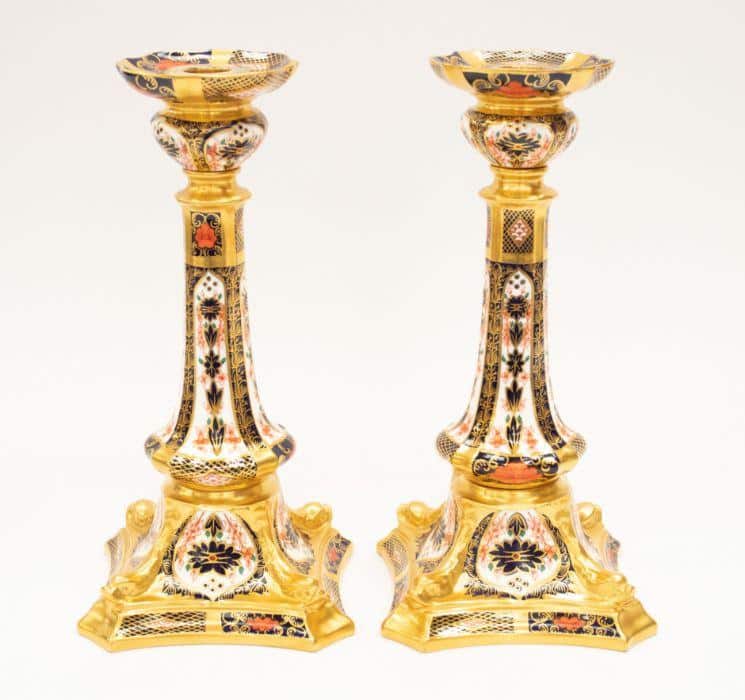
For example, in our February sale, Lot 1108, a Royal Crown Derby Imari 1128 collection including a ewer, lidded twin handled dish, trinket box, pin dish, and a small comport achieved a mouth-watering price of £580 from a modest £200-£300 estimate.
Likewise, for Lot 1121, a Royal Crown Derby Imari pattern fluted footed comport, factory first quality, the gavel came crashing down at £540 – bang on the estimate of £400-£600.
On estimate too was Lot 1125, an Imari pattern footed comport, together with a boxed trinket box and two coffee cans with saucers, sold for £280 to yet another online bidder .
Royal Crown Derby paperweights come in a bewildering range of guises: from penguins and kangaroos, through an array of domestic animals and wild birds, to creatures from far flung corners of the globe. Devoted admirers have amassed huge collections and these attractive little objects are in constant demand, with 16 lots in our February Antiques and Collectors’ Auction achieving a total of £1640.
It never ceases to surprise and delight me that so many of my Derbyshire kin share my love of our local heritage, Royal Crown Derby’s Imari pattern being to my mind a wonderful example of the skill, dedication and passion of my home city.
Royal Crown Derby items are invited until March 9 for Hansons’ March 16-21 auction. To arrange a free valuation, email our Reception team: [email protected] or call 01283 733988.