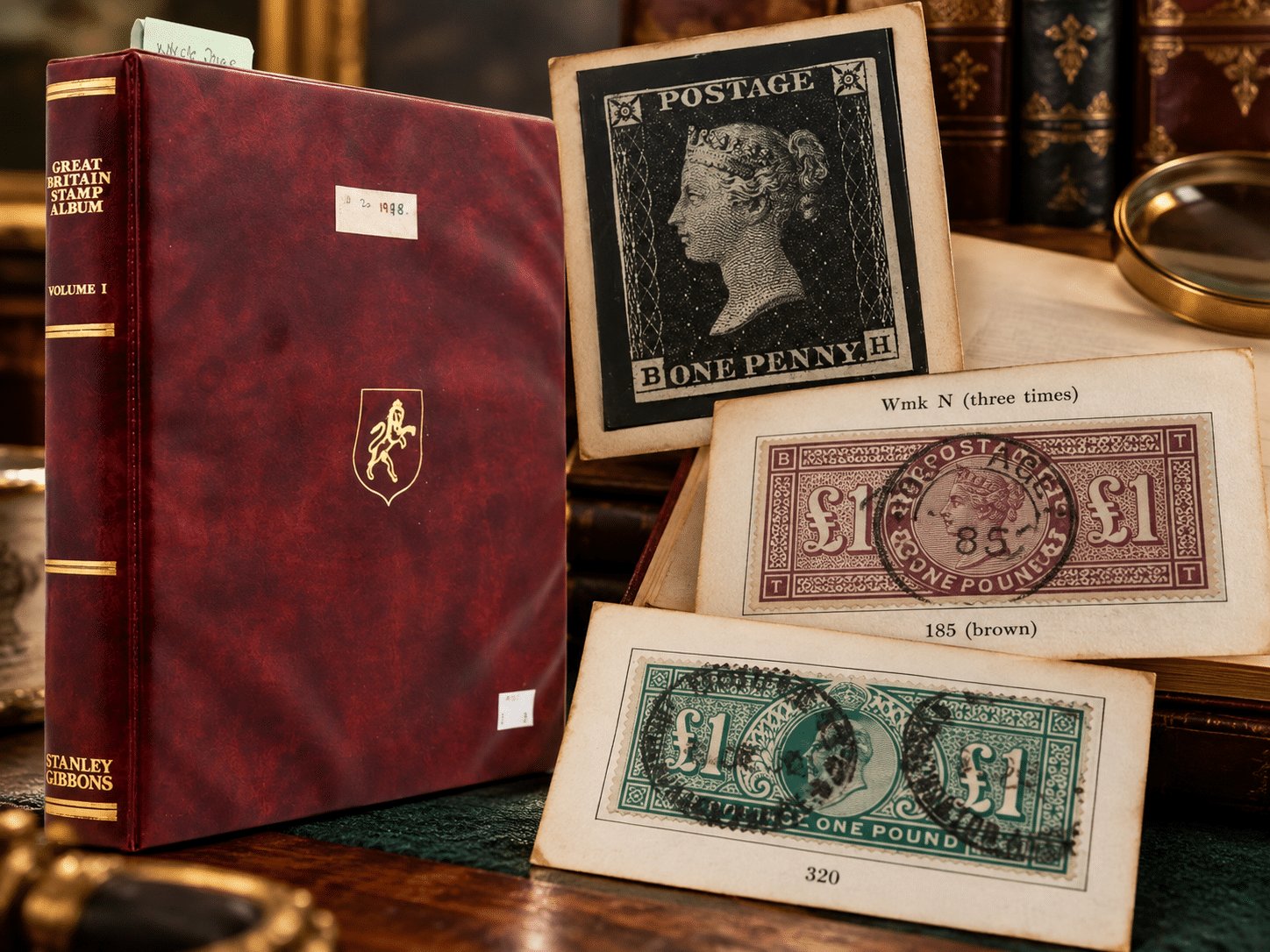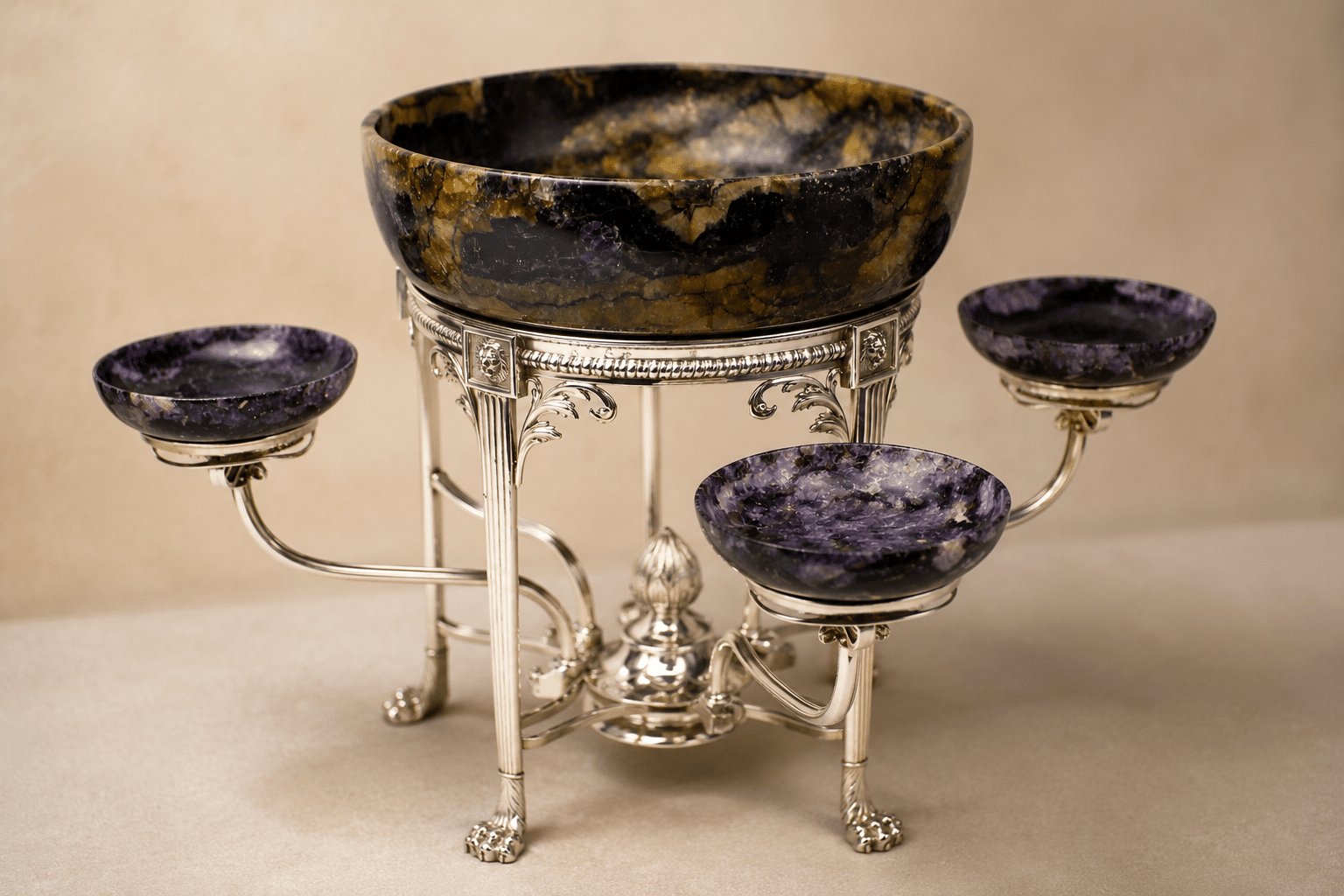








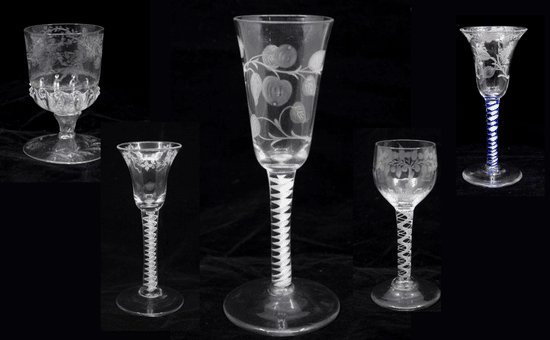
A single antique cider glass toasted huge success in Hansons’ October Fine Art sale after it was contested to a phenomenal £4,800.
It was the star lot amid a sparkling 18th century glass collection that achieved £65,000. The cider glass (lot 320), a rare example of Georgian glassware, circa 1765, doubled its auction estimate of £2,300-£2,600.
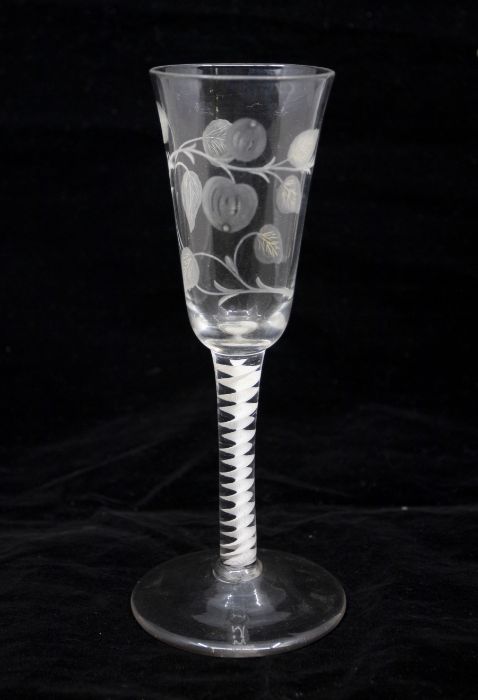
It survived more than 250 years, picking up a small nick on the foot rim. It was finely engraved with apples branches and leaves, boasted an opaque stem and stood 21cm high.
Other highlights included lot 375, an engraved English blue and white twist-stem wine glass, circa 1765, which reached £4,400. Two more glasses made £3,200 each – lot 305, a late 17th or early 18th century Bohemian diamond point engraved glass, and 316, a Beilby enamelled wine glass, circa 1765.
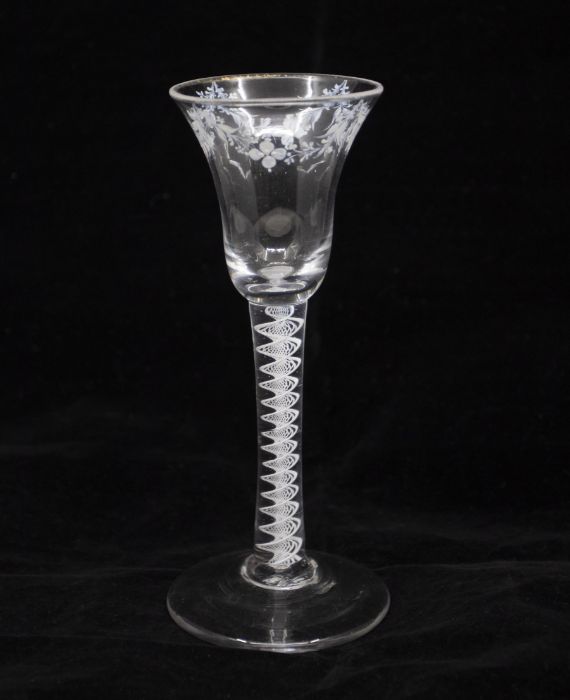
To provide some understanding of this collection’s importance, William Beilby (1740-1819) was an eminent English artisan who produced enamelled glass during the second half of the 18th century. Bohemian glass originates from Bohemia and Silesia, now parts of the Czech Republic. It has been recognised for its quality and innovative designs for centuries. The oldest archaeological excavations of glass-making sites in the region date to around 1250.

From a collector’s perspective, antique glasses are both historically fascinating and beautiful. But they were far from alone in excelling in the strongest Fine Art sale Hansons has witnessed in five years. Record results and exceptional prices came thick and fast in every category.
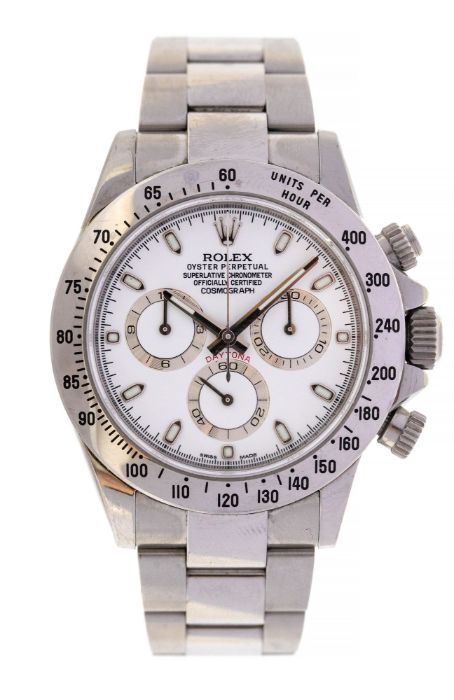
Take watches and jewellery. Lot 155, a gents Rolex steel Oyster Perpetual Cosmograph Daytona watch, achieved £12,000 – and led the charge with the designer make. Lot 163, a gents 18ct gold Rolex Oyster Perpetual Day-Date automatic watch, made £7,000, and lot 166, a 1990s gents Rolex Automatic Oyster Perpetual Submariner Superlative Chronometer bi metal watch, sold for £5,600.
In jewellery lot 114, a Van Cleef & Arpels multi-gem and carved coral brooch in the shape of a mandarin duck glided to £7,000, smashing its £2,000-£3,000 estimate.
Oriental finds tend to excel and lot 213, a Chinese Imperial yellow silk and gold brocade dragon panel, Qing Dynasty, probably Qianlong (1735-1795), reached £10,000. In addition, lot 200A, a Chinese famille verte export porcelain double gourd vase and cover, Qing Dynasty, late 19th century, made £2,300; lot 207, a pair of yellow ground ‘peony’ garden seats, reached £2,100, and lot 216, a Chinese blue and white shallow bowl, painted with five-toed dragons, Jiaquing mark (1796-1820), sold for £1,500. The centuries-old bowl had sat on top of a shelf unit in a family home for decades.

Auction surprises included lot 391, an oil on canvas by Edward Theodore Compton (1849-1921) depicting an alpine scene. It reached £7,500 from a modest guide of £500-£700.
Compton was an English-born artist, illustrator and mountain climber. His family emigrated to Germany where his love of mountain climbing developed. He is known for depicting alpine scenery, and as a mountaineer made 300 major ascents including 27 first ascents.

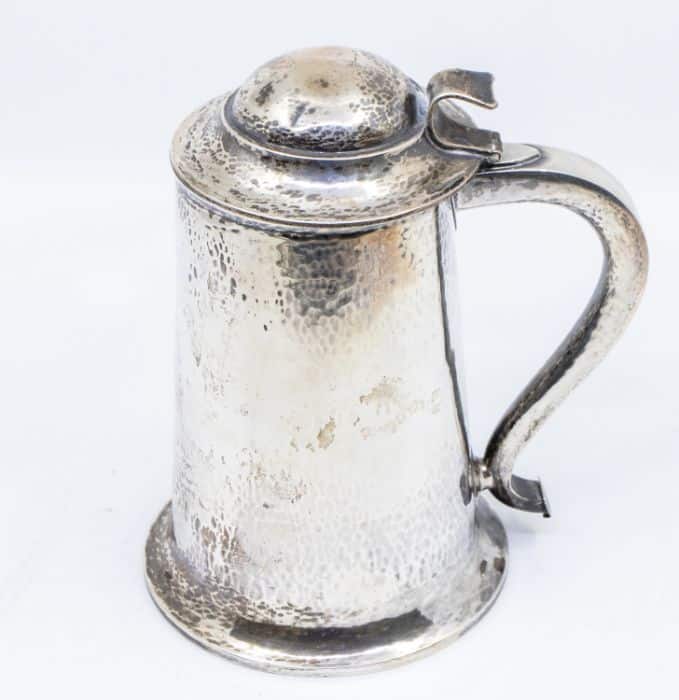
Another estimate-smasher was lot 73, an Arts & Crafts silver tankard and cover, Birmingham Guild of Handicraft Ltd, 1904. It made £1,300 – seven times its £170-£190 guide. Silverware included a good collection of spoons. Lot 79, a Charles II silver Puritan spoon, hallmarked by John King, London, probably 1663, made £950.
In ceramics lot 219 honoured Staffordshire’s pottery heritage to achieve £5,000. It highlighted a painstaking method of porcelain decoration called pâte-sur-pâte (paste on paste) and a Frenchman man who pioneered it in the county, Marc-Louis Solon.
The lot included a late 19th century Minton pâte-sur-pâte plate by Solon; a pâte-sur-pâte plaque depicting Dr Thomas and inscribed ‘Dr. Henry Thomas Born 1832 Died 1894, Presented by Mr L Solon in 1884’ and three letters to Dr Thomas from Solon (1835-1913).
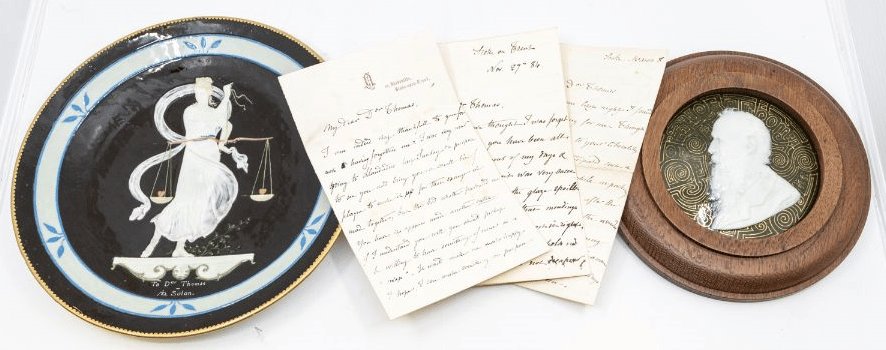
Solon began his career at Sèvres, France, but moved to Stoke-on-Trent in 1870 to work at Minton, where he became the leading exponent of pâte-sur-pâte. Dr Henry Thomas was a British homeopath based in Llandudno.
Derbyshire heritage emerged in lot 447, an early 19th century stick barometer, circa 1810, made by John Whitehurst and Sons of Derby. It sold for £1,400. Meanwhile lot 277, a carved wood paddle or club found in a Derby home, made £3,100. This Grand Tour item, thought to be from South Pacific islands, was dated 1830.
The outstanding success of this sale demonstrates that global demand for antiques has never been higher. In tough economic times tangible assets are an attractive investment. Entries are invited for Hansons’ Christmas Fine Art Auction. To book a free valuation or home visit, email [email protected] or call 01283 733988.